and biological sciences at Brown University.
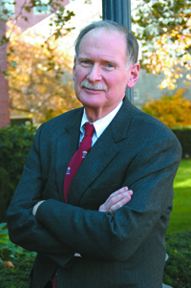
Name: Dr. Richard W. Besdine
Position: Interim Dean of Medicine and Biological Sciences at Brown
University.
Besdine is also Chief of Geriatrics for Brown and the Lifespan system. He
also directs the Center for Gerontology and Health Care Research, which is a
health services research program emphasizing chronic disease.
Selling Luxury Real Estate Requires More Than Exposure
By Emilio DiSpirito IV License Partner | Private Office Advisor Engel & Völkers Oceanside www.DiSpiritoteam.com…
Learn More
Education: Bachelor’s degree, Haverford College, Haverford, Pa.; M.D.
from the University of Pennsylvania School of Medicine.
Background: Trained at Beth Israel Deaconess Hospital in Boston, the
Centers for Disease Control and Prevention (while serving in the military service),
and was a research fellow at Harvard Medical School. While at Harvard he co-founded
the Division on Aging and developed one of the first academic fellowship training
programs in geriatrics. In 1986, Besdine was appointed the Travelers Professor
of Geriatrics and Gerontology at the University of Connecticut School of Medicine.
From 1995 to 1997, Besdine was the U.S. Health Care Financing Administration’s
chief medical officer and director of its Health Standards and Quality Bureau.
Residence: Barrington
Age: 62
PBN: When did you take over the role of the interim dean and what does
this title include?
BESDINE: I took over July 1. I came to Brown to take care of old patients
and make life better for older people not just in Rhode Island, but worldwide
through research and teaching programs. I am passionate about that and have
turned down higher level jobs in academic administration at other places because
I want to do aging. The reason that I agreed to serve what will probably be
two years as interim dean is that this is a time when the Brown Medical School
is being restructured. We have a blueprint process under way, we have had an
internal faculty report, we have prestigious national figures in academic medicine
coming in early December to give us advice, and the provost and the president
insisted that they did not want a caretaker for the division of Biology and
Medicine. Rather, they prefer someone who would have ideas and enthusiasm for
this process. I am feeling more useful than I think I have ever felt in my career.
I will complete the blueprint, the president will take her view of these recommendations
to the fellows of the corporation, and come away with a plan in February and
then the university can go about the job of recruitment of a permanent dean.
That’s it in a nutshell. And that’s entirely additional to the running of not
just a medical school, with its medical students, faculty and rotations, but
also being responsible for all of biology, undergraduate teaching, graduate
teaching and research, and our program of public health, which has nine research
centers and does a lot of undergraduate teaching as well. It’s a large portfolio
and part of this restructuring is not just looking internally at how we do business,
do we have enough associate deans, is there enough leadership, but finding if
the system is actually working efficiently.
Why now is the university choosing to change the structure? What is it
that you think doesn’t work?
The medical school was established almost 30 years ago in an era when medicine
financing was changing quickly. At the time Brown’s self-image was that of a
gem of a college. Actually it was already in the process of becoming a research
university college, but that’s not what the image was. I think that there was
concern that the mission of core values of undergraduate education could be
jeopardized, not just financially, but also because medical schools tend to
get to be big dogs. So that concern resulted in a structure that is a unique
one with having all of this undergraduate stuff within the same entity in which
the medical school resides.
The financial structure between the university and the medical school was
set up so that there could be no endangering of the school finances by anything
adverse that might happen. Now almost 30 years later, the division and the medical
school are a roaring success, accounting for 10 or 12 percent of the faculty
at the university. We account for half of the research dollars that come in
to the university. The growth in research funding in the medical school itself
has more than doubled in the past five years with hardly any increase in the
size of the faculty. Add to that the clinical departments, which are all based
at the hospitals, another more than $50 million in research comes from there.
If you look in the aggregate, the intellectual base for the research is health
care and biology, including a very robust program in public health here. Our
internal structure was supporting what was supposed to be a tiny experiment.
The relationship hasn’t changed at all. We are, and I hate this phrase, ‘a tub
on its own bottom.’ Likewise our relationship to the affiliated hospitals and
clinical departments, which some would say are the medical part of the medical
school, is very unusual. None of those faculty in clinical departments, with
the exception of a few chairmen, are Brown employees. They are the employees
of the hospitals or of what are called the foundations that are departmental
faculty practice plans. For there to be no financial relationships between the
medical school and its faculty and clinical departments means that those full-time
faculty quite rightly feel there isn’t much connectedness. So the relationship
between the medical school to faculty is something that needs attention and
strong consideration for revising in a way to make us more of an entity together.
For the complete interview, visit our subscription Web site, or call (401) 273-2201, ext. 227 or 234.