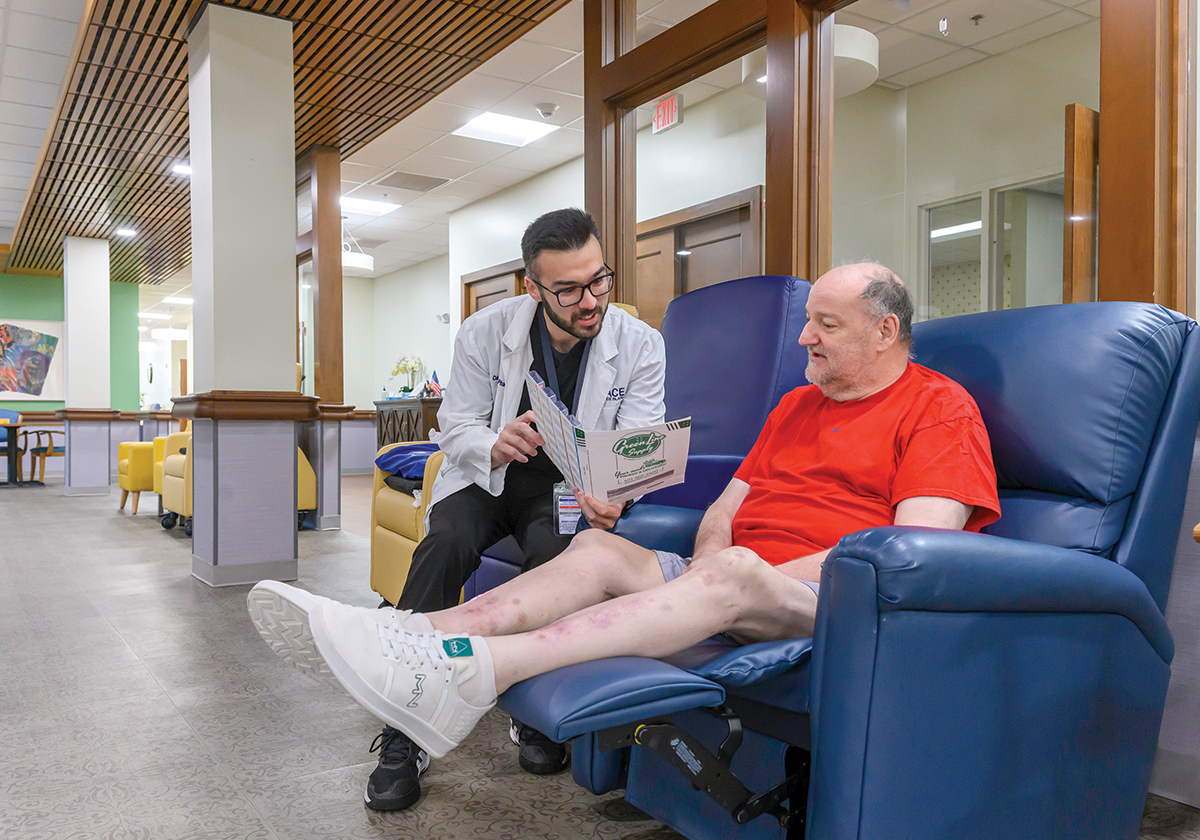
On a typical week, PACE Organization of Rhode Island might have about 11% to 14% of its seniors cancel their visits to the nonprofit’s service centers. But when air quality alerts go into effect – an increasingly common occurrence in recent years – that rate doubles.
These seniors often have multiple health conditions that make them more susceptible to the health impacts of poor air quality, says PACE of RI CEO Joan Kwiatkowski. The nonprofit provides medical and social services to older adults who still live in the community but require support to stay out of hospitals and nursing homes. Clients worry that leaving their house to get to the center will risk exacerbating these conditions.
The fears aren’t completely unfounded. Senior citizens, alongside children and people with certain health conditions, are warned to refrain from prolonged or intense outdoor activity when the R.I. Department of Environmental Management issues air quality alerts.
But Kwiatkowski would rather see PACE’s seniors make the trip in – the journey from their homes to the center shouldn’t be long or strenuous enough to aggravate health conditions, and she worries about those who stay isolated at home.
The air quality truly can cause health complications in already frail individuals, “so it’s really important that even if [the alert] is yellow that they take care of themselves,” Kwiatkowski said. “But in our case, it means coming to the center because we take care of them ... versus being alone in their apartments.”
In those situations, “I don’t know that they’re eating; I don’t know that they’re taking their medications,” she said. “I don’t know that their depression is in check. ... It could mean they’re not leaving the house [and] having food. ... So it creates a cascade of other complications for folks when they [become] more isolated because of the weather.”
Health care providers and public health professionals are bracing for poor air quality alerts to continue increasing in the coming years as Canadian wildfires become more common, posing a particular risk to sensitive populations.
Alongside the elderly, those populations include young children and people with health conditions such as asthma, other respiratory illnesses, or heart disease.
“It’s unfortunately going to be an increasingly regular part of our lives with climate change,” said Dr. Karen Maule, a pediatrician at East Greenwich Pediatrics Inc., “as the summers get hotter and the wildfire seasons are getting longer.”
Maule now makes a point to counsel parents on paying attention to air quality alerts.
“When the air quality levels are in that orange zone or red zone, you do see more asthma exacerbation,” Maule said. “It’s hard because we want our kids to play outside, but it’s dangerous” when alerts go into place.
While children are vulnerable in general, those with conditions such as asthma are particularly at risk. In Rhode Island, 8.5% of children and 12.2% of adults have asthma, according to the most recent data from the American Lung Association.
Maule also worries about the long-term effects, which remain unclear at this point. But wildfire smoke is more dangerous to health than typical air pollution, Maule said.
“Not only do you have the release of various toxic chemicals,” she said, “but as the wildfires are burning homes, you have all the various flame-retardant materials and plastics being burned and oxidized into the air.”
Like the older population, air quality alerts also take a toll on children’s mental health, according to Maule.
“A lot of the kids I care for are having a lot of anxiety,” she said. “It’s scary to see all these stories of wildfires and natural disasters becoming more common.”
Meredith Hastings, leader of the Breathe Providence air quality monitoring project and a professor of earth, environmental and planetary sciences at Brown University, said the state’s capital has seen particularly concerning air quality effects over the past couple of years.
“The last two summers in particular, we had really dramatic impacts,” Hastings said. “During the wildfires, the whole city was blanketed in higher particulate matter concentrations than we usually see, and it was across the city.”
Air quality typically associated with areas such as the Port of Providence, where increased respiratory condition rates in surrounding neighborhoods have long raised concerns among health officials, has become more common across the city during these alerts, Hastings said.
Dr. Amy Nunn, director of the Rhode Island Public Health Institute, said the organization hasn’t noted significant health effects on patients at this point. But RIPHI’s clinic, Open Door Health, sees a large volume of younger adults.
Still, poor air quality is part of “a much bigger concern for all of us,” she said, as the state grapples with rising health insurance costs and a shortage of primary care doctors.
Nunn anticipates that air quality alerts will continue to intensify in frequency and severity because of climate change. And while wildfires won’t pose the only related public health concern, they are a newer threat.
“Rhode Island is in a place where we generally worry a lot about hurricanes and storm surges,” she said. “We haven’t thought of ourselves as a place where we historically have to worry about wildfire risks.”
And while air quality-related health concerns aren’t particularly raised among those served by RIPHI, lower-risk patients aren’t immune to related anxiety. As a result, Nunn is also concerned that the general public might pull back on exercise due to the alerts.
“People who have preexisting conditions related to pulmonary conditions like asthma or [chronic obstructive pulmonary disease] should be vigilant when the air quality is poor,” she said. But “we don’t want this to be something that inhibits people from exercising regularly.”