The last 12 months have not been easy for APC by Schneider Electric.
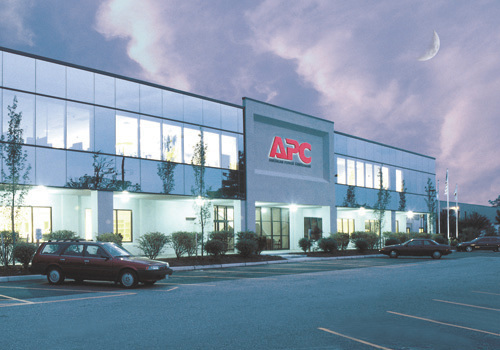
The South Kingstown-based company, founded here in 1981 as American Power Conversion, was forced to cut more than 200 jobs as businesses, rattled by the downturn, scaled back investments in APC products like uninterruptible power supplies and data center equipment. Its West Warwick manufacturing plant was closed to consolidate operations. Most of a ballyhooed $3.5 million investment to upgrade its South Kingstown headquarters was put off.
It all came just two years after APC was acquired for $6.1 billion by Schneider Electric, a 171-year-old French conglomerate that ranked No. 300 on this year’s FT Global 500 list of the world’s largest companies. Schneider combined APC with MGE UPS Systems to create a new Critical Power & Cooling Services division.
But Rob McKernan, president of APC’s North American operations, says there is no reason to fear that APC will depart the state. “Rhode Island will always be the hub of the IT business of Schneider and of APC,” he said in an interview. “We still use Rhode Island as the hub of our new [North American] employees, where we hire people on our sales track and our customer service track.”
He added: “To move away from Rhode Island would really cut the fabric of who APC is. So there are absolutely no plans to do that.”
Some of the pressure on APC subsided last month as parent Schneider reported better-than-expected earnings for the first half of the year, although net income fell 59 percent to 346 million euros ($494.81 million) on a 13 percent decline in sales year over year.
Emmanuel Babeau, Schneider’s chief financial officer, told Dow Jones Newswires the company was on track to cut costs by 1.6 billion euros ($2.3 billion) ahead of an original 2011 target. Schneider is not considering further reductions at this time, he added.
APC recently hired a few new employees after seeing a small increase in call volume, which McKernan called “a small sign but a good one nonetheless.” The company is also preparing for its annual college recruiting tour.
McKernan worked for APC from 1994 to 2002, then spent four years at a division of the Dutch electronics giant Philips before rejoining APC in 2006. “The reason I came back is because I always thought the combination of R&D and customer focus was very powerful,” he said. “It seems so easy, so basic, but many companies fail at that.”
His return came just before APC was bought by Schneider, making it just one piece of an enormous company that employed 113,904 people worldwide last year. The Critical Power & Cooling Services division made up 14.5 percent of Schneider’s 2.66 billion euros ($3.8 billion) in revenue in 2008.
McKernan acknowledges that there was some nervousness about the acquisition, but says in the end it has worked out well for both sides. “You hear a lot of people saying that if the economy hit us and we were still just APC only, we probably wouldn’t have been faring as well,” he said.
It has also opened up new product opportunities. Although uninterruptible power supplies still drive APC’s sales, the company and its parent have been increasing their focus on energy efficiency, which Babeau said he expects to be a “strong driver” of profits over the next few years.
The new offerings include EcoStruXure, an energy-management system that incorporates products from APC and other Schneider divisions. The company introduced it by saying it was “declaring war” on wasted electricity.
Although APC has always noted its products’ power savings, its clients have only recently begun to consider it as part of their purchasing decisions.
“I don’t think we’d ever used the words ‘energy efficiency’ seven years ago,” McKernan said. •