officer, Brooks Pharmacy
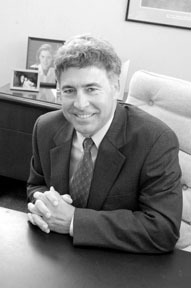
Name: Michel Coutu
Position: Chief Executive Officer, Brooks Pharmacy
Age: 50
Building a Strong Data Foundation in the Age of AI
Artificial intelligence (AI) has become a key priority in the boardroom and across management —…
Learn More
Education: M.B.A., University of Rochester, 1985; bachelor’s degree
in finance and accounting, 1977 and law degree from University of Sherbrooke,
Canada, 1980.
Background: Practiced labor law as an attorney for two years before
moving to the United States. His family ran a chain of drugstores called Jean
Coutu. Moved to the United States in 1983 from Montreal to start Maxi Drug Inc.
Started the company in Massachusetts under Maxi Drug before moving to Rhode
Island in 1990; then acquired Douglas Drug. Acquired Osco Drugs, a chain of
pharmacy stores in greater Boston in 2001 for $240 million.
Residence: Providence
PBN: Not long ago we started to see changes in your stores. Rather than
just pharmaceutical and cosmetic products we now see food, clothing and sometimes
furniture. Is that part of your strategy, if so, why?
COUTU: Again, if you look at the history of the company in the days
of Samuelson when it was Adam’s Drugs. In the 1970s when I first looked at the
area, Adams used to carry all kinds of unusual products. I come from a very
professional background. Pharmacy in Europe and Canada are much more professionally
based establishments and here in the U.S. is where I got my education on how
people perceived a drugstore. They were carrying slippers for the summertime
and garden hoses and all kinds of general merchandise not found in any other
drugstores other than in the U.S.A. So basically it opened my mind a little
bit about how business is done and how people are looking at drugstores. When
we started in the U.S., we did a total analysis of shopping habits of the customer
in the area and they were very favorably looking at drugstores as an area to
conveniently purchase certain seasonal products. When we purchased Douglas,
it was even more apparent that the perception of drugstores was even broader.
For instance, in the former Douglas there were bakeries and optical centers.
So it was the ultimate one-stop shopping and that’s before the large combo food
stores.
When you look at everything that was carried in drugstores, we thought
it made sense to offer the public what they were looking for. That’s the most
fundamental concept of marketing.
Has it been a success having those products in the store?
Absolutely. If it wasn’t, we wouldn’t have been carrying them.
As a subsidiary of Maxi Drug how much power and control do you have over
the operations of Brooks Pharmacy?
First, Maxi Drug is the operating corporation and works under the umbrella group of Jean Coutu Group PJC USA Inc., which is a Delaware corporation of which I am the sole director. So it’s pretty well managed here in Warwick, and decisions are made here in Warwick.
You have started an effort to increase the size of the existing chain of
stores by 2004. How is that coming along?
Right now the number of stores is 330, operating throughout New England mostly in Vermont, New Hampshire, Connecticut, Rhode Island and Massachusetts. We have only five stores in Maine. We are on a growth pattern of about on average 15 stores a year unless we do an acquisition, and we are always seeking acquisitions so we will continue to grow for the time being in New England where we feel we can open easily another 150 stores. We do not force growth but are looking for opportunities and as they come we jump on it.
Can you talk about these new prototype stores?
Yes, this is a concept that is a service concept. Our main focus at Brooks
Pharmacy has always been on health. It’s pharmacy first and convenience store
on steroids second, but our main focus has always been health and beauty. And
for that reason it was a natural extension of our offering to expand our skin-care
department and adding to it a healthier approach, which is Derma Skin care.
This is basically adding to your selection of products a brand that was not
found in the United States. These are brands coming from France. And basically
adding to it an element of service. We have a technician that has been trained
by dermatologists and skin experts to evaluate protocol of products that would
rejuvenate or maintain elasticity of your skin. The only place that it was not
available up until this point … was in the U.S.A. In all the skin-care centers
we have trained technicians. Most of these people have been to cosmetology school
and trained in department stores. As of today we have five: three in Rhode Island
(Narragansett, the East Side of Providence and East Providence) and two in Massachusetts.
This is not a department you’ll find in every single store. It’s important that
we do that selectively by identifying the right demographics and right stores.
What did the acquisition of Osco Drug do for your company?
Yes, in January of 2001 we bought 80 Osco stores. These stores were mainly
located in greater Boston and southern New Hampshire – two areas that Brooks
was not very present somewhat by design. Basically it took us nine years to
buy these stores so it’s been a very long project for us but we were convinced
that at one point we would buy these stores. So by design, at that time, we
didn’t put a lot of Brooks stores in that area working more or less on acquiring
those stores to give us the critical mass in those areas.
Have all of them already been converted?
From the moment we took them over. The night of the acquisition the stores
were all converted to Brooks. You could not see in any of these stores the following
morning any indication that any of these stores had ever been an Osco store.
We haven’t changed the mix of offerings in those stores. We found out that in
urban areas people shop very differently than in neighborhood areas. Because
of the way people travel and commute, more people use public transportation
so you limit the amount of product and size of product that people can carry
to their homes or apartments. We’ve learned over the last two years how to operate
in densely populated urban areas and from that learning we are in a good position
to continue putting stores and growing in urban years.
How many employees were added?
It was close to 3,000 employees that came on.
Prescription drugs being purchased via the Internet and from Canada has
become a hot topic of debate. Where do you stand in this debate and do you agree
with the practice?
I don’t agree with the practice for one very simple reason: it’s illegal.
So that makes it simple why I’m against this practice. Until they legalize the
re-importation of medication, then I think we have to obey by the letter of
the law. Of course if it does become legalized, I’m in better position than
anyone else in the country having an existing corporation of drugstores in Canada.
At this point what we have to work on is making sure people understand the consequences
of legalizing this. Secondly, there has to be more involvement of all the different
state attorneys general in making sure they apply to the letter of the law.
The FDA came out with a statement but statements don’t go too far if you don’t
enforce them. I think this has put all the operating drugstores in the area
at a disadvantage. And it’s very sad for example in New England where you have
two of the top 10 drugstores in North America offering the consumers of New
England top professional services and allowing outlaw corporations to operate
in the area.
You mentioned that there are consequences for consumers? What are they?
If you legalize it, why would any corporation buy medication that came directly
from a pharmaceutical manufacturer in this country? If you know that by doing
this you’ll pay a substantially higher price … it is absolutely clear that their
pricing strategies is to sell in other countries at a lower price. It’s for
a multitude of reasons. For instance, in Europe the government negotiates all
the prices of medication and the government also negotiates medication increases.
Same thing is happening in Canada and most countries all over the planet with
the exception of the United States where we have here a free market. Sometimes
a free market inflates price and it’s not always to the benefit of consumers.
In fact, it’s in the U.S.A. that consumers pay the highest for medication –
substantially higher than any other country on the planet. The problem here
is that consumers don’t pay out of pocket for medications, it’s through insurance
and so far the insurance has allowed the practice of high prices on medication.
Earlier this year Massachusetts added an assessment that would add a tax
to the prescription not covered by Medicaid or Medicare. Has that moved some
of the Bay State business to Rhode Island? And are the taxes being passed to
your customers?
This tax has been chaotic since day one. The decision to impose the tax came
on right before Jan. 1, 2003. We were called into Boston for a session not of
negotiation, a session of what will you impose and how will you tax your customers.
The letter of the law was not even printed at that time so that was an issue.
Everything presented to us indicated that it was a dispensing fee – a tax imposed
on the end-payer. We had at that time the opinion of the commissioner of insurance
of Massachusetts saying this is purely tax like a sales tax. Every chain operating
at that time in Massachusetts said this is a sales tax and turned around and
printed signs saying ‘we apologize but a law was just voted in and we will be
charging you on every new prescription.’
Because you have stores in Massachusetts and Rhode Island, did you see
an uptick in business in Rhode Island as a result of the tax?
Yes, absolutely. In the border stores in Rhode Island and New Hampshire we
had additional prescriptions coming from our Massachusetts stores. The problem
with that tax was the way it was presented was questionable. It was imposed
on drugstores; it was not imposed on mail order, Internet or hospitals. It has
changed. We went to court and it was decided by a judge that it was inappropriately
in place. The problem is more profound than tax itself. The tax was just a tool
to balance a Medicaid program that was operating at a loss. So the big question
is what creates the loss and what are the different mechanisms that we can take
to balance the budget. We were an easy target. I don’t think that was a good
business and governmental practice. It was done quickly and without any consultation.
We told the government of Massachusetts ‘don’t bite the hand that feeds you.’
Can you share any numbers in term of growth or profitability?
This year we had a great year and because of the Osco acquisition we have grown ourselves by over 30 percent and our profit by over 40 percent. But because we are private we don’t have to share those numbers. But I can tell you that the numbers are very interesting.