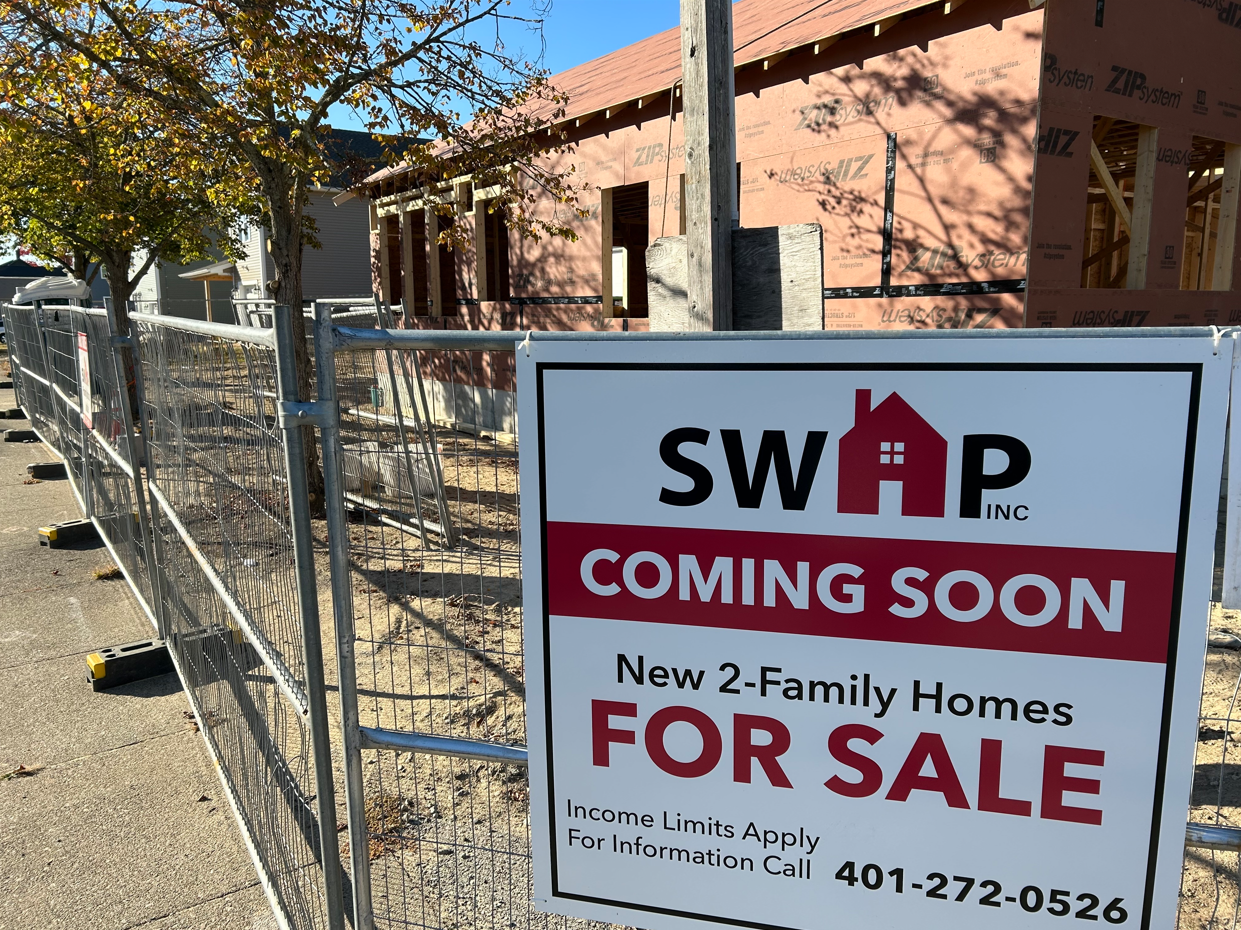
Rhode Island has picked up the pace in issuing more building permits for new homes – crucial to easing the housing crisis – but observers say that pace isn’t enough to overcome the state’s record of dismal housing production over decades.
In April, the R.I. Executive Office of Housing released its 2025 Rhode Island Integrated Housing Report, which touted that 3,778 housing units had been permitted in 2025 – a 40% increase over 2024. Compared with 2021, that’s a 150% increase.
Still, home sales and monthly rental costs continue to rise. According to data from the Rhode Island Association of Realtors, the statewide median single-family home sale rose from $480,000 in March 2024 to $514,250 in March 2026. In March 2021, that figure sat at $335,000.
The prices for multifamily homes and condos continue to climb, too.
For years, Rhode Island has ranked near the bottom nationally for housing production per capita. And the higher number of permits in recent years seemingly has yet to change that status. Real estate listing platform Realtor.com gave Rhode Island an “F” in its 2025 Housing Report Card, ranking it last for homebuilding and affordability.
And that’s not the only persistently troubling sign, said Brenda Clement, executive director of HousingWorks RI at Roger Williams University. While the U.S. Department of Housing and Urban Development considers 6% to 8% a healthy vacancy rate in the housing market, Rhode Island’s rate is around 2% to 4% – a historic low and “much below what we would consider a healthy market,” she said.
Additionally, Rhode Island has about a month and a half supply of home inventory, compared with the six months of inventory that characterizes a balanced market.
While the increase of building permits is a positive development, Clement said, the state and municipalities need to sustain it before there will be a noticeable effect on the housing and rental markets.
“We know we’ve been underproducing for years, so this is a way to catch up,” Clement said. But “we also know we’ve got to sustain that level of growth to keep the momentum going.”
That momentum might be challenging to maintain. Pandemic-era funding has dried up, and President Donald Trump has proposed a 13% cut to HUD’s budget in fiscal 2027.
Clement said those developments should put extra pressure on state leaders to support initiatives such as Gov. Daniel J. McKee’s proposed $120 million housing bond.
Also, there are no guarantees that every new housing permit will translate to new construction and a certificate of occupancy issued when local officials deem a new structure safe to use. That’s why it remains to be seen whether the flood of building permits will lift Rhode Island from its lowly place in the rankings for housing production.
The state hadn’t been closely tracking those certificates in its housing report until this year – a move that HousingWorks RI advocated for – meaning there’s a lack of historic data.
In 2025, the recent housing report states, municipalities issued 2,162 certificates of occupancy.
Emily Marshall, R.I. Executive Office of Housing spokesperson, said that the rising number of residential units permitted in 2025 is “a very promising sign of progress,” but she agreed that officials won’t know the full picture until they have more data on certificates of occupancy.
Moving a housing project from a permit to occupancy typically takes at least two years, Clement said, and the process can often extend to four years for more involved projects. Also important is what type of housing is being permitted and constructed.
“It’s not only about building. It’s about building to meet the needs of the community and the local residents,” Clement said.