KINGSTON – The state ended the second quarter “on a somewhat positive note, as we sustained a pace of activity well above that during the March — April slowdown,” University of Rhode Island economist Leonard Lardaro said yesterday in his monthly report.
The Current Conditions Index was 58 in June, declining from May’s 67 points but still surpassing its year-ago level for the second month in a row. (Scores higher 50 points indicate the state’s economy is growing while lower scores indicate it is shrinking.) In June 2006, the CCI was a neutral 50, and for all of last year, it averaged 54 points. For the first half of this year, the average is 55.5.
ISO 9001:2026: A Practical Opportunity to Build for What’s Next
For Rhode Island manufacturers, ISO 9001 has been much more than a certificate on the…
Learn More
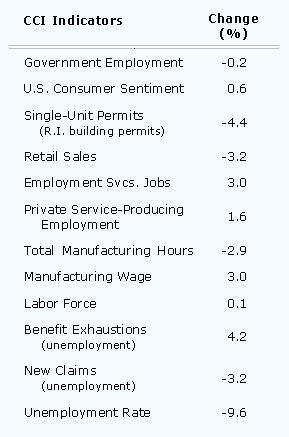
Seven of the 12 indicators improved in June, turning in “good but not spectacular performances,” Lardaro wrote, while “some trends, both good and bad, have become better defined.”
The best news came in local manufacturing wages, up 3 percent from their year-ago level, and the Rhode Island jobless rate, which fell to 4.7 percent from its June 2006 level of 5.2 percent, even as the state’s resident labor force grew by 0.1 percent.
Manufacturing hours declined by 2.9 percent – generally a negative sign, but together with the rise in wages, Lardaro said it points to a possible labor shortage. “And, keep in mind,” he added, “that declining Total Manufacturing Hours partly reflects rising productivity, a positive factor.”
Weakness was seen in new home construction, as the number of single-unit permits fell 4.4 percent from its June 2006 level; in retail sales, which were down 3.2 percent; and unemployment benefit exhaustion, which rose 4.2 percent, in their fourth straight month of increases, pointing “to the likelihood that the longer-term unemployed in our state are having greater difficulty finding jobs.”.
“At the other end of the layoff spectrum,” Lardaro noted, new claims for unemployment benefits fell by 3.2 percent.
Other labor-market indicators were mixed, with private service producing employment growing 1.6 percent, slowing from its first-quarter spurt; employment service jobs (including temporary workers) growing 3 percent, lagging last fall’s double-digit levels; and government employment falling 0.2 percent, in its ninth consecutive decline.
Going forward, Lardaro said, “National and global uncertainties surrounding the spread of sub-prime mortgage weakness, combined with a generally slowing national economy, pose a challenge to Rhode Island’s economic momentum in coming months. And required budget cuts will only exacerbate the effects of national and global weakness.”
The Current Conditions Index, created by University of Rhode Island economist Leonard Lardaro, measures the strength of the state’s economic climate; values above 50 indicate the economy is expanding. Additional information, including historic data, is available at members.cox.net/lardaro/current.htm.