PROVIDENCE – In a turbulent statewide and national health care landscape, Care New England Health System leadership is focused on a strong primary and outpatient care foundation, health system leaders said on Tuesday night.
Within Rhode Island and throughout the U.S., health care providers face challenges ranging from staffing shortages to skyrocketing insurance costs. In the Ocean State, thousands are expected to lose insurance coverage this year due to Trump administration funding cuts, placing additional strain on an already over-burdened industry.
Facing this shortage, CNE is investing in preventative care, hospital leadership said at a virtual town hall event on Tuesday, billed as "A Conversation with Care New England: Community, Care, and Our Shared Future."
"When primary care is unstable, the entire system feels it, from emergency departments to inpatient units to specialty care, and ultimately affecting the patient's overall experience of care," said Dr. Roger Mitty, CNE president and chief operating officer.
While Rhode Island isn't unique in its shortage of primary care providers, Mitty said, it lags behind neighboring states, largely due to lower insurance reimbursement rates. As a result, Rhode Island's physician compensation trails by around 5% to 15%, while medical school debt climbs to new highs.
"The demand [for primary care] is growing, but unfortunately, the workforce is not keeping pace," Mitty said.
In an effort to address this gap, CNE plans to open a new ambulatory center in East Greenwich in June, with one floor dedicated entirely to primary care. Despite broader workforce shortages, Mitty said the system is confident in its ability to recruit physicians from its partnership with Brown University's Alpert Medical School.
Outside of CNE, other health systems have made significant shifts in recent years. The system previously known as Lifespan Corp., which comprises Rhode Island's largest health network, strengthened its existing ties with Brown University and rebranded as Brown University Health.
Meanwhile, Roger Williams Medical Center and Our Lady of Fatima Hospital, two safety-net hospitals with nearly 500 beds between them, are on the brink of closure. Out-of-state for-profit Prospect Medical Holdings, parent company of local hospital owner CharterCARE, last year declared bankruptcy and filed a lawsuit seeking to close the two hospitals in the absence of a new owner.
Atlanta-based nonprofit The Centurion Foundation, the hospitals' only potential buyer, failed to secure funding by the deadline and has sought help from the state to close the deal. State funding that has kept the hospitals open for the past several months runs out at the end of January.
Care New England has no active plans to merge with another health system, said CNE president and CEO Dr. Michael Wagner, nor will it take over Roger Williams and Fatima hospitals.
“We are always open to discussions from a partnership perspective,” Wagner said, but he noted that CNE is currently not engaged in any specific merger discussions.
And while the health system's leadership hopes to see Roger Williams and Fatima hospitals remain open, Wagner said that CNE can't take ownership of the facilities.
“We are watching very closely and hoping that the deal either gets completed with Centurion, or ... potentially receivership with the state," Wagner said. "We will work in earnest with the state and those two hospitals in terms of any assistance we can provide."
But “we are not in the position of acquiring those two hospitals at this point in time,” he said.
The health system is instead strengthening ties between its existing resources, Wagner said. Earlier this month, CNE released a new set of logos to facilitate brand recognition across facilities.
While old logos featured different fonts, colors and lettering among CNE's various facilities, the new branding keeps these visuals uniform across facilities.
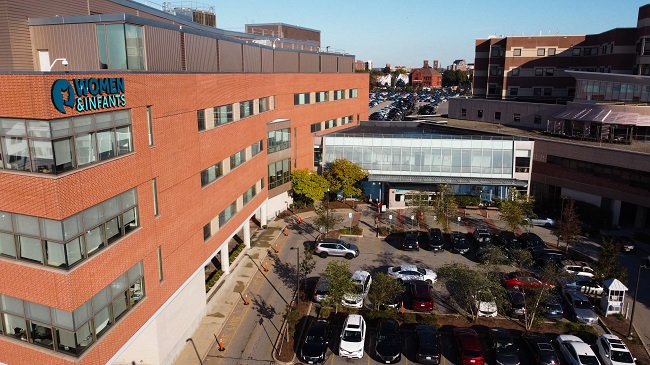
As the state’s second-largest health system, CNE operates Women & Infants Hospital, Butler Hospital, Kent Hospital, The Providence Center, VNA of Care New England, and numerous primary care and lab facilities.
The network employs around 7,500 and staffs 748 beds, Wagner said during the town hall, and annually oversees more than 88,000 emergency department visits and 15,000 surgeries, nearly 8,800 deliveries, and care for about 20,000 individuals through its community-based behavioral health programs.
Jacquelyn Voghel is a PBN staff writer. You may reach her at Voghel@PBN.com.