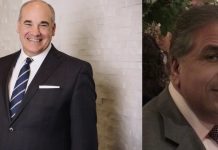
Dr. Michael Fine says he walked into the emergency department at The Miriam Hospital in Providence and saw “people spilling into the halls all over the place” as they contended with long wait times to see an overburdened doctor.
Fine, chief health strategist for Central Falls and a former director of the R.I. Department of Health, points to that intensified crowding in emergency rooms as a sign that, due to federal health insurance credit expirations, an estimated 13,000 Rhode Islanders are newly without insurance this year.
And health care observers are bracing for worse. This fall, proposed federal cuts to Medicare and Medicaid could leave another 30,000 residents without coverage, they say.
State officials have begun efforts to subsidize insurance for the most vulnerable Rhode Islanders, but Fine says that another, less-conventional approach could dramatically reduce emergency department visits.
“If everyone had a primary care physician in the state of Rhode Island, then the number of people who would need hospital care and emergency department care would drop substantially,” Fine said, estimating that emergency department visits could drop as sharply as 80%.
The state can make this vision a reality even for uninsured Rhode Islanders, Fine says.
Fine’s proposal is unconventional but not unheard of or untested – at least, not on a smaller scale in Rhode Island.
More than 25 years ago, Fine founded the Scituate Health Alliance, a nonprofit that provides low- to moderate-income, uninsured and underinsured Scituate residents with access to $10 primary care and dental appointments. He continues to serve on the nonprofit’s board.
The hyperlocal, community-run initiative is not traditional insurance, but more like a community safety net for primary care that can keep people who don’t qualify for Medicaid, can’t afford private insurance and have high deductibles healthy and help them avoid bigger health problems later.
Under the program, patients pay their doctor or dentist directly, and the alliance foots the rest of the bill, using a mix of municipal dollars and other fundraising efforts.
John Marchant, president of the alliance and a former town councilor, says he’s seen the program offer a myriad of benefits to patients and health care providers. And the organization is extremely low cost to operate because there’s no complex insurance billing and the focus is on basic, essential care.
At the statewide level, Marchant says, the program would also offer economic benefits.
With the Scituate Health Alliance, primary care providers get paid right away, for instance, rather than waiting months for an insurance payment.
“And because you’re not sending the money out to an insurance company in Milwaukee, the money gets recirculated right here in Rhode Island,” Marchant said. “People take their paychecks, they put it into health care, it goes into the savings account, goes into the bank, goes back into the economy, goes back into their paycheck.”
The only entities that might not benefit, Marchant says, are insurance companies.
In Scituate, the program’s enrollment hasn’t spiked despite health insurance premium increases. When the Affordable Care Act enhanced tax credits expired at the end of 2025, the average monthly premium for state marketplace health insurance plans soared by 101%, an average monthly increase of $111 per person.
But Marchant says the alliance is trying to amplify the program’s availability in town. In the past, enrollment has spiked amid financial concerns.
During the 2008 recession, most notably, the program went from serving 24 residents to 278. Today, the enrollment has declined to a small group of residents.
Still, the alliance believes it can be expanded beyond the town’s borders and has drafted a plan to implement the program at the statewide level, Marchant says, which is based on a health savings account model.
This structure “right off the bat, saves 40% because you’re eliminating the middleman,” Marchant said. “It’s not insurance, so you’re not paying someone to manage the plan. The plan is managed by you and your doctor.”
The alliance has also done extensive outreach. It has sent the proposal to Gov. Daniel J. McKee, the R.I. Office of Primary Care and Rural Health, House Speaker K. Joseph Shekarchi and House Minority Leader Michael W. Chippendale.
Marchant says he spoke with Shekarchi, who said that he would introduce the plan as proposed legislation if McKee would put money behind it. But otherwise, Marchant says, he’s received little to no response.
McKee’s office said in a statement that it doesn’t have any records of the proposal.
If the state doesn’t take action, Fine says, it fits a long-standing pattern.
“What [the state] is not looking at is access to primary care,” Fine said. “That’s where we should be paying attention first, so we have a place to stand and create an environment that reduces our costs so people can afford health care again.”