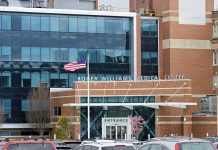
You could look at the Waterplace Condominiums towers as a bridge between old and new Providence – between the historical downtown and traditional-looking Westin Providence and Courtyard by Marriott and the glassy veneer of the GTECH Corp. headquarters.
It’s a transition that not everyone welcomes, and experts and laypeople alike find themselves discussing the evolving cityscape as they walk through downtown these days. With every new building, the city’s architectural character changes a little, and the new buildings just keep going up.
Building a Strong Data Foundation in the Age of AI
Artificial intelligence (AI) has become a key priority in the boardroom and across management —…
Learn More
Dietrich Neumann, a professor of modern architecture at Brown University, noted in an interview that aside from the GTECH building, downtown has a coherence based on “brick and maybe a little neo-Colonial touch.”
The GTECH building, meanwhile, while showing a sort of “honesty” about being a steel structure, is not “entirely successful somehow,” he said.
“I think something with either a little more surface pattern or a more graspable structural identity, it might have been stronger,” he said.
The Waterplace towers, on the other hand, are wedged between two styles, Neumann said – an increasingly common phenomenon. “You see across the country this new synthesis,” he said.
Rhode Island School of Design architecture professor Kyna Leski, who for a year has been a consultant to the Providence Planning Department, said many new buildings in the city look substantially more modern than their neighbors because for decades, there was little construction at all.
“Providence is going through growing pains right now – I hear a lot about what people think about this new construction,” said Leski. “We’re not used to seeing architecture that has moved into the 20th century and that hopefully someday will move into the 21st century here.”
This is not to say that Leski doesn’t appreciate the city’s historical buildings. It’s just that they couldn’t be built today, she said: They’d cost a fortune, as much as 10 times what developers are spending on new construction.
“You’re talking about marble, you’re talking about stone, you’re talking about the types of materials and crafts that are just really expensive today,” she said.
As it is, developers in Providence face real challenges recovering their costs, she said. Construction is expensive, and in attracting tenants, Providence has to compete with the Boston area.
“I think there’s a very difficult calculus in Providence, because the costs of construction are the same as Boston, but the kinds of returns that you get are one-half to below one-half,” said Leski. “So that impacts building construction – cost per square foot.”
Ironically, what looks edgy in Providence is actually a throwback to older designs, Neumann noted. Commercial architecture here still lags behind national and international design and technological trends, and the glassy GTECH building, for example, owes a lot to the modernist movement that dominated the early to mid-20th century.
But in an urban center, Neumann said, how buildings look isn’t the crucial factor.
“What’s important is the fact that the buildings are there at all,” he said. “In the end, the way these look only matters to a few.
“For the vast majority of people, it’s important that there are things to do, that they can sit on the street and there is life and there are cafés and restaurants. Places to go and places to shop. And I think somehow this arrangement of the mall and the GTECH building has worked quite well.”
Where the character of downtown goes in the future – whether it strays from the historic or shifts toward the postmodern – developers and new construction will play a role.
“And I would hope, in the future construction, that designers, design review teams and developers are always asking the question, ‘What is Providence, what is the identity here, on this site, today?’ ” Leski said. “And that doesn’t mean you have to imitate something from another period, but it does mean that you have to be receptive about what is already so special and unique about this city. •