Some of the biggest names in online sports betting have said thanks but no thanks to Rhode Island.
Last August, the R.I. Lottery received interest from eight firms seeking to enter the Ocean State’s mobile sports betting market, which has been dominated by International Game Technology PLC’s RI Sportsbook since 2019.
In the end, however, the Lottery had received only two proposals when the deadline passed in February, according to Lottery spokesperson Paul Grimaldi. One proposal was from Bally’s Corp. and another from Rush Street Interactive Inc., a publicly traded gaming platform in Chicago.
The proposals are under review, Grimaldi said.
Among the eight companies that showed initial interest last fall in getting a piece of the Rhode Island action were national heavyweights DraftKings, FanDuel and BetMGM.
The Lottery has been testing the waters of expanding its mobile sports betting on the recommendation last year of adviser Spectrum Gaming Group that the state open its market to more sports-wagering providers to bring in more revenue.
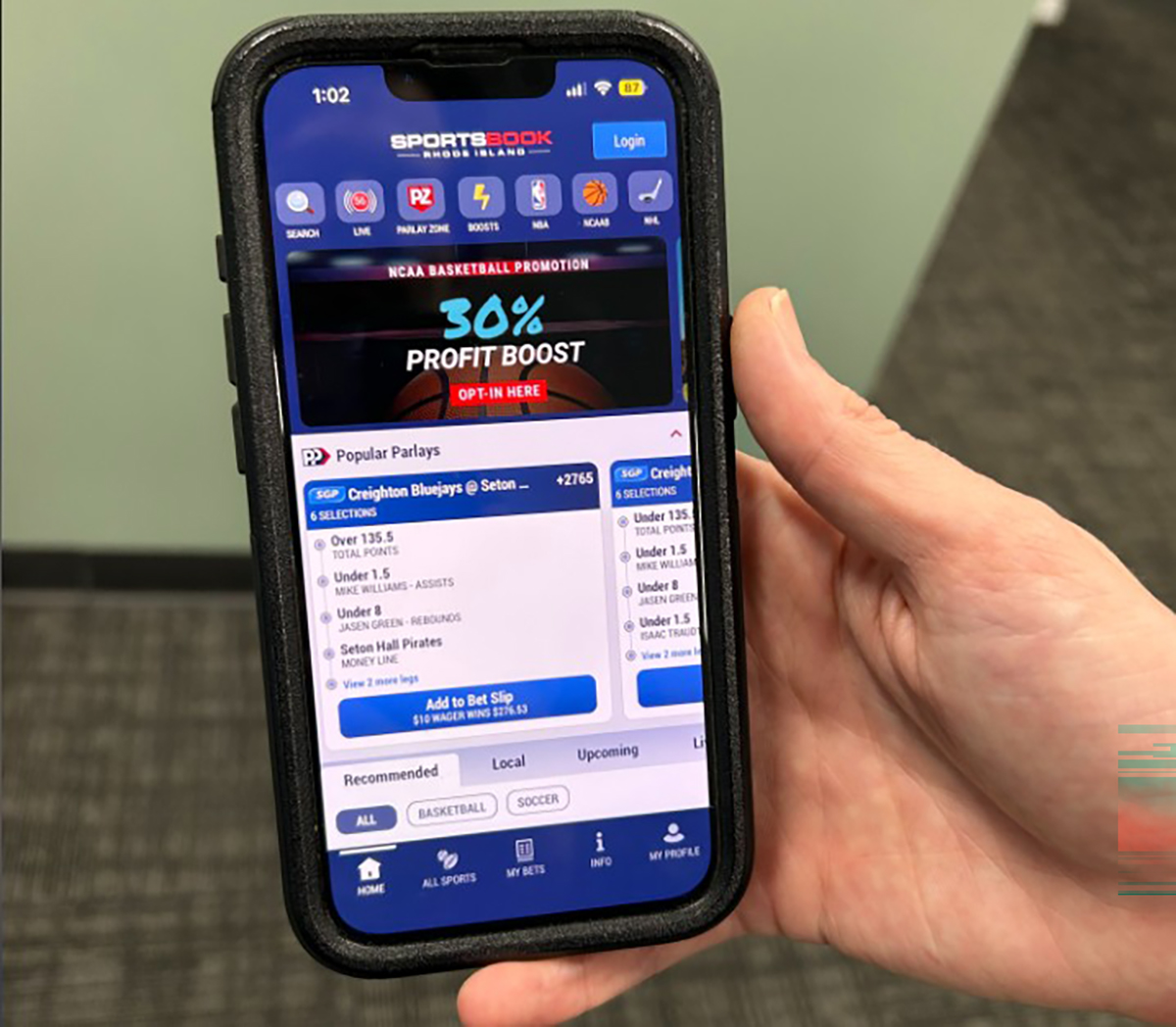
Right now, IGT’s Sportsbook app has a monopoly, and many have argued that persistent technical problems with the app highlight the risk of the state’s single-operator setup.
Spectrum cautioned that there would be “limited interest” among vendors because of the state’s 51% take of the revenue and any new competitor would have to pay a 17% hosting fee to Bally’s.
Indeed, at least one company indicated it bowed out because of the financial setup.
“DraftKings decided not to respond ... because the commercial terms outlined by the state would not have positioned us to compete effectively in the market,” said Griffin Finan, senior vice president and deputy general counsel. “We remain committed to working collaboratively with stakeholders across the state and would welcome the opportunity to advance a framework that fosters competition and supports a sustainable market.”
Rep. Matthew S. Dawson, D-East Providence, wasn’t surprised at the lack of interest. DraftKings now has 4.8 million active accounts, five times the population of Rhode Island.
“The bigger players are not going to come until we get our market in order,” said Dawson, an outspoken proponent of adding more vendors.
As of now, the Lottery is aiming to add another wagering provider later this year. With the pool of bidders down to two, Grimaldi said the Lottery has the option of choosing one of the two “or choosing neither of them.”
Could the Lottery issue another request for proposals? Grimaldi said it’s too soon to determine.
If Bally’s were to be selected, it would have the advantage of avoiding the 17% hosting fee that other vendors would have to pay Bally’s.
A lesser-known entity, Rush Street hit $1 billion in revenue in the most recent quarter. During a February earnings call, CEO Richard Swartz told shareholders that the strategy “is about trying to find the right fit and the right relationship and create the right proper value for the partnerships to work together well.”
“We’ve proven ourselves to be very strong in smaller states ... and able to really generate a large share in those opportunities,” he said.
Meanwhile, Dawson has submitted legislation that would allow the state to expand to up to six sportsbook vendors and increase the vendors’ take from 32% to about 79% of the revenue, among other things.
Dawson said Rhode Island is leaving money on the table.
Online sports betting generated $3.71 billion in state tax revenue in 2025, climbing 32.4% year over year, according to the American Gaming Association. Meanwhile, Rhode Island’s revenue from sports wagering declined 3.2% between fiscal 2024 and 2025, according to the state.
“There is more revenue to be made,” Dawson said.