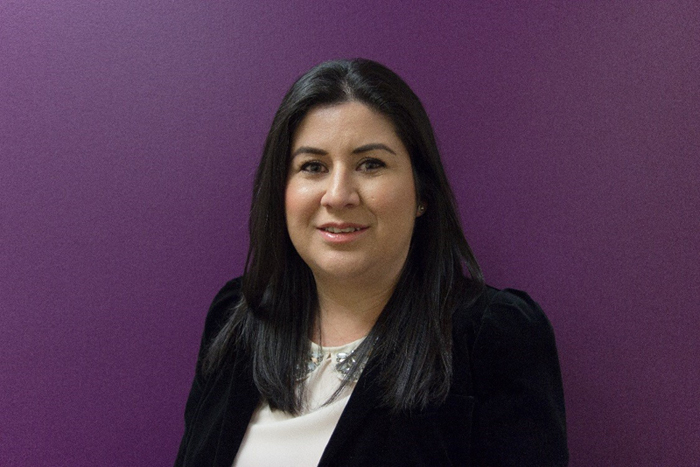
In November Tiana Ochoa was hired by Big Brothers Big Sisters of the Ocean State as a program director. With a master’s degree in social work from Rhode Island College, Ochoa is an independent clinical social worker with 14 years of work in various roles within the social services field. She previously worked for BBBSOS from 2003 to 2005 as a case manager.
In addition to her experience helping children and families thrive and reach their full potential, Ochoa is also committed to civic engagement. She currently serves on the Rhode Island Latino Political Action Committee, Rhode Island Democratic Rep. Jim Langevin’s Diversity and Equality Advisory Committee, and as president of the Guatemalan Center of New England. Born in Guatemala, Ochoa moved to Rhode Island at age 15. She currently lives in Providence and enjoys all things New England.
ISO 9001:2026: A Practical Opportunity to Build for What’s Next
For Rhode Island manufacturers, ISO 9001 has been much more than a certificate on the…
Learn More
PBN: What will be your responsibilities as the program director for Big Brothers Big Sisters of the Ocean State?
OCHOA: I am responsible for the oversight and direction of all aspects of community- and site-based mentoring programs. I manage a team of nine with the objective of maximizing program quality, client effectiveness and child safety. I ensure match growth and quality through collaboration and alignment with other internal departments. Additionally, I seek support from community partners and advocate on behalf of the children we serve.
PBN: You’re a licensed independent clinical social worker and you previously worked as a case manager with BBBSOS from 2003 to 2005. How has the organization grown since then?
OCHOA: An increase in partnerships and funding has enabled programming to expand significantly over the last decade. Our community-based mentoring program serves as many as 300 children every year while site-based mentoring is a newer model that we offer, and it has grown quickly. Our footprint has expanded to 19 sites across the state in five years.
In partnership with Amgen, our Beyond School Walls STEM-focused workplace-mentoring program has experienced great success during the past two years. The goal is to continue the growth of this program and introduce children, who would not have the opportunity otherwise, to STEM fields [science, technology, engineering and math]. To do this, we need community partners who are willing to play an active and engaged role and make a difference. Amgen is the perfect example of this partner.
The Big Brothers Big Sisters Donation Center, our social enterprise business [that] collects clothing and household items, has also grown and enables us to serve more children and provide wraparound services.
PBN: In your first few months in the position, what have been your biggest challenges?
OCHOA: The greatest challenge has been aligning the national Big Brothers Big Sisters of America standards and service delivery model with our internal policies and procedures, which often reflect a local culture. An example of this would be an adaptation to our mission in which we included our state’s name and tailored the statement to our local goals rather than adopt the national statement. Our mission is to provide mentors to the youth of Rhode Island who will motivate and empower those children to make positive decisions, improve academic results, avoid risky behaviors and grow in a way that will positively impact our community.
PBN: What are the biggest successes you have celebrated in that time?
OCHOA: I am very proud of the team we are building. I have been able to recruit and hire two bilingual match support specialists; 35 percent of the children we serve come from bilingual households, so having bilingual team members is critical.
We have successfully adapted all of our procedures to ensure uniform enrollment processes for volunteers and children regardless of the program model they select, which saves time for everyone involved and enables participants to transfer from one program to another seamlessly.
We are using technology to help make the enrollment process easier for our volunteers, such as using Google docs instead of paper forms that have to be scanned or faxed. We also use scheduling software to help volunteers set up in-person or telephone meetings.
PBN: What should the community look forward to in terms of programming from BBBSOS in your time?
OCHOA: Our ultimate goal is to provide a high quality of service to the children in our care. We also want to ensure our volunteers have a great experience and create mentoring friendships that last a lifetime.
We currently have 92 boys on our wait list. Our goal is to find a Big Brother for all of them this year. That means that we need 92 male volunteers to step up. I encourage those who want to get involved to reach out. If commitment as a mentor is not possible, there are other ways to help and I encourage you to contact us to learn more.
In the long term, I envision BBBSOS as a model program – one which can serve as a benchmark for other Big Brothers Big Sisters of America affiliates across the country. We have the advantage of being an established, statewide agency with healthy finances led by invested stakeholders and a passionate staff. We will continue to build on this foundation as we strive to be top-of-the-list.
Emily Gowdey-Backus is a staff writer for PBN. You can follow her on Twitter @FlashGowdey or contact her via email, gowdey-backus@pbn.com.