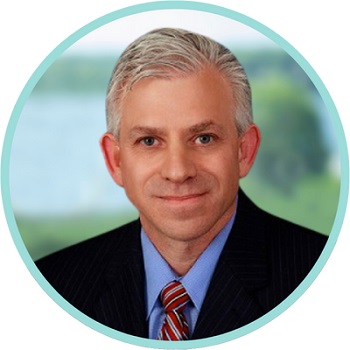
South County Health recently announced that Dr. Gerald Colvin is set to return as medical director of the Cancer Center in October. Colvin spoke with Providence Business News about his return.
PBN: Why did you choose to return as medical director of South County Health’s Cancer Center?
COLVIN: I chose to return because South County Health has a unique commitment to delivering high-quality, community-based cancer care. This is where patients are not just numbers – they’re our neighbors, family and friends. The Cancer Center has always had a strong foundation of personalized, compassionate care and I wanted to be part of strengthening and expanding that vision for the people of Washington County and beyond.
Community-based hematology and oncology is where 85% of patients in the U.S. receive their care and because the hospital system renewed its full commitment to strengthening these services, I felt that this is a natural fit for me and a great time to reintegrate caring for patients in this part of the state.
PBN: What are your goals for your new role?
COLVIN: Firstly, to deliver high-quality, coordinated care by developing a truly integrated service line. What this means is that all aspects of cancer care will be looked at and optimized to enhance quality, efficiency and patient experience. It is common that “silos” of care are naturally made between disciplines. Even the electronic medical record systems are different between providers caring for cancer patients – this reduces communication and coordination of care, and will be addressed and remedied.
In addition, there is a plan for radiation oncology, surgical oncology and medical oncology to be present for patients together under one roof with multidisciplinary clinics, so patients can benefit from a more collaborative and patient-centered approach.
Finally, given the challenges of reimbursement in Rhode Island – particularly around the high costs of chemotherapy and immunotherapy – another important goal is to find innovative ways to reduce financial strain, ensuring that our health system can continue to deliver advanced cancer care close to home.
PBN: Last year, most of South County Health’s oncology providers suddenly departed, does that concern you at all entering your new role?
COLVIN: I understand why that question comes up, but no, I’m not concerned. What matters most is that South County Health took the right steps to stabilize and rebuild the program. Today, we have a team of highly skilled, permanent oncology providers in place who are deeply committed to serving this community. That foundation gives us tremendous momentum to grow, innovate and provide the level of consistency patients and families deserve.
PBN: How accessible is cancer care in Washington County and how would the additional staff change this?
COLVIN: With the addition of new providers and expanded services, access to cancer care is better than ever in Washington County. This means we’re able to see patients closer to home, often more quickly than they could elsewhere. That also means less travel, less stress and more time focusing on healing.
Our expansion allows patients to get comprehensive care – from diagnosis through treatment – without having to leave the community they trust. Many patients do get second opinions at large academic institutions and by having more providers and expanded services, those patients that do not go on a clinical trial can get the care, as directed, locally at home instead of having to travel – sometimes up to 3 hours a day, multiple times per week – to get their care in [Hartford, Conn.], Providence, or Boston.
PBN: What are some notable trends you’ve seen in cancer care recently?
COLVIN: The expansion and improvement of liquid (blood-based) diagnostics has dramatically changed the way we care for patients with cancer. We are now able to look for evolving driver mutations in the blood in real time, as often as every six weeks.
A driver mutation is a specific mutation that “drives “ the cancer, and when blocked, kills the cancer. Even though there are more than 100 types of cancer, there are only around eight main mechanisms, and scientists have been working on each pathway. The last horizon was the RAS pathway, that has eluded us until recent clinical trials.
Work in this realm has improved our ability to give novel medications, some of which have incredibly high response rates. We also use blood-based tests to determine the amount of residual cancer that remains in a patient. This can determine if the patients have ongoing remission from their cancer. Immunotherapy continues to expand in more than 22 cancer types, with many more patients [having] long-term remission and even [being cured] from stage 4 disease. There is so much to be hopeful for in terms of new treatments.
Katie Castellani is a PBN staff writer. You may contact her at Castellani@PBN.com.