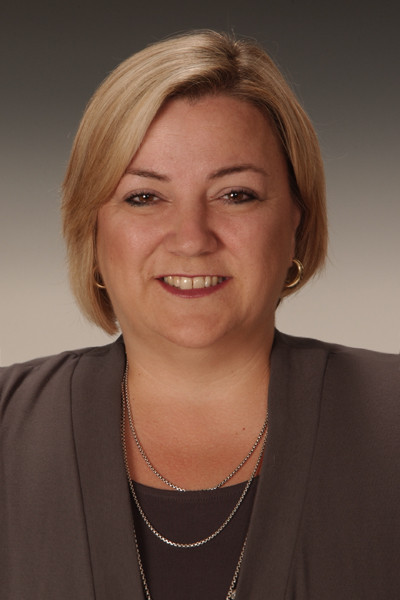
Jeanne Cola was recently named executive director of Rhode Island Local Initiatives Support Corporation, which organizes capital and other resources to revitalize distressed neighborhoods. Prior to her new post, Cola was senior vice president, director of community investment at Citizens Bank. She began her 25-year career at Citizens Bank upon graduating from Rhode Island College. She talks about her current role, where she sees LISC going from here and the housing industry among other things.
PBN: What part of your banking experience is most relevant to your new job as executive director of LISC?
COLA: Working at a financial institution for close to 25 years, I have had the opportunity to work at different levels of the corporation and in different business lines. As a result, I have learned valuable skills: leveraging resources, maximizing return on investment, creativity and partnership. In addition, I have learned an important fact: change is constant and change is good. To make the most of change, it is necessary to have the right perspective and a positive attitude.
Over its 20 year history in Rhode Island LISC has invested more than $280 million and leveraged an additional $850 million to help create more than 7,000 affordable homes and thousands of jobs for Rhode Islanders. At its core, LISC’s mission is to build strong neighborhoods and healthy communities all across Rhode Island. The skills I have learned and the relationships I have built will benefit LISC as we work to elevate the mission, maximize the investments made in our neighborhoods and communicate the outcomes. I am thankful for the opportunities I have had and I am looking forward to the opportunities in front of me at LISC.
Rhode Island's Market Has Changed. Developers, Builders, Investors and Sellers Must Change With It.
By Emilio DiSpirito IV License Partner | Engel & Völkers Oceanside Leader | The DiSpirito…
Learn More
PBN: Why did you want to make the switch from the for-profit to the nonprofit world?
COLA: LISC is not new to me. I have been involved in a volunteer leadership capacity with LISC for several years and overall with the organization for close to 15 years. I have witnessed first hand how a home can make a difference for a family and how working strategically in a neighborhood with the local Police Department can lower the crime rate and how investing in and improving childcare facilities can improve a child’s readiness to learn. Working with partners helps leverage outcomes. This is what attracted me to LISC.
LISC represents an opportunity to grow and enhance my skills in an arena that I am knowledgeable and passionate about. The work LISC does with its partners truly changes lives.
PBN: Do you expect to take LISC in any new directions?
COLA: LISC has recently completed a strategic plan that focuses on building strong neighborhoods and healthy communities. Rhode Island LISC will accomplish this by expanding investment in housing and other real estate, building family income and wealth, stimulating economic activity and fostering livable, safe and healthy environments. I look forward to continuing the work that has begun. For example, the Financial Opportunity Centers will provide individuals and families with the tools they need to build personal financial stability and to gain necessary job readiness skills to find employment. This is good for the community and it is good for the economy.
PBN: What do you see as the largest challenges facing the community in terms of access to affordable housing?
COLA: The “L” in LISC stands for “local,” and our focus will remain squarely on what works well in our communities. We’ve enjoyed some real successes in recent years in collaboration with our partners providing access to affordable housing. The biggest challenge going forward will be continuing to bring the community together – business, philanthropic, government and neighborhood leaders – to focus on and continue the conversation around how we maintain momentum and increase the resources to create more affordable workforce housing for families. For most families, securing affordable housing is the first “domino” so to speak, to an improved quality of life but Rhode Island can leverage its investment and maximize impact if the affordable workforce housing is located in thriving communities. This is why we are looking to launch the Our Neighborhoods initiative in a third community. Our Neighborhoods is a holistic community development strategy designed to revitalize and rebuild Rhode Island neighborhoods. It has been successful in Olneyville and Woonsocket for more than 18 months and we are encouraged by the progress and opportunity.
The success in Olneyville is serving as a platform to attract new community investments. As an example, Meeting Street recently announced that they will pilot their Early Childhood Initiative, “ phase one of a childhood development pipeline that will take children through high school inspired by the Harlem Children’s Zone” in Olneyville. This effort will provide a wide range of support and services to ensure that children enter kindergarten healthy and ready to learn. Meeting Street saw the commitment to the Olneyville neighborhood, the progress being made and the strong collaboration between LISC, Olneyville Housing Corporations and other key stakeholders as a value add to their program investment, an investment that will provide good solid outcomes for kids. It is exciting and gratifying to see the momentum build. It is my personal belief that the progress in Olneyville, and the work the collective group of partners is achieving, will become a national model for comprehensive community development.
PBN: Given the current fiscal and political climate both in Rhode Island and in the nation, what kind of partnerships do you expect to be making to help LISC continue to deliver on its mission?
COLA: LISC is an organization built on partnerships, and in challenging environments it is important to demonstrate value. At LISC, our mission is to build strong neighborhoods and healthy communities across the state – something that certainly takes coordination and cooperation on many levels. We will continue partnering with local community development corporations and agencies all across the state. We’ve been developing relationships in Rhode Island for more than 20 years, and corporate partnerships will continue to be important part of that. I believe my background and personal commitment to the communities of Rhode Island can be useful in developing those relationships even more deeply. I’ll be working to expand those corporate partnerships, and continue to provide holistic solutions that are more creative and leveraging every dollar. This will be a win-win for everyone.