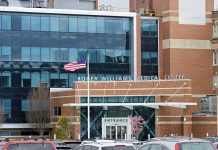
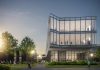
On Jan. 26, the University of Rhode Island will open its new $58-million Center for Biotechnology and Life Sciences. Although a budget shortfall will leave one floor of the new building vacant for now, state and university officials have high hopes for the new facility. Jeff Seemann, dean of URI’s College of the Environment and Life Sciences, talked with Providence Business News recently about how the new center could boost the state’s economy and how the recession is impacting URI.
PBN: Can you tell us a bit about the new center?
SEEMANN: URI’s new Center for Biotechnology and Life Sciences (CBLS) is a statement about the future of Rhode Island’s flagship public research university. It is an absolutely spectacular state-of-the-art educational and research facility designed to provide a premier environment for students and scientists to push forward the frontiers of learning and discovery.
ISO 9001:2026: A Practical Opportunity to Build for What’s Next
For Rhode Island manufacturers, ISO 9001 has been much more than a certificate on the…
Learn More
Planning for this $58 million, 140,000-square-foot building began in 2002, and with strong support from the governor, the General Assembly, Rhode Island voters and the corporate sector, we broke ground in 2006 on what is the largest academic building project in the history of URI. As importantly, it is the largest publicly-funded “green” building in Rhode Island, and thus makes another important statement about URI’s commitment to the environment and sustainability.
We officially open the doors of the center at a ribbon cutting ceremony on Jan. 26, and we think that in so doing we are also signaling URI’s emergence as one of the premier universities in the Northeast, not only in the sciences but in the arts and humanities as well.
PBN: What sorts of research and educational programs are planned for the new building?
SEEMANN: Thousands of students per year take our introductory biology classes and laboratories at URI. These undergraduates — majors in biology, pharmacy, nursing and many other disciplines — will now experience the world of life sciences, biomedicine and biotechnology in the finest educational facilities imaginable. At the same time, URI faculty, graduate students and undergraduates will work in state-of-the-art research laboratories on scientific challenges that are important to not only Rhode Islanders but people throughout the nation and world.
Our scientists will be working on developing the next generation of biofuels as alternative energy sources; creating vaccines for diseases such as Lyme disease and HIV; and carrying out discovery-based research that will support the continued development of the biotechnology industry in Rhode Island, to name just a few.
PBN: How does the building fit into URI’s broader plans for life and health sciences programs?
SEEMANN: Rhode Island is fast becoming a major player in the biotechnology, life and health sciences sector as a result of the increasingly coordinated efforts of Governor Carcieri, House Speaker [William] Murphy, President [M. Teresa] Paiva-Weed, [Providence] Mayor [David N.] Cicilline, [U.S.] Senators [Jack] Reed and [Sheldon] Whitehouse, Congressmen [James] Langevin and [Patrick] Kennedy, the state’s 11 institutions of higher education, the hospitals and the corporate sector.
The construction of the CBLS represents the continuation of URI playing a major role in this effort. Furthermore, the building is the anchor for the university’s new North District Life and Health Sciences quad. In April, we will break ground on a new pharmacy research and education building, and in the next several years we will construct complementary new buildings for nursing and chemistry, all areas of vital need for the state. These new science capabilities will be a near perfect complement to the development of medical research and educational capacities currently going on at Brown, Lifespan and Providence’s new Knowledge District. As we look ahead, we must also begin to plan for a URI research-and-development presence in Providence that complements the outstanding educational capabilities of our Alan Shawn Feinstein College of Continuing Education there.
PBN: How do you see the new center and those programs fitting into the state’s economic development picture?
SEEMANN: The CBLS is the “icon” for the new economy of Rhode Island. It represents the importance of biotechnology and life sciences in the future of the state’s economy. It represents the vital importance of our state’s system of public higher education in preparing our children for the increasingly knowledge-based work force of the 21st century. It represents solutions to the scientific and social issues that challenge our daily lives — from how to decrease our dependence on foreign oil and slow the pace of global climate change to protecting the vitality and beauty of Narragansett Bay and the world’s oceans.
The new building will be a center for long-term economic growth and prosperity in Rhode Island as its faculty attract more and more federal research dollars that fuel new jobs, important discoveries, technology transfer/commercialization and new company creation — all essential components of the economic recovery and revitalization of our state.
The CBLS will be an important resource in attracting a second $20 million round of National Science Foundation EPSCoR funding to augment the $6.75 million we have already received to help grow our state’s academic research capacity, and will serve as a focus for many of the initiatives of other organizations central to the economic transformation of Rhode Island, including the Science and Technology Advisory Council (STAC), the Research Alliance and its Collaborative Grants Program, the R.I. Economic Development Corporation, and the Slater Technology Fund.
Finally, the CBLS, new Pharmacy Building and URI Technology Park can and should serve as a focus for the investment of considerable federal economic stimulus dollars that will help power our state’s economic recovery.
PBN: The state is facing a $366 million deficit for the current fiscal year, and an even larger shortfall of $486 million next year. How is this affecting URI? What does 2009 look like for the university?
SEEMANN: There is no doubt that the state and university have some challenging times ahead, and there is similarly no doubt that URI is being negatively affected by the continued cuts in state support. However, I strongly believe that URI can and must be an important part of both the short- and long-term solutions that will be required for Rhode Island to come out the other end of this global financial downturn in not only an economically healthy position, but in a leadership position as well.
In the short term, the university must increasingly focus it capacities and expertise in order to deliver maximum value in the arenas of education, research and scholarship, and outreach and engagement. We must redouble our efforts to expand and diversify our external funding from federal, corporate and private sources. At the same time, state leadership must recognize URI’s need to operate in a more independent, flexible and agile way in a business sector that is already remarkably competitive if the institution is to deliver maximum return-on-investment to the state.
In the long term, URI — and in fact all of Rhode Island’s institutions of higher education — must be viewed as an essential target for investment in economic recovery. We know what the correlations are between a college degree and future income. We know how universities can be found at the center of every successful high-tech metropolitan development in the country. We know that universities themselves are big businesses, with the potential for thousands of high-paying jobs. So 2009 needs to be a year in which URI participates in the solution to the short-term economic crisis, and at the same time is viewed as a critical focus for investment as part of the long-term economic recovery of Rhode Island. •