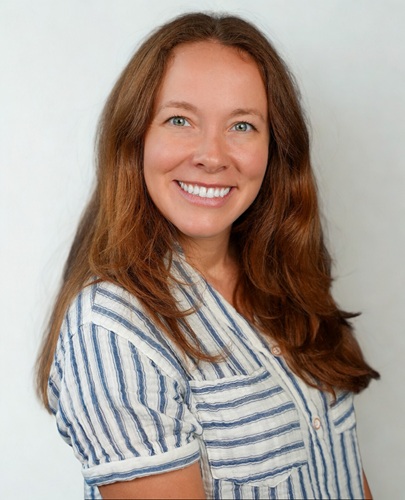
Sarah Waimon is a registered nurse and entrepreneur behind Looey, a transparent shield designed to provide better protection against splash-back during bedpan cleanings.
In April, Waimon and her product took home first place honors from the Rhode Island Business Competition.
PBN: What inspired you to develop Looey?
WAIMON: Looey was born out of firsthand experience at the bedside. As a nurse of 16 years, I repeatedly encountered a persistent problem – splash-back during the use of bedpan washers. It wasn’t until I sustained a splash to the face that I decided something needed to change.
What many caregivers accept as part of the job actually represents a real and unnecessary exposure risk. I realized this wasn’t an isolated issue but a widespread one with no true engineered solution in place. Looey started as a simple idea to solve that problem and quickly grew into something bigger: an opportunity to meaningfully improve safety and dignity for healthcare workers.
PBN: What protective measures against splash-back have traditionally been present (or lacking) for healthcare workers, and how does Looey improve safety?
WAIMON: Historically, protection against splash-back has relied heavily on personal protective equipment (gowns, gloves and face shields). While essential, PPE doesn’t eliminate the source of exposure. In many cases, there has been little to no engineering control at the equipment level to prevent splash-back from occurring in the first place.
Looey is designed as a physical barrier that integrates directly with existing bedpan washer systems, helping to stop the splash at the source. By reducing exposure before it happens, Looey adds an important layer of protection that complements PPE rather than relying solely on it.
PBN: Did you have a background in entrepreneurship prior to Looey? What was it like making the leap?
WAIMON: Other than selling lemonade as a kid, I came into this with no formal background in entrepreneurship. Looey is the first product I’m bringing to market. Making the leap meant stepping into an entirely new world. I had to learn about product development, intellectual property, manufacturing and go-to-market strategy.
I took my nursing experiences with wound care, med passes, patient assessments and translated them into a new language: business formation, incorporation, sales and marketing. It’s been both challenging and energizing. What’s helped most is knowing the problem I’m solving is real and validated by others in the field. That validation gave me the confidence to keep moving forward while navigating completely unfamiliar territory.
PBN: What resources did you find are available to healthcare innovators in Rhode Island? Conversely, what are some of the challenges?
WAIMON: Rhode Island has a strong and supportive ecosystem for early-stage innovation. I’ve been able to leverage local resources for prototyping, work with local legal experts on intellectual property and engage with organizations that support startups.
Rhode Island has a tight-knit startup community that’s genuinely accessible. You can build real momentum here quickly. The Rhode Island ecosystem has been instrumental in getting Looey to where it is today, with key support from NEMIC [New England Medical Innovation Center], RIHub, Polaris MEP and legal guidance from Hinkley Allen and Troutman Pepper Locke.
That said, there are challenges. Scaling beyond the local ecosystem requires building connections nationally. But in many ways, Rhode Island is an ideal place to start. There’s a real sense of community behind building something new.
PBN: What is Looey's status in relation to commercialization and clinical use, and what are your next steps?
WAIMON: Looey is currently in the advanced prototype stage, with strong interest from healthcare systems across the country. We’ve filed for intellectual property protection and have refined the design through feedback from a pilot study we conducted.
The next steps are focused on finalizing our design for manufacturing and continuing conversations with potential distribution and hospital partners. The goal is to move from prototype to scalable production while ensuring the product integrates seamlessly into existing workflows. Ultimately, we’re working toward broad adoption so that this simple solution can have a meaningful impact on healthcare worker safety.
Jacquelyn Voghel is a PBN staff writer. You may reach her at Voghel@PBN.com.