Providence-based Vision 3 Architects recently received accolades for its green building incentives. In addition, the firm has been taking steps to lower energy consumption at its offices.
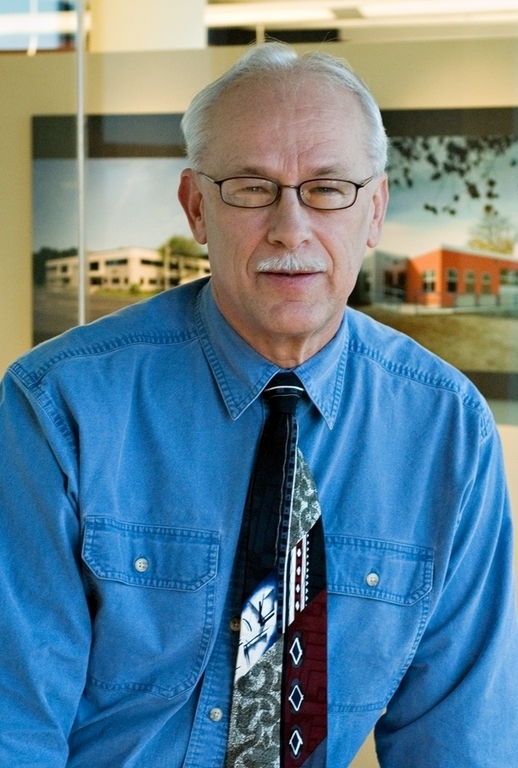
Founded in 1987, Vision 3 Architects handles commercial projects ranging from educational buildings to hospitality centers. Principal William Gray recently spoke with Providence Business News about the firm’s work, including the Home and Hospice Care of Rhode Island headquarters in Providence and the Child and Family Community Center in Middletown.
PBN: Could you sketch out the areas your company focuses on, and the types of projects your architects have worked on lately?
GRAY:Vision 3 Architects is focused on bringing creative thinking and innovative solutions to our clients. By combining this commitment with attention to detail, respect for what things cost, and being responsible design stewards of the environment, we have built successful client relationships and projects, and have had fun doing it. Our practice promotes specialization in design for hospitality, corporate office education and health care markets.
We compete and differentiate ourselves in these major market segments by our depth of knowledge and experience in each. As a result, we are able to bring value-added services to our clients in these industries. The office is structured into teams, where teams are defined by the markets they serve. Each team is led by a principal and senior team leader, and has a core group of professional staff that is committed to developing specialized skills and knowledge that support the team’s goals and objectives.
The biggest project active in our office right now is the new world headquarters building for FM Global in Johnston. We are pursuing LEED Gold Certification for it. The ribbon-cutting ceremony is scheduled for mid-September; it should be quite an event.
Building a Strong Data Foundation in the Age of AI
Artificial intelligence (AI) has become a key priority in the boardroom and across management —…
Learn More
PBN: You recently ran an experiment at your Providence office in which you turned off the lights during daylight hours. How did that work out? Would you recommend it for other offices?
GRAY: Actually, our “lights-off experiment” was not just an experiment. It was part of a planned critical analysis of our corporate culture, business practices, and overall carbon footprint as they relate to our being environmentally responsible. Specific to “lights off,” everyone was on-board with it. We have a lot of natural light in the office, but where needed, people used LED task lights. This has been, and continues to be, a grass-roots initiative in the office, so staff adapted well. Even now, most of our general overhead lighting is off during daylight hours – not as office policy, but simply because people have found they don’t need to turn it on. As a company, we’ve become much more attuned to wasteful energy habits that we developed over time.
Actually, as part of our critical self analysis, we combined “lights off” with computer “sleep mode” and alternative thermostat control settings. Normally, our HVAC units are set with fans running constantly to circulate air in the office. During the test period, we set the controls so that fans would only cycle on when heating or cooling was called for. When combined, all our energy saving initiatives produced a 30 percent to 50 percent reduction in energy consumption during the test period – pretty substantial. Before moving on, I have to say that our in-house team of LEED-accredited professionals, affectionately referred to as “GangGreen,” spearhead this ongoing drive to reduce our carbon footprint. That’s why it’s being successful.
Truthfully, I don’t see how anyone, or any company these days, cannot be examining their own practices, policies and lifestyles to become more environmentally responsible.
PBN: Two of your projects recently won the Green Building of America Award. Can you tell us a little about the projects and what made them green?
GRAY: Yes, you’re talking about the new Child & Family headquarters building in Middletown and Home & Hospice Care of Rhode Island’s new facility in Providence. We were actually surprised, but obviously quite pleased, when notified of these awards. Each project provides a different perspective on our approach to how we work through a responsible, decision-making process with our clients. In both cases though, engagement of the client in a green design dialogue and educational process was extremely important to the success of the project.
Home and Hospice Care wanted to pursue LEED certification to support their company philosophy and commitment to sustainable practices. Child & Family on the other hand, did not care about LEED Certification, or green design. Their motivation was to maximize the value of their investment by controlling initial cost, improving building performance, and reducing long term operating expenses. Pursuit of LEED certification tends to be a more routine process that involves submittal of documentation to the U.S. Green Building Council (USGBC) in support of seeking its award of points that are added together to determine the level of LEED certification achieved
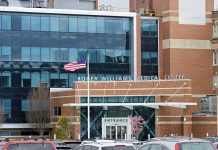
Right now, on the Home & Hospice Care project, we are still in the documentation phase with the USGBC, but certain key points have already been awarded. The decision to reclaim an existing building rather than build new was significant for obvious reasons. Other major design achievements already awarded points are that 90 percent of the occupable spaces have views to the exterior, not a small accomplishment in an existing building. Our electrical and HVAC systems are designed to be 25 percent more efficient, and water consumption is 30 percent less. In addition, and to their credit, Home & Hospice Care is under contract to purchase 45 percent of their power from renewable energy sources. At the end of the process, we expect the project to be awarded LEED silver, if not gold, certification.
On the other hand, Child & Family’s motivation led us to bring National Grid and its Advanced Building Systems program to the table. We were the first in Rhode Island to take advantage of this program. Simply put, National Grid offers cash contributions to owners who spend more money to implement proven energy efficient systems and improvements in new building construction. The owner benefits long-term from building performance and energy saving improvements, and short term from cash contributions to defray the costs of implementing more efficient building systems and controls.
Under this program, our design team worked closely with National Grid’s team to specify building envelop improvements such as high-performance glass, and increased building insulation; HVAC upgrades including heat recovery, and CO2 sensors to monitor indoor air quality; and, electrical improvements that range from specification of high-performance motors and fans, to installation of lighting control sensors. In the end, Child & Family received a check for over $76,000 from National Grid to help defray the incremental cost of energy efficiency improvements that totaled about $149,000. It was a real win-win situation.
PBN: What recommendations do you have for those planning construction projects in terms of reducing energy consumption and being environmentally friendly?
GRAY:It’s pretty simple. Anyone planning construction projects at any level should be looking to engage design professionals and contractors who have a proven track record and commitment to deliver and build creative, innovative, sustainable design solutions for their clients. Especially in today’s economy, working on the client’s behalf to do this, and helping to bring potential financial resources to the table, whether in the form of cash, rebates, tax credits or grants to help achieve long-term operational and quality of life improvements to the built environment, will differentiate design and contracting firms in the marketplace.
PBN: What is the next green project your firm is working on?
GRAY: Not to be flip, but the next green project we’ll be working on is the next one to come in the door, whether the client knows it or not.