Biotech giant Genzyme Corp. has sold off its Fall River-based cardiothoracic unit nearly seven years after acquiring the business.
Teleflex Inc., a Pennsylvania-based manufacturer of products for the medical, aerospace and marine industries, is the new owner of the cardiothoracic unit, called Genzyme Biosurgery, located in Fall River’s industrial park.
Teleflex will pay $32.4 million in cash and nearly $8 million in trade obligations for Genzyme’s cardiothoracic unit, which employs approximately 430 people in Fall River and 20 in Coventry, Conn.
ISO 9001:2026: A Practical Opportunity to Build for What’s Next
For Rhode Island manufacturers, ISO 9001 has been much more than a certificate on the…
Learn More
Teleflex Medical and Genzyme have developed a transition team to assess everything from the company name to whether or not there will be layoffs.
“They develop a plan for bringing the two companies together,” Julie McDowell, a spokesperson for Teleflex, said of the team. “They look at what we can do to best serve our customers and how to combine products.”
McDowell would not comment on what would happen to the facility or its employees but did say that the transition team is meeting with employees over the next three weeks to discuss what will happen in the future.
“We haven’t made any announcement about that,” McDowell said about potential layoffs. “The transition team has to do their assessment and it will take some time.”
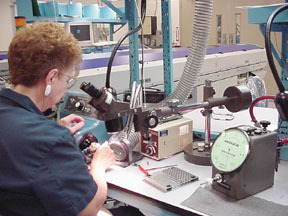
Genzyme said the company no longer had use for the unit, which manufactures specialty surgical devices for the treatment of heart disease and broader surgical applications, because it no longer fits into Genzyme’s core business of biotechnology.
“We acquired that business initially for the product and sales force which helped us launch products that we were trying to sell into the surgical community,” said Dan Quinn, a Genzyme spokesperson.
“It made more sense as a biotech company not to be immersed in other surgical devices and to divest that part of the company. This is only a small part of the business.”
The unit, with 2,500 customers in 45 countries, produced $76 million in revenue compared to the $1.3 billion in revenue produced by Genzyme as a whole.
Teleflex has big plans for the unit, which will be rolled into Teleflex Medical, a $400 million division of Teleflex Inc., in order to expand the company’s surgical device offerings by including chest draining and cardiovascular and valve suture products.
“We have a number of hand-held instruments marketed in cardiovascular but not specifically for cardiothoracic, so it really is complementary,” McDowell said. “This expands Teleflex’s ability to develop new products for the cardiovascular and cardiothoracic markets.”
By selling off assets of its biosurgery unit, Genzyme can now focus on its investigational gene therapy treatment for severe peripheral arterial disease. Peripheral artery disease causes pain, cramps and fatigue in one or both of a person’s legs.
One year ago this week, Genzyme announced that it had completed Phase I clinical trials of the treatment at St. Elizabeth’s Medical Center in Boston, the University of Michigan and the Atlanta Cardiology Research Institute.
Genzyme’s other area of focus is on its Phase II human trial. The trial tested
the safety and effectiveness of cardiac cell transplantation – a new therapy
developed to prevent progression of heart failure in patients who experienced
heart attacks.
For the complete current issue, visit our subscription Web site, or call (401) 273-2201, ext. 227 or 234.