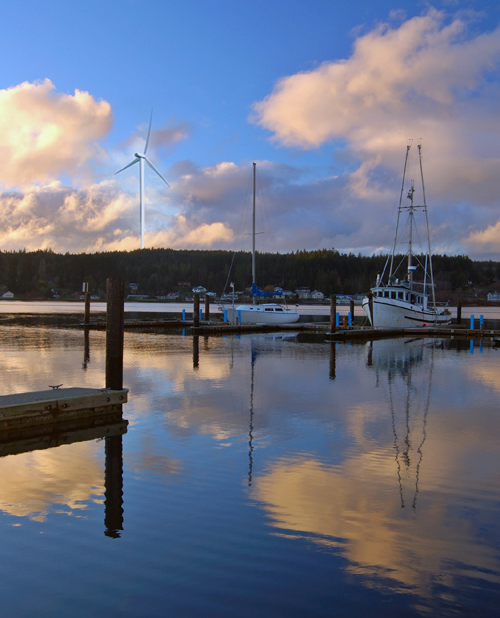
Gilbane Inc. – the Providence-based construction and development giant – is getting involved in the business of erecting wind turbines.
In September, the company won a $12.2 million contract to oversee the construction of three wind turbines at a Providence wastewater treatment plant. The project will mark Gilbane’s first foray into the wind business and the start of a strategy to chase similar projects around the country.
“This is not going to be our first and last,” said Tom Leasca, Gilbane’s vice president for business development and special projects. “Gilbane always looks for long-term relationships in any market we go into.”
Leasca said he and his team spent the better part of 18 months considering whether the emerging business of erecting wind turbines made sense for a company better known for constructing schools, hospitals and office buildings. Executives mulled the expertise required, the potential safety risks and the ability to put up towering structures without shutting down surrounding operations.
“We did a lot of soul searching within our organization to make sure it was a risk we would take,” Leasca said.
Gilbane’s interest in the market budded after the 2009 passage of the American Recovery and Reinvestment Act that sent municipal officials scurrying for building projects. Local officials started talking about new schools and public buildings accessorized with wind turbines. Gilbane responded by incorporating wind turbines in its proposals. But the projects never went anywhere because the federal money never materialized, Leasca said.
Instead, something else happened. Gilbane works for many wastewater and water-treatment facilities – heavy energy users that often sit on waterfront land with plenty of wind and few obstructions. Plant officials started exploring installing alternative energy sources and Gilbane started paying attention.
Then the Providence wind turbine project popped up. Gilbane had worked with the plant’s operator, the Narragansett Bay Commission, before on the Combined Sewer Overflow project. And the scale of the farm – three 1.5-megawatt turbines reaching 360 feet to the blade tip – appeared to match what plant officials elsewhere were mulling.
Gilbane will manage construction of the project, but take it one step further than a typical contractor. Gilbane executives are recommending the brand of turbines to erect and, working with partners, crafting the design of the system. The company brought on Glynn Electric from Massachusetts for the electric design, Barnhart Crane & Rigging from Tennessee to lead the erection of the turbines and Atlantic Design Engineers from Massachusetts to help with the design. Gilbane executives envision similar partnerships first in the Northeast and then spreading to the rest of the country.
“The approach here is on strategic teaming,” said John Kaplin, a project manager who will oversee the Providence job. “Gilbane’s strength is as a construction manager and managing a project.”
Leasca said Gilbane executives do not know how much of Gilbane’s business could someday come from renewable energy projects. At $12.2 million, the Providence deal is less than the $20 million average Gilbane contract.
But Gilbane is not complaining. It’s a project the company can put in its portfolio and take to other wastewater plants. It comes at a time when the poor economy has hammered the construction industry as governments and businesses scale back building projects in the face of shrinking budgets.
And wind turbine projects could serve as the first step into a larger renewable energy market. Leasca said wind turbines currently make the most economic sense in the Northeast compared to other technologies like industrial-sized solar farms. But as technology improves and the energy market changes, companies may start commissioning solar farms and Gilbane wants to be known as a company that can tackle renewable energy projects.
“Things are happening in this market pretty fast right now,” Leasca said. •