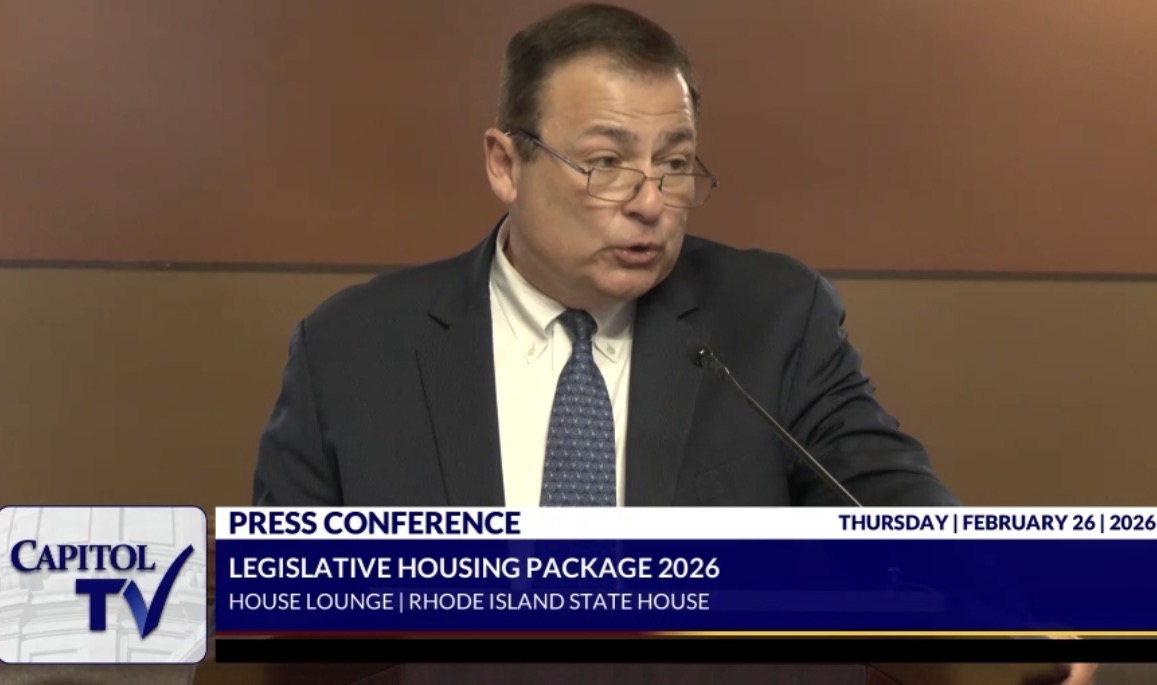
PROVIDENCE – House Speaker K. Joseph Shekarchi on Thursday announced a new package of legislation he is backing to facilitate new housing development and streamline the regulatory approval process.
“While Rhode Island remains a relatively affordable option for people moving here from other states, our own residents are too often priced out of the neighborhoods they grew up in,” he said.
Much of the legislation stems from testimony heard before two special legislative commissions which have been meeting regularly since July 2022.
“Across Rhode Island, cities and towns are making real progress in expanding housing opportunities,” said Randy Rossi, executive director of the Rhode Island League of Cities and Towns, adding that the organization “looks forward to continuing to work closely with the House and Senate this session to advance practical, technical improvements reflecting the experience of our members on the front lines.”
Shekarchi's efforts includes a bill modifying the state building code to allow single-staircase construction in residential buildings of up to four stories and 16 units, adhering to all applicable fire codes.
Additionally, there is legislation to facilitate the adaptive reuse of state-owned vacant buildings into housing, including the conversion of municipal schools.
Another bill would limit tax rates for new residential rental units that include designated affordable housing in construction or adaptive reuse projects.
And a bill sponsored by Shekarchi would amend Rhode Island’s existing Homeless Bill of Rights by adding a provision requiring a minimum of 15-day notice to individuals and families affected by encampment disbanding, with exceptions for emergencies.
Rep. June S. Speakman, D-Warren, chair of the Special Legislative Commission on Affordable Housing, said that this year’s package, in particular, “addresses the struggles that renters sometimes face in finding affordable, stable housing that meets their families’ needs.”
Other proposals in the package include:
- Permitting property owners in areas with water and sewer capacity to subdivide property for single-family residential development under specific conditions
- Setting maximum parking requirements for multifamily housing in transit-accessible areas
- Enabling cities and towns to permit supportive and functional emergency units, such as Pallet shelters, temporarily during emergencies.
- Creating a commission to study and review the Condominium Act to modernize the state’s condominium laws, which have not been updated in over a decade
- Making technical amendments to clarify and amend processes and requirements in the Zoning Enabling Act, Low- and Moderate-Income Housing Act, and Subdivision Act
Shekarchi argued that Rhode Island has now become a model for housing policy in other states, and reducing red tape in the development process has led to a rise in building permits.
Indeed, in 2023 the state saw a 70% increase in building permits, the most in a single year since the Great Recession.
“But building takes time, and we are still trying to play catch-up for all the years that Rhode Island was dead last in the country for new housing starts,” he said.
Gubernatorial candidate Helena Foulkes is set to roll out her own housing plan early next week, which includes a millionaire's tax to create a revolving fund aimed at building 20,000 homes and apartments, “and a strong push for modular housing,” according to campaign spokesperson Angelika Pellegrino.
This marks the sixth such package in Shekarchi has backed multi-year effort to address the state housing crisis.
Since becoming Speaker in 2021, the General Assembly has enacted 60 new housing laws. Joined by elected officials and housing advocates during a press conference in the House lounge, Shekarchi said that more legislation is required to help reduce prices and increase inventory.
Christopher Allen is a PBN staff writer. You may contact him at Allen@PBN.com.