PROVIDENCE – At first glance, a day in the Hope Scholars Initiative might look like a typical classroom scene, with students meeting in a small group as they annotate, analyze and make personal connections to a text.
But unlike a more commonplace school environment, students aren’t just analyzing textbooks or novels. Here, they’re unpacking a hip-hop album.
The music genre takes a front-and-center role in the educational approach developed by founder and entrepreneur Harrison Grigsby.
The "Album Club," for instance, which functions like a book club for music, gives students an opportunity to "annotate and write lyrics that connect to a personal theme or personal experience, or a positive experiment in their lives,” Grigsby said. “It’s a way to examine and explore trauma that they probably have been normalizing," which can manifest in ways like post-traumatic stress disorder.
“We want them to understand what they experienced or are experiencing,” he continued, “and how we can change that in a strength-based way."
For students who have been let down by traditional education systems, Grigsby said, hip-hop can serve as a bridge between education, personal interests and lived experiences that educators commonly dismiss or stigmatize.
"Many educational institutions ... don’t allow for marginalized groups to see themselves," Grigsby said. "And many young people identify with hip-hop culture."
Despite the genre’s popularity, he added, hip-hop is often dismissed in traditional school settings, "because there is cultural incompetency from staff and administration."
Black and brown students face particular stigma under this hyper criminalized system, Grigsby said, and additional challenges in finding understanding mentors: Less than 2% of public school teachers are Black men, for instance, according to data from the National Center for Education Statistics.
By bridging these gaps in representation and cultural understanding, Hope Scholars Initiatives provides immediate and long-term support for vulnerable students who are often at high risk of incarceration, whether that's through meeting immediate literacy needs or facilitating pathways to higher education and workforce development opportunities.
"The foundation when we come in is having an understanding of that cultural identity and speaking their language,” Grigsby said, with a goal of "making connections to literacy, to college readiness, and most importantly, to social and emotional learning, where we’re not vilifying them for their experiences."
Hope Scholars Initiative currently offers this programming as part of the regular school day at A-Venture Academy in Providence.
Even for Grigsby, the idea of applying hip-hop music to education wasn't immediately obvious.
An educator, musician artist, and Providence native, Grigsby has worked in higher education for nearly two decades at the Community College of Rhode Island, Rhode Island College, Roger Williams University and College Unbound.
For much of that time, Grigsby said, he couldn’t envision a world where his work as an educator could intersect with his artistry.
"But what would happen is students who were familiar with my music would come into my office," Grigsby said, "and I recognized there was a connection there. That was a starting point for serving my students."
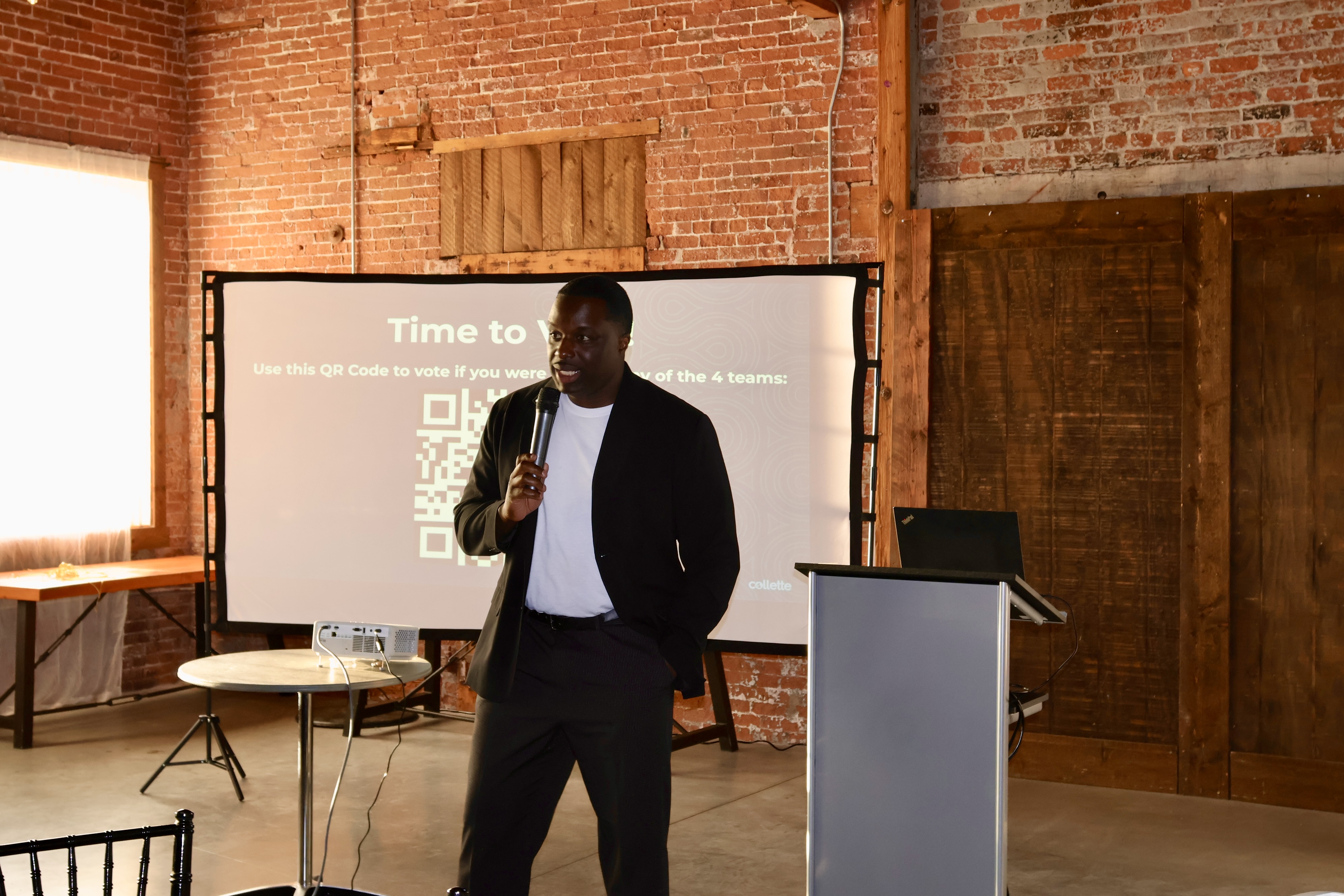
Since those beginnings, Grigsby and Hope Scholars Initiative have won recognition and funding from organizations like the Papitto Opportunity Connection and Leadership Rhode Island. Last week, Grigsby took first place at a
pitch contest marking the conclusion of Growth Lab, an entrepreneur development program offered by Social Enterprise Greenhouse and Collette travel services. He has also given guest lectures at Harvard University and the University of Rhode Island.
Looking forward, Grigsby envisions a program hub and eventual expansion throughout the U.S.
He also wants to establish a recording studio for students and to expand on mentorship and workforce development programming.
Representation, a tenet of Hope Scholars Initiative, also played a major role in Grigsby's entrepreneurship journey.
After connecting with established hip-hop educators and attending a Columbia University event focused on this specialty, Grigsby said he felt the confidence to move forward with his own venture.
The hip-hop educators who inspired him "bring joy to the classroom," Grigsby said. "They’re being their most authentic selves. They may have tattoos. They’re unabashed about who they are, because this is an arm of connection to the young people they serve, so they leverage that."
Jacquelyn Voghel is a PBN staff writer. You may reach her at Voghel@PBN.com.