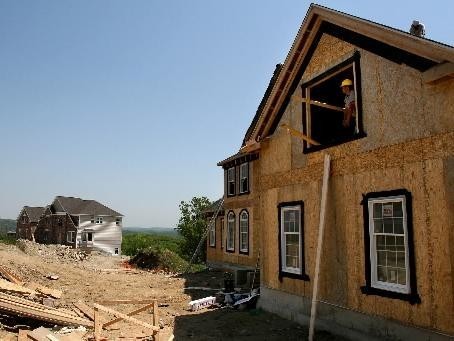
WASHINGTON – Housing starts nationwide fell in May to a seasonally adjusted annual rate of 1.47 million, a decline of 24.2 percent from the May 2006 rate of 1.94 million, according to a report today by the U.S. Census Bureau.
“There is still some more downside to the housing market,” Nariman Behravesh, chief economist at Global Insight Inc. in New York, told Bloomberg News. “Mortgage rates started up again and there is still a shakeout going on in subprime.”
ISO 9001:2026: A Practical Opportunity to Build for What’s Next
For Rhode Island manufacturers, ISO 9001 has been much more than a certificate on the…
Learn More
The rate of decline seemed to be slowing, however, as starts fell 2.1 percent in May from the revised April rate of 1.506 million units per year.
The decline in new construction was less than anticipated, according to a Bloomberg survey of 68 economists that predicted a 3.7-percent decline from April’s originally reported rate of 1.528 million.
Increases in new construction in the Northeast and Midwest – where housing starts increased 15.7 percent and 15.5 percent, respectively – were more than offset last month by declines in the South (1.6 percent) and the West (19.7 percent).
Permits issued for privately owned housing rose 3.0 percent compared with April to a seasonally adjusted annual rate of 1.501 million in May – exceeding the Bloomberg survey’s 1.47 million forecast – as the Northeast’s 6.5-percent decline was more than offset by increases in the Midwest, South and West.
Compared with May 2006, the rate at which new permits were issued declined in every region, falling 21.7 percent nationwide.
The housing construction slump is the worst since 1990-1991, paring 0.9 percentage point from first-quarter growth in the gross national product, after chopping 1.2 percent from the GDP in the second half of 2006, Bloomberg News said.
The effect is likely to continue. Housing inventory remains at record levels, and economists in Bloomberg’s survey predicted the U.S. economy will grow 2.1 percent this year, slowing from the 3.1-percent average of the past three decades.
Additional information, including the full New Residential Construction report released today by the U.S. Census Bureau and U.S. Department of Housing and Urban Development, is available at www.census.gov.