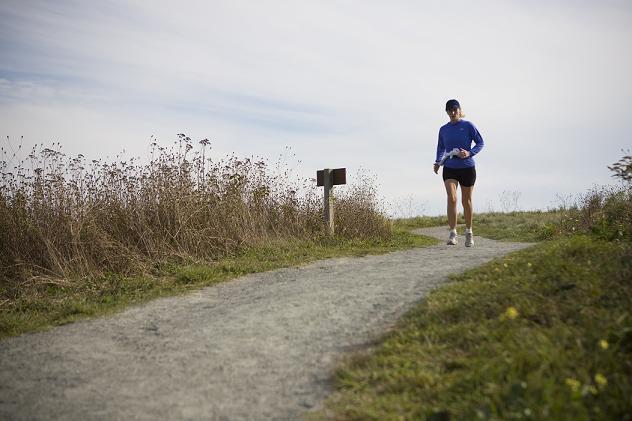
Are you a bird watcher? Or do you love to walk along the water’s edge – on the rocky cliffs, or perhaps near the marshes and coastal ponds?
Perhaps you like your nature beautifully manicured, as in the Blithewold Mansion, Gardens and Arboretum, or the Green Animals Topiary Garden?
Whatever a nature lover’s preferences, the R.I. Division of Tourism has made it easy to find beautiful spots in the state by creating a list of “nature trails” on VisitRhodeIsland.com, the state’s official travel Web site.
And although there are no specific statistics gauging how many visitors the listing has steered to those sites, they are known to have generated “huge interest,” said Mark Brodeur, director of operations for the Tourism Division.
“Recreation is an important element in vacationing, especially for the younger boomer and the Gen-Xs coming up,” he said.
The sites, about 40 total, are grouped into four clusters: bird watchers, coastal, garden and hiking. The setup reflects a new approach in tourism that links tourist spots through types of destinations, rather than geographic closeness.
On the Coastal Nature Trail, for example, tourists might visit Napatree Point Conservation Area in Westerly and Settler’s Rock on Block Island.
The marketing is a step in the right direction, said Catherine Sparks, chief of forestry for the R.I. Department of Environmental Management, which oversees many of those sites. The DEM Web site itself does not do as good a job promoting them, she said.
“I would like to improve what’s up on the Web site for our management areas – campgrounds and beaches. I think we could probably better describe them on the Web site,” she said. “I think in this day and age, anything you do in that regard is a plus.”
This approach also fits with a growing trend in tourism of visitors wanting to know exactly what to expect when they go somewhere, and seeking a very specific kind of place, Brodeur said. And it allows tourism officials to pitch more specific ideas to tourism magazines and media outlets.
“What we call this is special-interest marketing,” said Brodeur. “We know if we create an experience that meets the needs and the desires of the consumer, they’re more apt to learn more about it or come and experience it.”
And the Rhode Island Nature Trails Web site isn’t short on hints for visitors to spend a little more time in state. “After a day exploring the Ocean State’s magnificent coast, stop at one of the state’s many clam shacks,” the Coastal Trail Web site urges.
“It’s our job to package a program that is going to draw them to experience the type of assets that we have here,” Brodeur said. “So we’re using the nature trails, trails that go to farms or bird watching, as ways we can get the consumer to start to plan a longer stay here in Rhode Island. And it really works for us.”
Grouping and describing the trails also increases the possibility that Web surfers will stumble upon the Web site without looking. Since they were grouped, there has been an increase in the division’s search engine optimization, where the trail Web site ranks in Internet searches about certain topics. If a potential visitor searches for “bird watching Rhode Island” on Google, the first-queued Web site is the R.I. Tourism Division’s.
This year, the trail sites have seen a 10-percent increase in traffic, leading to more surfing around to other sections of the site – visitors average 8 to 10 minutes there, Brodeur said, and now about 75,000 to 100,000 visitors visit each month.
“We know that it is content that really drives people into a site organically. Then, from there, we’re actually seeing people navigate through the site to areas that include kayaking or Jewels of the Bay,” Brodeur said.
The Audubon Society of Rhode Island, with 14 wildlife refuges and 31 miles of trails, operates the largest portion of recreational refuges in the state, said Jeff Hall, director of advancement. The society takes a similar marketing approach with a 35,000-copy annual guide that gets spread around Rhode Island.
Both Hall and Sparks said that there is high traffic on Rhode Island’s trails
“There are almost always people out walking and hiking, horseback riding,” said Sparks. “There’s a great deal of pressure on our recreational lands.” •