The town of North Kingstown has put federal environmental regulators on notice: A lawsuit is coming.
The written warning sent by certified mail to the U.S. Environmental Protection Agency Thursday by Marisa Desautel, an environmental lawyer hired to represent the town, marks what is the second legal challenge to a sludge treatment plant proposed for Quonset Business Park. The 60-day notice, required under federal regulations, contends that permitters made a mistake in clearing the project’s pollution impacts with a less stringent classification. Similar disputes over air quality and pollution from the project were featured in a state lawsuit filed by a coalition of local residents in late April.
Building a Strong Data Foundation in the Age of AI
Artificial intelligence (AI) has become a key priority in the boardroom and across management —…
Learn More
“Right now, the direction of the project is out of our hands, so we’re doing what we have to do to protect the residents and the community,” Town Manager Ralph Mollis said Monday.
Mollis acknowledged the industrial park and its 11-member appointed board of directors have been an economic asset to the town during its 22-year history.
“This is a recent project where we are on different pages,” he added. “We’re hoping in the end, a different location will be found.”
The $225 million project – heralded by developer QSS Biosolids as a solution to the state’s shortage of sewage treatment options – has already been put on hold until at least June 1, 2027, under a pair of bills approved by the Rhode Island General Assembly on its final day of session. But concerns remain over the project and the process by which it already received some preliminary authorizations – including a lease agreement with the Quonset Development Corporation and air quality permits through EPA and Department of Environmental Management.
“As far as we’re concerned, there’s still a possibility this project’s going forward,” Mollis said. “We wouldn’t want to have to wait and be reactive rather than proactive.”
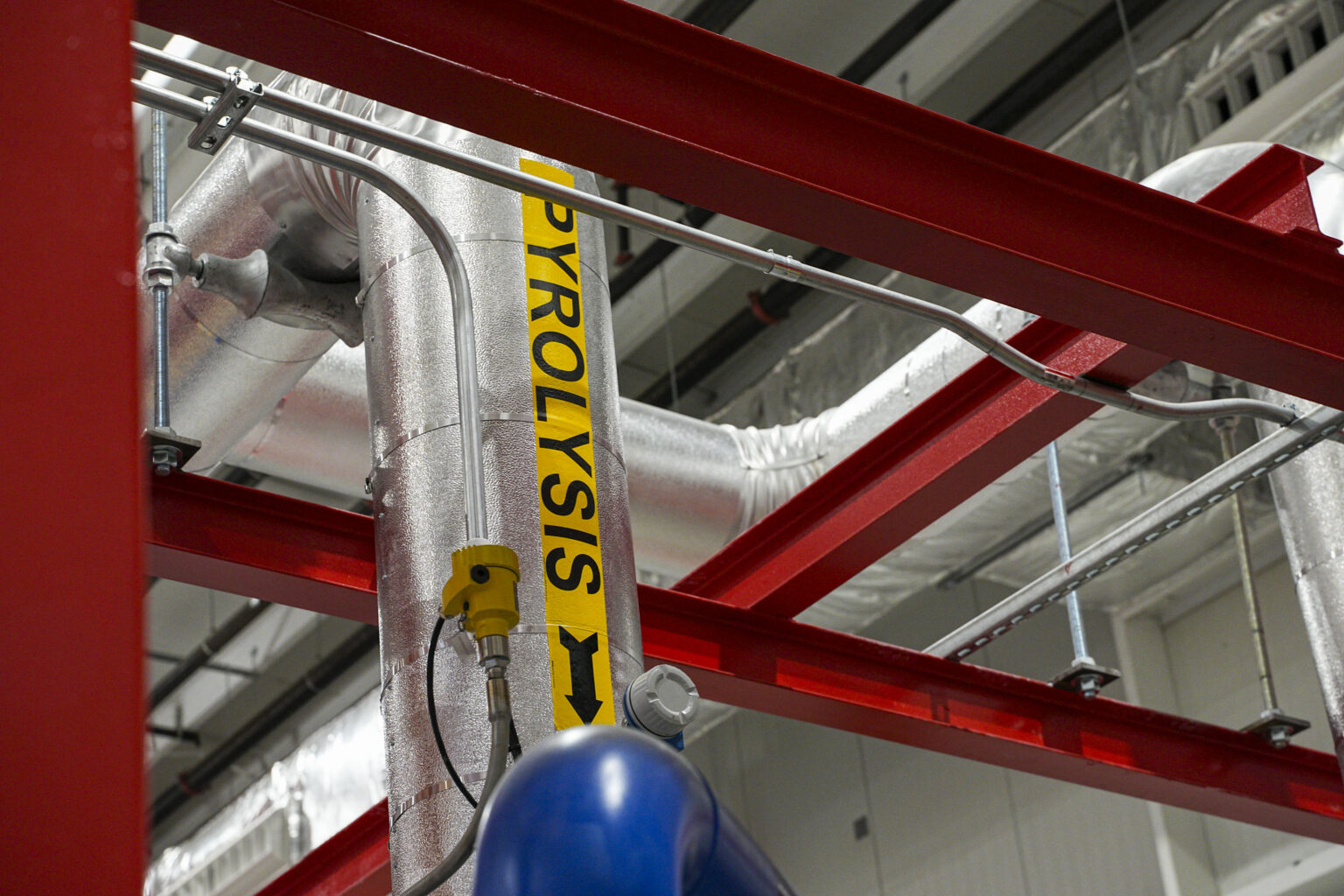
Federal and state environmental regulators agreed with the developer’s analysis that the project warranted a “minor” air quality permit – issued from EPA in May 2025 and DEM in January – because it does not use traditional incineration to turn solid sewage waste into a disposable byproduct. Instead, QSS proposes to incorporate an emerging technology called pyrolysis, which uses an oxygen-less (and therefore flame-less) high-heat process to break down sludge into nutrient rich biochar.
Based on EPA’s own definitions, a traditional solid waste incineration plant requires a “major” source permit for air quality and odor control, which includes a more rigorous review and mandatory public hearings. Pyrolysis is not listed in either federal or state regulations governing incineration and waste management.
Desautel argued in her letter to the EPA that the Quonset plant warrants this more stringent review, noting the combined pollution impacts from the proposed sludge processing plant and the same company’s wood chip pyrolysis facility already in operation three miles away. QSS also indicated in its application to the Quonset Development board that it might want to expand its sludge plant to serve as an electricity generator, fitting in with parent company Green Development’s portfolio of renewable energy and storage projects.
“You have to look at this as a neighborhood classification,” Desautel said in an interview Monday. “It’s a bigger emitter than just the pyrolysis site.”
Desautel recommended the town pursue the filing with federal regulators as a first step in part because it gives the parties involved a chance to rectify the perceived problem without formal litigation. If the EPA agrees with the town’s conclusion that a major air source permit is warranted and begins that review process, that would address at least preliminary concerns, Desautel said.
The decision not to sue project developers in state court, as town residents already have, also reflects the lack of information available, Desautel said.
To that end, her firm has received some information in response to public records requests filed on the town’s behalf but is still awaiting “significant” portions of the information it requested from the EPA, Quonset Development Corporation and Narragansett Bay Commission.
Mollis on Monday said none of the records requests have been denied, but that the responses have been “slow” with various public agencies seeking deadline extensions due to the volume of information requested.
Spokespeople for EPA and DEM declined to comment.
David Preston, a spokesperson for Quonset Development, said the quasi-public agency has completed the document requests as of June 1, but that Desautel’s firm has not responded to its request for receipt and $90 in payment to share the records.
Desautel said the check to QDC was mailed on Thursday.
A spokesperson for QSS did not immediately respond to requests for comment.
North Kingstown Town Council authorized the town to retain Desautel Browning as its legal consultant in late April. As of Monday, the town has paid the firm $30,000 for its work, Mollis said.
Nancy Lavin is a senior senior reporter for the Rhode Island Current.