PROVIDENCE – It’s going to be a "gangbusters” year for the consumer in 2026 as income generated from labor begins to outperform the financial markets, a reversal of the trend that has held for several years.
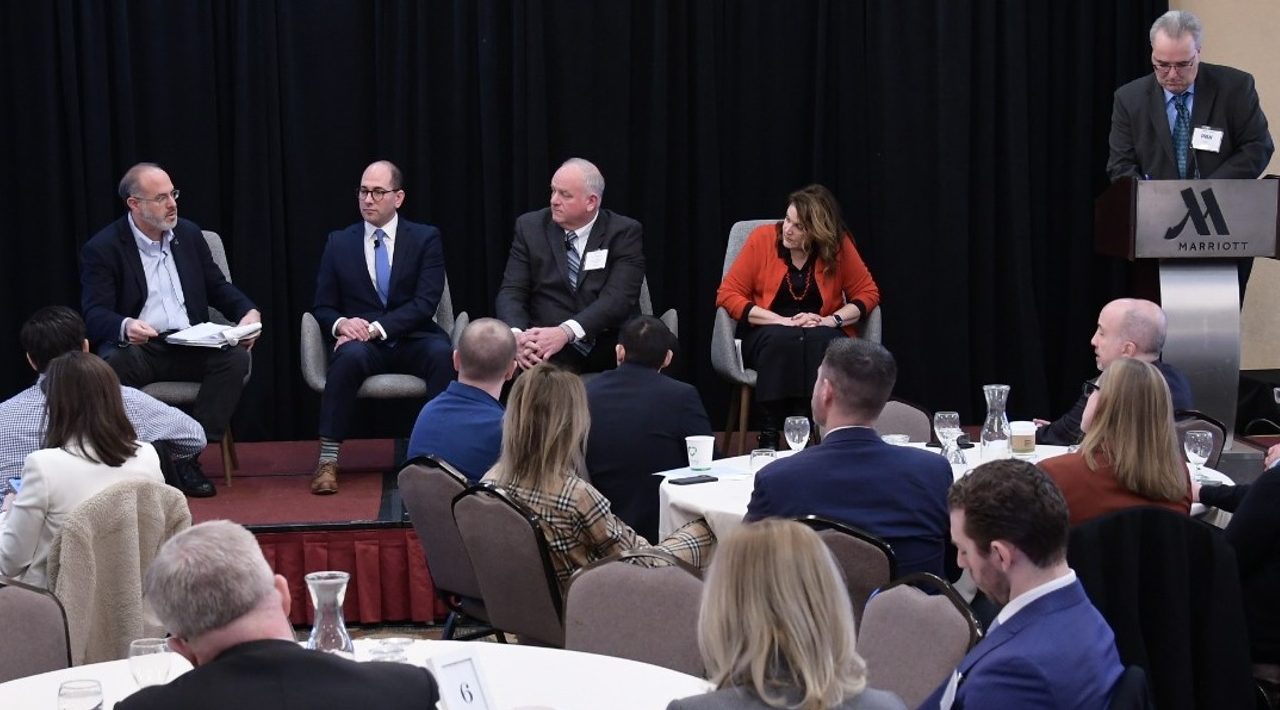
That was the analysis presented Thursday morning by Thomas Tzitzouris, head of fixed income research at New York City-based Strategas Research Partners and the keynote speaker at Providence Business News’ Economic Trends Summit held at the Providence Marriott.
In the near-term, with Trump tax cuts expected to provide an additional $1,000 more to households in tax returns, Tzitzouris said that will ensure a “smooth" dip in consumption until the summer when spending ramps up again.
There will also be a short-term boost in business spending, with purchases of capital goods alone estimated to double from $33.5 billion last year to $65.1 billion in 2026.
But whether it's deficit spending by Democrats or tax cuts by Republican administrations, Tzitzouris said both political parties have become hamstrung to continue a federal monetary policy that dominates the national economy, a fiscal policy that prioritizes government and from which neither has an incentive to deviate.
This has shortened business cycles to two years, bringing economic stimulus in even-numbered years but overall leading to more volatility, he said.
‘You’re picking winners and losers along the way,” he said. “That’s where [we] are today.”
Overall, inflation is likely to come in just under 2.6% in 2026, moving “sideways” for the rest of the year. But wage growth in the following two years of around 4% will likely bring inflation back above 3%.
Locally, Tzitzouris said state government finances are comparatively healthy, but many Rhode Island municipalities are “horrific,” which is a drag on state balance sheets.
And as baby boomers retire, birth rates continue to stagnate, and income growth remains weak, there is a “rigidity" in the Rhode Island labor market, meaning there will be less cushion in the event of a future recession, he said.
This labor supply shock, with participation rates remaining depressed, continues the longtime issue of businesses struggling to recruit new talent. "If they try to hire, the labor is not there,” he said.
In addition, Rhode Island is getting dangerously close to a housing bubble that, if popped, could drop average home prices between 30% to 50%.
During a panel discussion at Thursday’s summit, R.I. Secretary of Commerce Stefan Pryor said he is seeing some encouraging trends in the state economy. He said any hiccups should be credited to federal policies such as higher import tariffs and a political environment that is creating uncertainty for businesses.
“There are cost increases that are affecting their everyday [operations],” Pryor said.
This includes manufacturing companies such as East Providence-based igus Inc., the U.S. arm of a global engineering and manufacturing company, which has reported losing $3 million or more from the tariffs, according to Pryor.
The Rhode Island Hospitality Association has reported feeling similar effects.
From bigger companies to smaller shops, the hurdles facing Rhode Island businesses “are real and they are national and global,” said Pryor. “But the best way to predict the future is to create it.”
A rise in luxury spending has continued to bolster the hospitality sector, said Kristen Adamo, CEO and president of the Providence Warwick Convention & Visitors Bureau.
“The people that do have money are spending it,” she said.
Adamo said the summer of 2026 could bring historic benefits in tourism-related spending from the World Cup soccer matches at Gillette Stadium in Foxborough, Mass., and the celebration of the country's 250th anniversary.
Still, Edwin "Ted" Carr, director of economic development for the city of Providence, said there is a role for the public sector to buoy the vital hospitality economy, citing the decision of Mayor Brett P. Smiley's administration to invest $3.75 million in a sale-leaseback deal to bail out the popular WaterFire Providence to ensure the economic boost from its events will continue downtown.
The downtown business district could continue to improve if there is a steady schedule of large-scale events that attract spenders, said David Salvatore, executive director of The Providence Foundation.
He said representatives from Caffè Nero, which has 40locations nationwide, reported that their Fountain Street shop is the third busiest in the country, but with a caveat. "Only when there are events happening downtown," he said.
Christopher Allen is a PBN staff writer. You may contact him at Allen@PBN.com.