The Jan Cos., operating under Renaissance Development Corp., professes a commitment to “long-term stewardship,” asserting on its website, “We believe in investing for generations, not just quarters.”
This philosophy, rooted in a legacy that began with Rhode Island’s first Burger King franchise in 1969, reflects the company’s expansive portfolio, which includes nearly 100 Burger King locations, Krispy Kreme outlets and private country clubs.
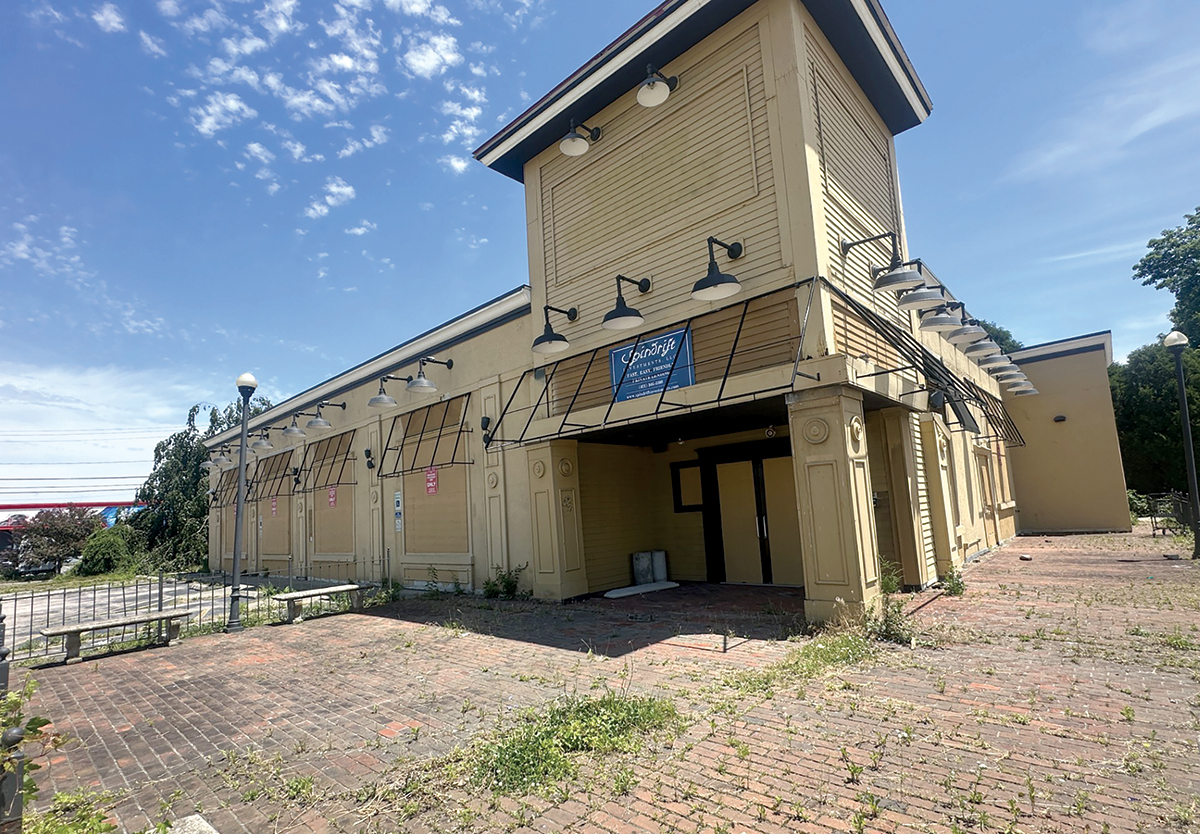
However, the situation surrounding a vacant property at 593 West Main Road in Middletown is different, revealing a complex interplay of local development hopes, boarded up and vacant since its last tenant departed in 2014.
Arthur Weber, a longtime member of the Middletown Planning Board and a former town councilor, has dedicated decades to revitalizing the West Main Road commercial corridor.
Historically viewed as a mere gateway to downtown Newport, this stretch has often suffered from a perception of being cluttered with fast food outlets and transient businesses.
Certain properties may fail to keep up appearances, Weber said, but “all you can do is check the tax roll and see if they paid their taxes.” Limited options are available to municipalities when dealing with vacant properties.
Indeed, Renaissance Development has consistently met its tax obligations – totaling approximately $180,000 over the last decade. But the property has fallen into disrepair. Cracks crisscross the parking lot, overgrown grass chokes the landscape, and graffiti mars the boarded-up building.
This deterioration contrasts sharply with the town’s vision for a massive Middletown Center development across the street, a project that has existed in limbo for years but one Weber continues to believe can come to fruition.
He argues against granting municipalities too much authority over private commercial properties, suggesting that unless a site poses a public safety risk, local governments should refrain from interference.
“Sure, I don’t like driving by it,” he said. “But the way town authorities look at it in relation to other issues, it’s not the end of the world.”
But the demographics in Middletown have evolved, particularly following the announcement that thousands of service members and their families would be relocating to the island to work at the National Oceanic and Atmospheric Administration facility. Additionally, the U.S. Coast Guard is set to expand its presence by adding two cutters to the Naval Station Newport base, indicating a potential influx of residents who could invigorate local businesses.
Despite these promising developments, the vacant property remains a point of contention.
The building, once a Ruby Tuesday, is 6,038 square feet and now apparently available for lease. The property advertisement boasts high visibility and significant traffic – over 26,500 vehicles daily.
But it has yet to attract interest from potential tenants due to its condition and the high leasing rates, said Jeff Brooks, a Newport Realtor with Hogan Associates Christie’s International Real Estate. Brooks said he recently spoke with the property’s owner, who expressed a reluctance to sell.
Calls to the listing agent, William Greene of Hayes & Sherry Real Estate Services, were not returned.
A $15,000 monthly rent – above the average for comparable sites – with no promise of fixing it up, almost guarantees most commercial chains would be deterred by the costs, observers say. Similar 6,000-square-foot retail spaces lease for around $20 per square foot.
“Sitting vacant hasn’t really been a problem for them, but they’re asking a lot,” Brooks said.
A lawsuit filed by Renaissance Development against Ruby Tuesday Inc. has cast a long shadow over the property.
Filed in January 2020, the case centers on the unpaid rent and property obligations stemming from Ruby Tuesday’s bankruptcy and subsequent lease rejection.
In a statement, Middletown spokesperson Matthew Sheley said that, while the former Ruby Tuesday’s site has not risen to the level of a nuisance, town building and zoning official Chris Costa has had to call the property owners “as needed, asking for cleanups of the site.”
Sheley highlighted the town’s successes in redeveloping underutilized properties, citing examples like the former Christmas Tree Shoppe and various parcels along Aquidneck Avenue that have been repurposed into beneficial housing and business ventures.
“Middletown is constantly looking for ways to bring the highest and best use of land along our commercial stretches,” Sheley said.
Renaissance Development did not respond to a request for comment.
Brooks said there have certainly been purchase offers, but despite the company’s reputation as a restaurant chain magnate, in many ways it is a holding company.
“They are not really incentivized to fix it up because whoever’s going to go in there is going to have to do the work,” he said. “These corporate chain commercial agreements are ironclad. You can’t be some Johnny homeowner saying I’d like to come see if I like the kitchen beforehand.”