ORLANDO, Fla. (AP) — Rhode Island had one of the slowest state population growth rates from 2018 to 2019, according to new estimates released Monday by the U.S. Census Bureau.
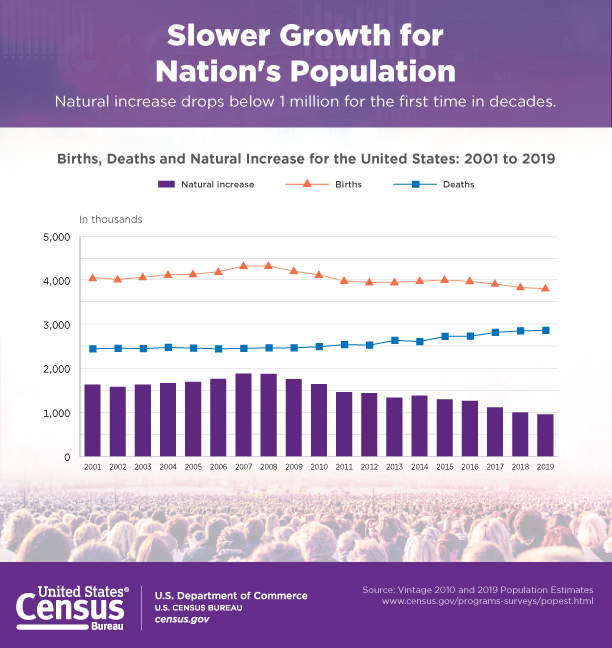
The state grew .1%, from 1,058,287 residents as of July 2018 to 1,059,361 residents as of July 1, 2019. This compares to a .5% growth rate nationwide, the slowest in a century due to declining births, increasing deaths and the slowdown of international migration, according to the data.
Rhode Island's Market Has Changed. Developers, Builders, Investors and Sellers Must Change With It.
By Emilio DiSpirito IV License Partner | Engel & Völkers Oceanside Leader | The DiSpirito…
Learn More
The U.S. grew from 2018 to 2019 by 1.5 million people, with the population standing at 328 million this year, according to population estimates.
That’s the slowest growth rate in the U.S. since 1917 to 1918, when the nation was involved in World War I, said William Frey, a senior fellow at The Brookings Institution.
For the first time in decades, natural increase – the number of births minus the number of deaths – was less than 1 million in the U.S. due to an aging population of baby boomers, whose oldest members entered their 70s within the past several years. As the large baby-boom population continues to age, this trend is going to continue.
“Some of these things are locked into place. With the aging of the population, as the baby boomers move into their 70s and 80s, there are going to be higher numbers of deaths,” Frey said. “That means proportionately fewer women of child bearing age, so even if they have children, it’s still going to be less.”
Four states had a natural decrease, where deaths outnumbered births: West Virginia, Maine, New Hampshire and Vermont.
In Rhode Island, births outnumbered deaths by 679, accounting for just over 63% of the 1,074-person increase. The remaining 430 came from net migration, with an influx of 3,645 international migrants outweighing the 3,215 decrease in domestic migration due to residents moving elsewhere.
Nationally, international migration decreased to 595,000 people from 2018 to 2019, dropping from as many as 1 million international migrants in 2016, according to the population estimates. Immigration restrictions combined with a perception that the U.S. has fewer economic opportunities than it did before the recession a decade ago contributed to the decline, Frey said.
“Immigration is a wild card in that it is something we can do something about,” Frey said. “Immigrants tend to be younger and have children, and they can make a population younger.”
Idaho, Nevada, Arizona and Utah were the fastest-growing states from 2018 to 2019.
Ten states had population declines in the past year. They included New York, which lost almost 77,000 people; Illinois, which lost almost 51,000 residents; West Virginia, which lost more than 12,000 people; Louisiana, which lost almost 11,000 residents; and Connecticut, which lost 6,200 people. Mississippi, Hawaii, New Jersey, Alaska and Vermont each lost less than 5,000 residents.
PBN staff writer Nancy Lavin contributed to this report.