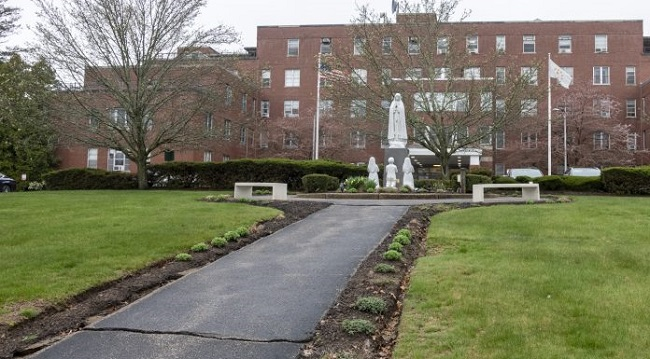
Federal health insurance cuts are poised to amplify dire financial problems at Roger Williams Medical Center and Our Lady of Fatima Hospital, observers say, significantly increasing the burden on patients, workers and the state’s entire health care system.
State health insurance marketplace HealthSource RI anticipates that with the expiration of Affordable Care Act enhanced tax credits at the end of 2025, an additional 13,000 Rhode Islanders will go without coverage this year, while others will shift to plans with lower premiums and higher copays. Meanwhile, proposed federal cuts to Medicare and Medicaid could leave another 30,000 residents without coverage next fall, officials say.
In perhaps an encouraging sign, the U.S. House approved the renewal of ACA subsidies on Jan. 8, but the measure still faces a Senate vote.
As it stands now, the insurance cuts and uncertain fates of Roger Williams and Fatima hospitals create “a perfect storm of things you don’t want” for Rhode Island’s health care system, said Robert Hackey, Providence College professor of health sciences.
While all hospitals will be affected, “the principal impact is going to be on facilities like Roger Williams and Fatima, which are really safety net providers that treat a disproportionate number of folks on Medicaid,” Hackey said.
The two hospitals are already teetering. The state has used money from a court-controlled Hospital Fund to keep them open through January as nonprofit The Centurion Foundation tries to secure funding to buy the facilities from their bankrupt owner.
Federal health insurance cuts make finalizing a deal more difficult, Hackey said.
“This is not a business where it’s easy to stay afloat when you’re disproportionately serving the uninsured and Medicaid patients, who are insured less and generate less revenue,” Hackey said. “That’s a perfect recipe for losing money.”
Michael Fine, chief health strategist for Central Falls and a former director of the R.I. Department of Health, said that the insurance cuts will also intensify problems in the primary care system, namely a severe shortage of doctors.
“Its immediate impact is going to be access to care,” he said.
To lessen those problems, Fine said, state legislators could allocate money to directly pay for basic doctor visits for people who don’t have health insurance. Instead of relying on emergency rooms, the uninsured would be able to see a primary care doctor for routine care, Fine said, similar to a program operated in Scituate with assistance from the town.
Fine said the General Assembly should move quickly to OK a proposal to create a public medical school that emphasizes primary care and pass measures to decrease the burden that insurance paperwork places on overloaded primary care providers.
Also, Fine said, Rhode Island could allow Brown University Health and Care New England Health System to merge under a single state regulator, reducing administrative waste. A Hospital Regulatory Commission could oversee pricing and provide the federal exemption needed to approve a merger that would otherwise be blocked as a monopoly.
Lindsay Lang, HealthSource RI director, warned of “insurmountable medical costs and delayed or unsought care” under ACA expirations.
“Rhode Islanders will become sicker as they forgo preventive care or avoid recommended follow-up care due to the out-of-pocket expense,” Lang said in a statement. “When that happens, emergency departments and community providers that serve as a critical safety net will be quickly overburdened.”