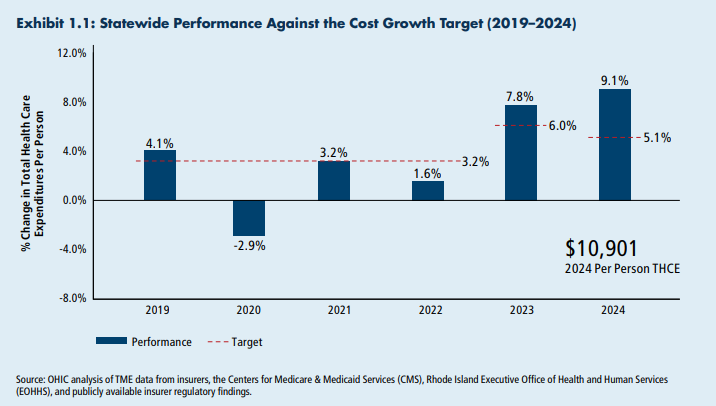
PROVIDENCE – Rhode Island healthcare spending surged to a historic high of 9.1% in 2024, according to a new report from the R.I. Office of the Health Insurance Commissioner, exceeding the state's 5.1% target by 4 percentage points.
Meanwhile, per-person spending exceeded $10,000 for the first time, and commercial market rates grew by 7.1%, representing their highest jump since 2021.
Hospital services, prescription drug and long-term care costs were the main drivers behind the overall spending increase, according to the report, which OHIC released on Monday.
"The topline here is that the state has seen two consecutive years of per capita healthcare spending growth," said R.I. Health Insurance Commissioner Cory King, noting "a concerning trend upwards" in the commercial market.
In that space, spending per person rose to $7,181, according to the report, an increase of 7.1% from 2023.
But all major insurance marketplaces saw an increase. Medicare spending per person reached $14,951, marking a 5.1% year-over-year increase, while Medicaid spending per person grew to $9,422, up 16.3%.
Growth in hospital outpatient and retail pharmacy spending was responsible for more than half of the growth in the commercial sphere, the report notes.
The state's Cost Trends Steering Committee sets the annual growth target based on Rhode Island's projected economic and household income growth.
The state has a goal of 3.3% healthcare spending growth for 2026, but King says that number is "aspirational and not enforceable."
Rhode Islanders are feeling the impact of these increases, the report notes. A 2024 survey found that 82% of Ocean State residents harbored anxiety around finding affordable healthcare, while 66% reported that they've delayed or avoided healthcare within the last 12 months.
The report also proposes several reform measures, such as requiring large and commercial insurers to enter performance improvement plans, alongside established mechanisms for the state to enforce penalties.
Legislators can also consider state-level premium assistance to replace the federal Affordable Care Act's Enhances Advance Premium Tax Credit program, the report advises, which expired earlier this year; and they should also push for pharmacy benefit managers to publicly disclose detailed information on rebates, fees, spread pricing and other business practices.
There are also options that King anticipates would generate more pushback from hospitals: price regulation and cutting administrative price increases, for instance.
King also highlighted site neutral payments as another potential measure, which would set the same payment rates for procedures regardless of whether they were done at hospitals or freestanding facilities. But insurance companies tend to oppose these policies, King said.
In a statement, Gov. Daniel J. McKee said that the OHIC report "highlights the critical mission of the Office of Health Commissioner: to prioritize the interests of Rhode Island’s healthcare consumers."
McKee said that his administration "has taken proactive steps to reduce the cost burden of healthcare in Rhode Island," including several recommendations for the fiscal year 2027 budget, and added that state leaders "must continue to find data-informed solutions to make quality healthcare more affordable for employers and working families."
Jacquelyn Voghel is a PBN staff writer. You may reach her at Voghel@PBN.com.