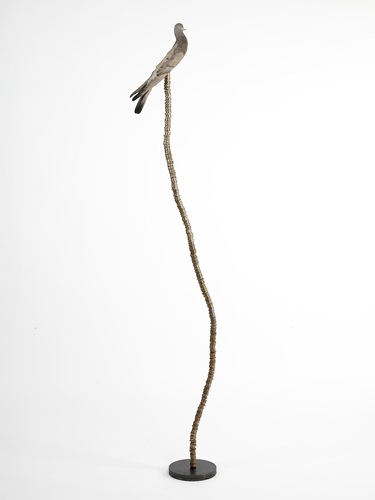
PROVIDENCE – The Críptido y Monedas V sculpture by Argentine artist Santiago Licata features a concrete pigeon with a human-like face perched on a stack of Argentine currency.
The 2025 work examines materiality, urban symbolism and systems of value, including economic, cultural and social frameworks, drawing on Argentina’s history of inflation and instability while reflecting broader questions about money, labor and social systems.
ISO 9001:2026: A Practical Opportunity to Build for What’s Next
For Rhode Island manufacturers, ISO 9001 has been much more than a certificate on the…
Learn More
The piece was chosen for inclusion in the permanent collection at the RISD Museum by members of the RISD Art Circle, a yearlong educational program for high school students interested in art and museum practice at the Museum of Art at the Rhode Island School of Design, commonly known as the RISD Museum.
Meeting most Saturdays from September through June, program participants develop creative projects while gaining insight into how museums operate behind the scenes.
In recent years, teens in the program’s 2024-2025 cohort curated a well-received exhibition called “Listen!” They selected works from the museum’s Prints, Drawings, and Photographs collection and contributed personal reflections shaped by issues relevant to their lives and communities.
Members in this year’s cohort were invited to take this one step further and agree on an addition to the museum collection. The group researched contemporary works, visited art fairs and galleries, and consulted with museum curators before recommending the acquisition.
Museum officials said the selection process underscores the relevance of programs like the RISD Art Circle, which aim to engage younger audiences as active participants rather than passive visitors.
“We wanted RAC teens to see themselves as people who can shape what a museum collects,” said Tsugumi Maki, museum director. “Not someday, but now. When young people participate in decisions at this level, they are not simply learning about museums; they are helping define what museums become. Opportunities of this scale are rarely extended to high school students.”
By selecting Licata’s work, students cited its connection to everyday realities they face such as financial uncertainty and the symbolic power of currency, including the phasing out of the penny in the United States.
“A lot of young people aren’t super interested in museums, but a lot of museums aren’t interested in young people,” said RAC participant Olivia Lee. “By inserting ourselves into the history of the museum, we are also pushing it to think about what matters to us.”
Gabriela Rijos Santos, another RAC member, said students wanted art that has an important message about culture and identity.
“We hope it moves people,” Rijos Santos said.
Christina Alderman, director of family and teen programs at the museum, said having the access and ability to work on such a significant project is a tremendous opportunity for both the museum and the teens involved.
“Not only are the teens learning about museums; the museum is learning as well,” she said. “The teens are shaping the museum in a very direct and enduring way.”
“This acquisition reflects the teens’ careful consideration of material exploration, narrative complexity and systems of value,” said Dominic Molon, the museum’s interim chief curator and Richard Brown Baker curator of contemporary art. “Their insights were central to the decision-making process and enriched the museum’s understanding of the work.”