PROVIDENCE – The R.I. Department of Education on Friday has released for the first time its local education agency accountability results, showing both a baseline for districts to meet moving forward beyond the COVID-19 pandemic and note areas where the districts must improve on.
The new results produced were required by the state’s Education Accountability Act in 2019, calling on the 62 districts and charter schools where they stand with their education performances. These new metrics, which rate achievement, school quality, growth, English language proficiency, graduation rates student success based on a point system, look at the districts as a whole as opposed to individual schools, al la the Star rating system.
Your Business Has Gone Global. Has Your Insurance?
A decade ago, “doing business internationally” was mostly a large-company concern. Today, a manufacturer in…
Learn More
The higher the point total, the better the performance, with 44 total points being the most the education agencies can receive across six different metrics. Some metrics in some districts were not applicable because of not having enough information to account data for.
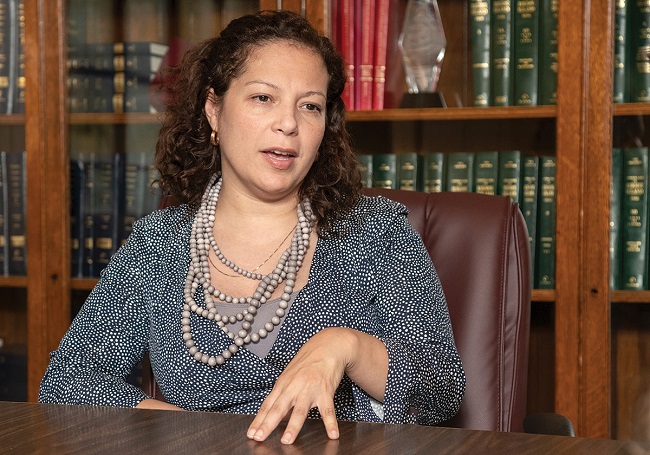
R.I. Education Commissioner Angelica Infante-Green reiterated the challenges local LEAs are still facing from the COVID-19 pandemic. She noted again the state public education system, citing a 2022 report from the National Center for the Improvement in Education Assessment, is expected to take between three to five years to recover from the health crisis.
When asked if it could take the state longer to get back on track after the pandemic, Infante-Green said it is “hard to know” because the trend data remains unclear both in the state and across the U.S.
Infante-Green said the newly released data shows students across Rhode Island are “moving in the right direction,” particularly in math. But, there is “a lot of work to be done,” she said.
“These reports underscore that the historically underserved students must be prioritized under the American Rescue Plan Act, federal guidance and task force recommendations,” Infante-Green said. She also said local district leaders have been briefed on the new results and RIDE will work with the districts to make improvements “in the coming months.”
Much like the Star ratings that were released this past December, there are mixed results across all education agencies in the Ocean State. The Providence Public School System – currently under state control – is among 10 education agencies that are struggling, most of which are charter schools.
According to the data, 37 education agencies had Achievement point totals in “mid-range,” meaning between four and six points of a possible eight, and just four LEAs were noted for “strong” achievement performance. The “Achievement” illustrates how students are performing on both the Rhode Island Common Assessment System exam and the SATs in both math and English-language arts. Twenty-one LEAs have low point totals in achievement, with the state calling for it to be a “focus” area for needing significant improvement.
In “English Language Proficiency,” 31 LEAs were given a “focus” indicator, while only 13 were given scores of “mid-range performance” or “strong performance.” Infante-Green in a session with reporters said the data further noted that the state’s multilingual community was “more impacted” by the pandemic. She hopes the pandemic-related funding districts received, including from the American Rescue Plan Act, can be centered around plans to improve outcomes for multilingual learners.
For “School Quality and Student Success,” which could net districts and charters a maximum of 15 points, 57 were rated either “mid-range performance” or “strong performance,” with only five being marked as “focus.” School Quality and Student Success, RIDE says, looks at chronic absenteeism and exceeding expectations on math and ELA assessments. Infante-Green is also pleased with the overall “Growth,” which recognizes student progress, across most LEAs – 57 were either in the “mid-range performance” or “strong performance” realm for growth.
Barrington, with 41 points, had the highest total accountability score in the state with all six metrics being rated. East Greenwich was given a 35. Cumberland netted a score of 31 and Smithfield had a strong score of 30. Bristol-Warren and Coventry each had a score of 28, according to the data.
Urban districts, though, remain at the bottom. Providence received just 15 total points on the accountability data. RIDE also identified Achievement, English Language Proficiency, Graduation Rate and Diploma Plus Measures – which notes a district’s ability in preparing students for college – all as areas of “focus” for PPSD.
Pawtucket is not much better with 18 total points despite having solid growth and school quality/student success metrics. Central Falls, with 14 total points, had the lowest mark of all the LEAs in the state – and all six metrics are marked for “focus.”
Infante-Green said RIDE will have various vendors and partnerships to go into the schools within the struggling districts, perform root cause analysis and find ways to change instruction to improve the climate. RIDE is also looking at out-of-time learning for some districts and understanding more about what happens after school “so there’s support from all communities,” Infante-Green said.
The results for each district can be seen here.
James Bessette is the PBN special projects editor, and also covers the nonprofit and education sectors. You may reach him at Bessette@PBN.com. You may also follow him on Twitter at @James_Bessette.