As a nurse of three years in Roger Williams Medical Center’s Blood and Marrow Transplant Program, Joanna Sanzone has supported patients facing harrowing diagnoses and critical procedures.
But in early 2025, Sanzone found herself trying to reassure patients through yet another upheaval: the possibility that the unit, which is the only one of its kind in Rhode Island, could soon shutter with the rest of the hospital.
That’s because Prospect Medical Holdings Inc., which owned the Providence hospital, had declared bankruptcy and filed a motion requesting to close Roger Williams and its other Rhode Island healthcare facility, Our Lady of Fatima Hospital in North Providence.
The staff at Roger Williams and Fatima had for years endured financial turbulence under severe mismanagement by Prospect, a California-based company. But the court filings tipped the chronically ailing hospitals into a severe crisis. The hospitals teetered on the edge of closure.
Sanzone’s patients panicked. She tried to soothe anxieties, but it wasn’t easy.
“We’re so specialized,” Sanzone said. “Even if your [primary care physician] is leaving, that creates anxiety, so multiply that by a cancer team.”
A long-sought reprieve came in March.
Georgia-based nonprofit The Centurion Foundation, which had been attempting to purchase the two hospitals from Prospect since 2022, finally secured $101 million in private bonds to pay for the acquisition, with an additional $18 million fund established by the state as a financial backstop to reassure investors.
The hospitals have switched hands, but the doubts about their survival haven’t dissipated.
Observers say the nonprofit still faces formidable financial challenges as it attempts to stabilize the two safety-net hospitals. And with Centurion ultimately serving as the only interested buyer, the state lacked another viable, long-term option to keeping the hospitals open.
Attorney General Peter F. Neronha has already sounded the alarm, saying the new operators aren’t moving fast enough to turn things around.
Nevertheless, the mood was celebratory in March as elected officials – including Neronha – and hospital leaders announced the $101 million deal after a four-year struggle to bring it to completion. Centurion Chairman and CEO Ben Mingle became tearful as he described the effort.
Now there is financial pressure to get Roger Williams and Fatima on the right track fairly quickly.
The $101 million debt taken on by Centurion comes with regular interest and principal payments. A financial analysis conducted by the R.I. Health and Educational Building Corp. shows that annual payments will range between $12 million and $18 million, with the first interest payment due on Oct. 1. The cost over 30 years will total $408 million.
There’s a lot riding on the outcome. The hospitals employ about 2,400 workers, have nearly 500 beds combined, and serve tens of thousands of patients annually, many of whom are on Medicaid and Medicare.
Closures would ripple across the region, with Rhode Island already experiencing tight hospital capacity.
Centurion’s turnaround strategy relies in part on a return to nonprofit status – and the tax breaks and exemptions that come with it – as well as handing much of the control of operations to local stakeholders who, unlike corporate shareholders, have a deep interest in seeing the hospitals survive.
Centurion told state legislators in February that nonprofit status allows it to bypass state and federal taxes and qualify for the 340B federal drug discount plan. Those changes and other operational changes – including a bigger focus on financially promising areas such as oncology and behavior health – are projected to save or generate a combined $75 million a year, Centurion executive said.
Through the long acquisition process – and numerous setbacks – Mingle has never publicly wavered in his confidence that Centurion can save the hospitals.
“We’ve been very vocal that this is not going to be easy,” he told Providence Business News. “And this team is really, really focused right now, working harder than we maybe ever did.”
[caption id="attachment_522568" align="aligncenter" width="1200"]

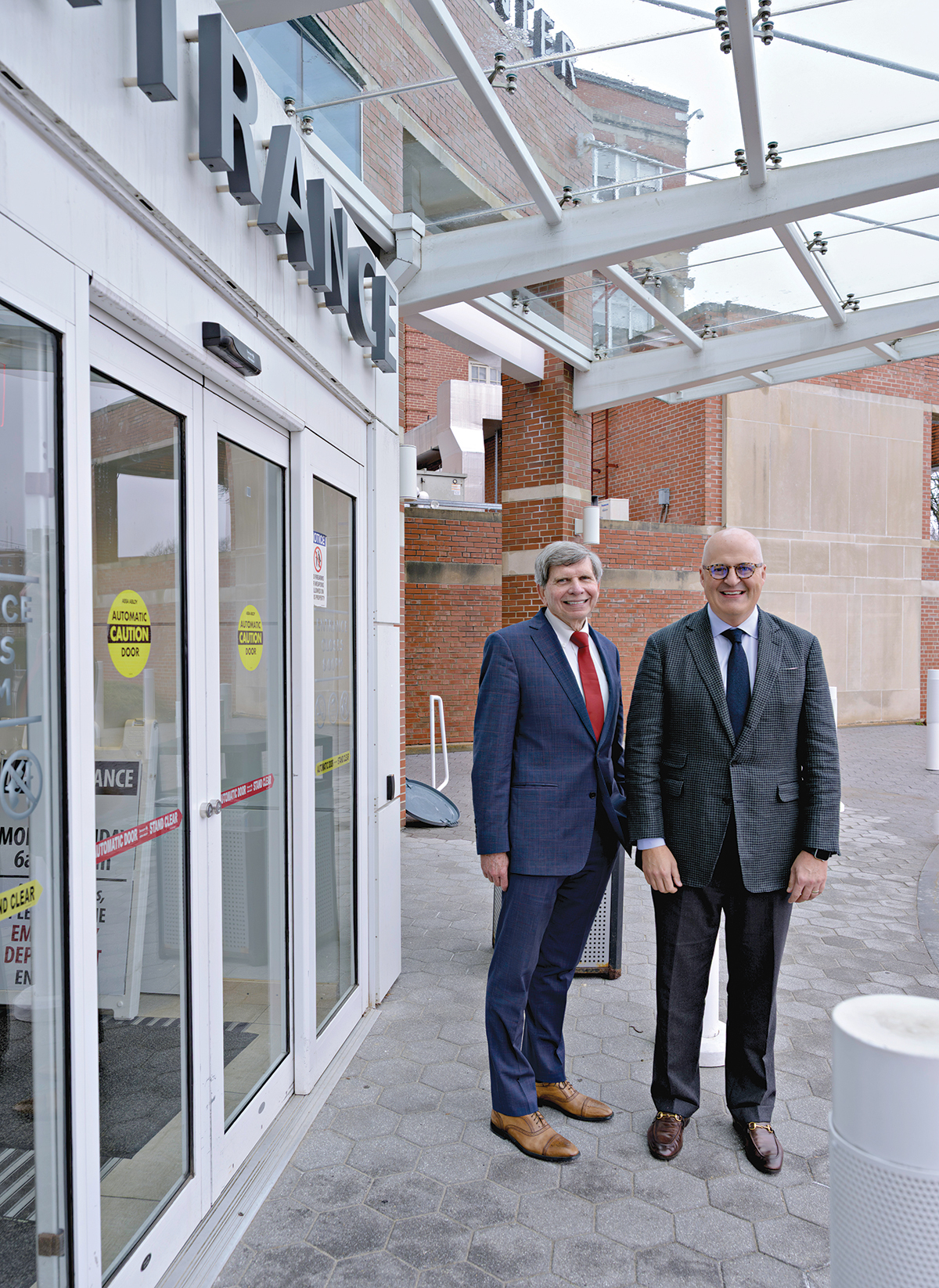
A DIFFERENTIATOR: Dr. Todd Roberts, an oncologist, is the medical director of the Blood and Marrow Transplant and Cellular Therapy Program at Roger Williams Medical Center in Providence, the only cancer program in the state to offer Chimeric Antigen Receptor T-cell therapy.
PBN PHOTO/MICHAEL SALERNO[/caption]
A BIG DEAL
From the early days of Centurion’s interest, observers have expressed concerns that its plan relies too heavily on debt and that the nonprofit has never operated a hospital before.
Indeed, founded in Atlanta in 1996, Centurion is a 501(c)(3) that provides real estate financing and facility development services to nonprofit health systems and other entities. The organization’s model is to use its nonprofit status and real estate expertise to structure deals and help organizations access cheaper financing.
Centurion says it has completed more than 100 financing deals totaling more than $850 million.
While Centurion has never owned a hospital, Mingle, who joined the nonprofit in 2018, says the organization is very familiar with the innerworkings of the healthcare sector.
“In the last eight years, we have assisted nonprofit health systems across the country with a new leasing financing strategy on a nonprofit basis,” he said.
Before that, Centurion also owned and operated nursing homes, Mingle said.
“So, we had a lot of experience creating a structure that allowed an organization to meet the needs of a community on a nonprofit basis,” he said.
Nevertheless, the complexity of the Rhode Island deal was daunting, involving federal bankruptcy court, health policy oversight agencies, state regulators, elected officials and an urgent search for financing partners.
In the end, Centurion acquired the two hospitals and several related assets from the bankrupt Prospect Medical Holdings with privately placed bonds arranged by Bank of America Corp. and issued through the R.I. Health and Educational Building Corp., the quasi-state agency that provides low-cost, tax-exempt financing for healthcare and educational institutions.
Now Centurion has established a new nonprofit, CharterCARE Health of Rhode Island, to run the hospitals locally, with the majority of the board of directors and advisory board members made up of local doctors and community leaders.
Jeffrey Liebman, the CEO of Prospect Medical Holdings’ subsidiary that was previously operating the two hospitals, has been appointed CEO at the new CharterCARE, overseeing an annual operating budget of $330 million.
As part of its agreement with state regulators, Centurion has also hired consulting firm SOLIC Capital Advisors, which specializes in restructuring, mergers and distressed asset management.
Mingle doesn’t see the drawn-out search for financing – which also required the state to provide a $18 million backstop to reassure investors – as cause for doubt in Centurion.
“When people say Centurion couldn’t get their financing done, that was true,” Mingle said. “But Prospect filed for bankruptcy. Prospect wasn’t paying their bills. People were jumping ship, and it’s a long regulatory process in Rhode Island.
“We ultimately did get it done,” he said. “We just had a lot of bumps in the road.”
SLOW GOING?
Many insist the road remains bumpy.
Neronha, who oversaw the hospitals transaction, says he recently met with Centurion’s consultants to discuss progress on the strategic plan to get the hospitals back in the black. “Candidly, they weren’t as far along as I’d have liked,” he said. “I expected more.”
SOLIC Capital Advisors hasn’t had enough interactions with Liebman, Neronha said, and the parties need to move faster in general. “We don’t have a year to make that [strategic plan] happen, or even six months,” he said. “That needs to happen in a matter of weeks.”
Neronha notes that, in addition to the $18 million backstop provided by the state, a hospital escrow fund was set up and paid out nearly $10 million between November 2025 and March to keep the hospitals open while Centurion secured financing.
“With that gift comes an expectation that [Centurion and CharterCARE] will do everything they can to make these hospitals succeed,” Neronha said.
Efforts that previously focused on securing the sale must now shift to ensuring that the hospitals are financially stable, he says. Then, Centurion needs to prove it can generate the additional revenue to make needed capital investments while delivering care to patients.
“We’ve got a long way to go to get there,” Neronha said, “if we can get there at all.”
Robert Hackey, a professor of health sciences at Providence College, is concerned about the financial challenges that Centurion faces in turning around the hospitals and the nonprofit’s lack of experience operating a hospital doesn’t help matters, he says.
Centurion initially pitched a plan centered on securing public bond funding, but ultimately, perhaps because of the risk profile, had to turn to private investors to complete the $101 million acquisition. The interest rates on the bonds are steep because of the perceived risk, Hackey notes.
Indeed, CharterCare will pay 8.5% on the tax-exempt bonds, which total $93.3 million, and 12.5% on $7.7 million worth of taxable bonds.
The nonprofit is also taking on facilities that were previously losing around $45 million annually. And with Roger Williams and Fatima serving a high number of lower-income patients, the hospitals will face additional financial strain if the proposed Trump administration cuts to Medicare and Medicaid go into effect later this year.
These financial complications explain the lack of other interested buyers, observers say.
Last November, California-based Prime HealthCare Foundation, the nonprofit arm of California-based for-profit health system Prime Healthcare Inc., emerged as an 11th-hour suitor. But the organization, which markets itself as saving financially ailing hospitals, withdrew its bid in December, citing serious cost concerns.
Neronha also attributes the lack of additional suitors largely to Rhode Island’s low reimbursement rates – the same diagnosis that has driven Rhode Island’s broader healthcare woes.
And the move to nonprofit status isn’t a cure-all, Hackey says.
“Nonprofit status is no guarantee of better financial performance or superior management,” Hackey said. The hospitals “need to develop a strong plan to return to profitability that builds on their strengths, and ultimately, their success will depend upon drawing more privately insured patients to seek care at their facilities.
“They need to find a distinctive niche that will attract patients from Care New England [Health System] and Brown University Health hospitals,” he said.
Differentiators such as the Blood and Marrow Transplant Program at Roger Williams and the hospitals’ geriatric psychiatry facilities help, Hackey says, but need to be part of a larger strategy.
James Bailey, associate professor of economics at Providence College, says that he expects the hospitals will continue losing money for at least a few years.
“I think the new deal is going to give them a chance,” Bailey said. “But they’re starting from a very tough place.”
The trend to track will be “are they able to lose a little bit less money each year?” he said.
[caption id="attachment_522567" align="aligncenter" width="1200"]

FIRST STEPS? Our Lady of Fatima Hospital registered nurse Lynn Blais, president of the United Nurses & Allied Professionals, says Centurion should quickly fix infrastructure problems at the hospitals, such as this ramp outside of Fatima in North Providence.
PBN PHOTO/ELIZABETH GRAHAM[/caption]
FEELING POSITIVE
Fatima nurse Lynn Blais acknowledges she initially harbored serious doubts about Centurion’s debt-heavy plan to buy the hospitals.
But Blais, president of the United Nurses & Allied Professionals, which represents about 1,200 workers at Fatima and Roger Williams, says she and other union officials have been convinced it is capable of pulling it off.
“Based on the information we’ve been given and the presentations [Centurion] has made, it does give me confidence that they can turn the hospitals around,” Blais said.
Blais, who has been a nurse for more than 40 years, has weathered more than one crisis in the health system, including Prospect Medical Holdings’ bankruptcy fiasco.
Prospect wasn’t always seen as a corporate villain. UNAP worked with the for-profit company to secure its purchase of the nonprofit CharterCARE Health Partners, which had also mismanaged the hospitals. At the time, Prospect was seen as the most viable option for survival.
When Prospect finalized that acquisition in 2014, it vowed to invest $50 million in capital improvements over a four-year period, and some employees initially felt a sense of optimism.
That didn’t last.
A 2021 ProPublica investigation found that private equity firm Leonard Green & Partners, Prospect’s majority owner, extracted $645 million from the hospital chain with plans to leave it with $1.3 billion in financial obligations.
Later that year, Prospect threatened to close or sell the two hospitals if Neronha’s office implemented a financial condition requiring the firm to contribute $120 million to $150 million to an escrow fund intended to safeguard the hospitals.
Leonard Green and Prospect ultimately gave $80 million toward this fund, which Neronha’s office used to sustain Roger Williams and Fatima hospitals after Prospect filed for bankruptcy.
‘THEY NEED US’
Ensuring the hospitals’ long-term viability requires an immediate and sustained focus on financial stability, with capital improvements to follow, Mingle says.
“Our job as leaders and as board members is to make sure this organization is sustainable, and [that] it turns not a profit but a margin, and that margin is used to reinvest in the facilities and reinvest in the employees and the physician providers,” Mingle said. “That’s been the missing link.
“We’ve got to get to the margin first before we can even start thinking about where to invest our margin,” he said.
Liebman, the new CharterCARE’s CEO, says that local control has already started to make a difference in the hospitals’ operations, and he expects those benefits to grow over time.
“We want to be a great community resource system, and that’s different than what the goal and design was … under Prospect,” Liebman said. “By removing what I call the corporate anchor and the way things were forced upon us [by Prospect], we’ve identified ways we can function better and be more efficient and be more effective, which is the most important thing.”
By contrast, many of Prospect’s policies “didn’t make sense for Rhode Island, but made a lot of sense for California,” Liebman said, where Prospect owned most of its hospitals.
Blais agrees that local control will be an improvement. The human resources department, for instance, has already proved to be much more responsive, and long-running shortages in hospital supplies have disappeared.
But the hospitals have urgent needs, she says, such as filling staff vacancies and major infrastructure improvements. There’s been no significant change on those fronts yet.
“It’s been a few months and we’re not seeing it,” she said. “We’ve got old computers and old beds. But you don’t see anyone coming in” to start the process of replacing the equipment.
Liebman acknowledges that the organization has a range of pressing capital projects to address.
“We’ve got some infrastructure work, some roof work to do, some actually building stuff that got delayed,” he said. “We’re also putting in new imaging equipment as quickly as possible. We’re upgrading the patient beds. We’re basically putting in everything we can to make it a better experience for the patients as well as the physicians”
As the new leadership pursues its massive undertaking, the Blood and Marrow Transplant Program is one example of what’s at stake.
The eight-bed unit offers cutting-edge treatments that have extended patients’ lives in ways once unthinkable, said Dr. Todd Roberts, the program director.
In addition to being the state’s only accredited transplant unit of its kind, it is the only facility to offer Chimeric Antigen Receptor T-cell therapy, an immunotherapy for multiple myeloma.
Though the blood cancer is considered incurable, Roberts said, “in the era of CAR-T cells, they have seen about a 33% long-term survival at five years, which has previously been unheard of. These are great advances in this field … but this is the only place in Rhode Island where we offer this.”
For Roberts, the announcement that Centurion had finalized the sale came as a massive relief.
Sanzone, one of the unit’s nurses, still has a feeling of apprehension about the future.
“There’s a sense of relief, but then … it’s another chapter of the unknown now,” she said.
And for the hospital’s disproportionately vulnerable population, she notes, that’s of particular concern.
“A lot of patients here are of lower socioeconomic status” and struggle to get the medical help they need, Sanzone said. “But they are there, they exist, and they need us.”