PROVIDENCE – University Orthopedics sports medicine surgeons have begun using a less-invasive surgical repair for anterior cruciate ligament, or ACL, injuries called bridge-enhanced ACL repair, or BEAR, developed by Dr. Martha Murray at Boston Children’s Hospital, and now in a third clinical trial.
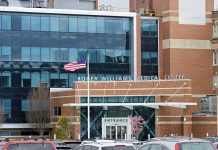
University Orthopedics surgeons are performing the procedure with the help of Braden Fleming, professor of orthopedics, and his team at Rhode Island Hospital.
Building a Strong Data Foundation in the Age of AI
Artificial intelligence (AI) has become a key priority in the boardroom and across management —…
Learn More
About 400,000 ACL injuries occur each year, according to University Orthopedics. The ends of a torn ACL do not reconnect and heal on their own, unlike other ligament injuries. ACL reconstruction is one of the most common orthopedic procedures in the United States and is the standard treatment for the torn ACL. During an ACL reconstruction, an orthopedic surgeon removes the ends of the torn ACL and replaces them with a graft, usually with patellar or hamstring tendons from the patient’s knee. Traditional ACL reconstruction also carries an 80 percent risk of arthritis within 15-20 years.
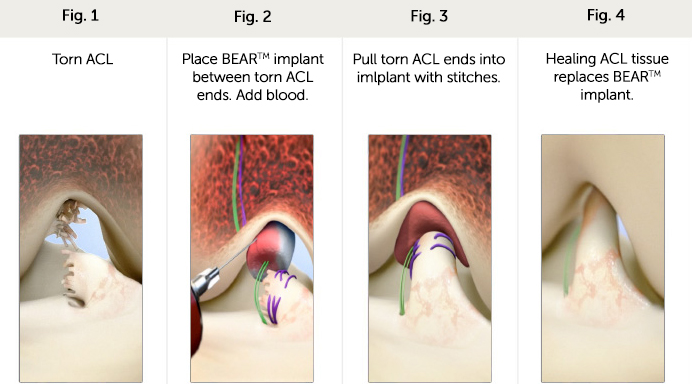
The new BEAR surgery, developed by Murray and her team, uses stitches and a bridging scaffold – a sponge injected with the patient’s blood – to stimulate healing of the torn ACL. The procedure can be done arthroscopically, without a graft of the patient’s tendon and preserving part of their ACL, according to Boston Children’s Hospital.
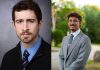
“Anterior cruciate ligament reconstruction is the standard of care for a torn ACL with high patient satisfaction and outcomes but carries the long-term risk of graft failure and knee post-traumatic degenerative arthritis,” said University Orthopedics’ Dr. Michael Hulstyn. “The BEAR procedure allows reattachment of the native ligament and is less invasive than reconstruction surgery. The goal is for a faster recovery time and return of knee stability with high patient satisfaction, and hopefully less chance of arthritis 15 to 20 years down the road.”
Hulstyn was the first to perform the surgery at Rhode Island Hospital, according to University Orthopedics.
“We are now in our third clinical trial and we feel that University Orthopedics and Rhode Island Hospital are a perfect fit to continue this research,” Murray said. “Drs. Hulstyn, [Paul] Fadale and [Brett] Owens have extensive experience in ACL surgery and we are excited to have them join this study.”
The goal of the current study is to analyze the BEAR procedure and more patients to determine if patient age contributes to the success of the procedure. Up to 250 patients will be enrolled at University Orthopedics /Rhode Island Hospital and at Boston Children’s Hospital.
“So far the results have been very promising. We are thrilled to be part of this exciting trial and appreciate Dr. Murray and her staff for allowing University Orthopedics to continue this groundbreaking work,” said Hulstyn.
Rob Borkowski is a PBN staff writer. Email him at Borkowski@PBN.com.