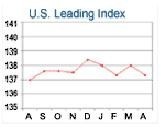
The index of U.S. Leading Economic Indicators fell 0.5 percent in April to 137.2 points (1996 = 100) after rising 0.6 percent in March to 138.0 points and falling 0.6 in February to 137.2, according to a report released today by The Conference Board.
The decrease defied analyst expectations, though the resulting level was about as predicted. The median forecast of 59 economists surveyed by Bloomberg News was that the index would remain unchanged at 137.4 points after the previously reported March increase of 0.1 percent.
Among the index’s 10 indicators, increases were seen last month only in stock prices and the nation’s real money supply. One indicator – new manufacturers’ orders for consumer goods and materials – held steady, while the other seven lost ground.
Negative indicators were led by a decline in building permits to the lowest level in a decade and a sharp increase in initial claims for unemployment. Also declining were new manufacturers’ orders for nondefense capital goods, consumer expectations, vendor performance, manufacturing hours and the interest-rate spread.
Over the six months from October to April, the leading index fell 0.2 percent, The Conference Board said, adding that “weaknesses among the leading indicators have been somewhat more widespread than the strengths over the past few months.”
The Conference Board is a nonpartisan, nonprofit business membership and research organization with offices in New York City, Chicago and abroad. Additional information, including this month’s full Leading Economic Indicators report, is available at www.Conference-Board.org.
ISO 9001:2026: A Practical Opportunity to Build for What’s Next
For Rhode Island manufacturers, ISO 9001 has been much more than a certificate on the…
Learn More