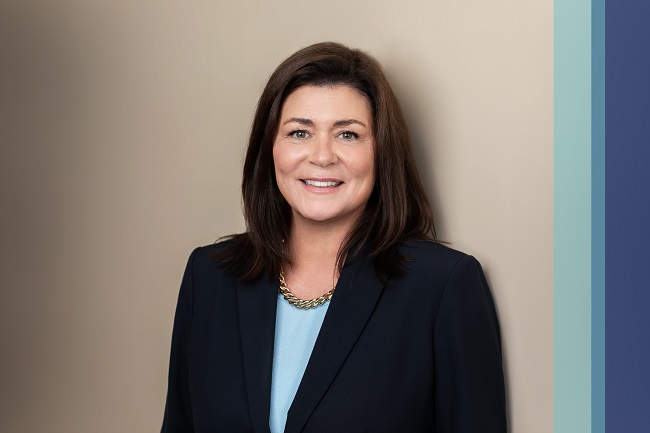
Andrea McNamara was recently hired as vice president and director of financial planning for The Washington Trust Co.’s wealth management division. She has more than 20 years of financial planning experience, including most recently as financial planning director for Wingate Wealth Advisors. She has a bachelor’s degree from Framingham State University and a financial planning certificate from Boston University.
PBN: Have you seen major changes in planning concerns and issues during and post-pandemic? How do you measure success, and has that changed?
Beyond Cash Donations: How New Forms of Giving Are Transforming Not-for-Profit Accounting
Evolving Funding Landscape for Not-for-Profits Not-for-profit organizations are being asked to do more with less,…
Learn More
MCNAMARA: The pandemic has certainly shifted planning conversations with clients. More clients that are close to retirement are wondering if they can skip going back to the office. Together, we’ve discussed and modeled what an early or partial retirement with less work and income looks like for them to see how to make that work.
Clients also have a heightened concern about staying healthy in retirement, so we’re having lots of discussions about how to accomplish that, focusing on keeping active and engaged throughout their retirement.
A successful financial plan helps clients balance saving for the future with living today. I always show clients a wide range of possible outcomes, and together we explore a variety of tradeoffs and scenarios, good and bad.
PBN: What is the number one area for which individuals feel most unplanned? What steps should be taken to help change this trend?
MCNAMARA: Flipping the switch from saving money to spending it – from accumulation to distribution – is where people tend to feel the most unplanned. That’s stressful for almost everyone I’ve ever helped retire. But there are ways to plan for and alleviate that anxiety.
First, work with an experienced financial planner that has helped lots of people retire. I’ve sat with hundreds – possibly thousands – of retirees and there are some anxiety triggers that show up again and again, like major home repair or extensive dental work. You ease that anxiety by thoroughly discussing potential triggers with your financial planner and including them in your financial plan.
Second, organize and understand your assets so you can see how a monthly distribution will replace your paycheck and the impact that has on your retirement spending. It can be stressful to call your financial adviser every few months to request a “big chunk” of money; planned distributions normalize spending money so you can enjoy your retirement.
Third, understand the different phases of retirement and the opportunities and challenges that each present. We engage in goals-planning exercises to identify what our clients and their families want from their wealth, and then work with them to align those goals with their time horizon, income and assets.
In general, I advise that folks plan a once-in-a-lifetime family trip for earlier in retirement while still healthy and mobile, consider the need for higher medical care expenses in later years and take advantage of tax planning opportunities in low-income years.
PBN: How does financial planning relate to investing, especially in a tumultuous market such as the one we’ve seen over the past few years?
MCNAMARA: The financial plan is like a map of the client’s life journey and the investments are the vehicle that takes the client through the journey.
Our financial planning approach assumes markets will be volatile, so we don’t use a static average investment return in our planning models. Together, we “stress test” the plan by considering the wide range of possible outcomes for your investments. We discuss how that impacts your plan and what we can do together to protect against that possibility, or at least minimize the impact it will have on your life.
Updating your plan regularly alerts us to potential problems early and lets us make strategic changes to avoid major disruptions.
PBN: Can you describe your/Washington Trust’s approach to financial planning versus other organizations?
MCNAMARA: Our planning approach is collaborative, engaging and fun! We take a conversational, modular, goals-based approach and use a suite of interactive planning tools that let us explore different outcomes and tradeoffs in real-time.
Our in-depth “what-if” planning can be transformative for clients because it provides the clarity and perspective that clients need to make decisions that support their short- and long-term goals.
PBN: What information do you find most useful in helping someone develop an effective financial plan?
MCNAMARA: You’re probably expecting me to say investment statements or tax returns. Those are important, but a financial plan is only effective when it’s meaningful. What’s most helpful is to discuss the answers to these kinds of questions:
- What is important to you and your family?
- What makes you happy?
- What keeps you up worrying at night?
- What do you want from your wealth?
- For your retirement, your family and your legacy?
- If necessary, what are you willing to sacrifice to get it?
I still want your tax return! But that information supports your financial plan, it doesn’t define it.
Nancy Lavin is a PBN staff writer. You may reach her at Lavin@PBN.com.