PROVIDENCE – The city could save more than $1 million a year by composting residents’ food waste rather than dumping it in the state landfill, according to a new report published on Thursday.
The Providence Municipal Composting Report represents the culmination of a nine-month process during which the city and partner Zero Waste Providence studied city composting practices and made recommendations for how to improve them.
Beyond Cash Donations: How New Forms of Giving Are Transforming Not-for-Profit Accounting
Evolving Funding Landscape for Not-for-Profits Not-for-profit organizations are being asked to do more with less,…
Learn More
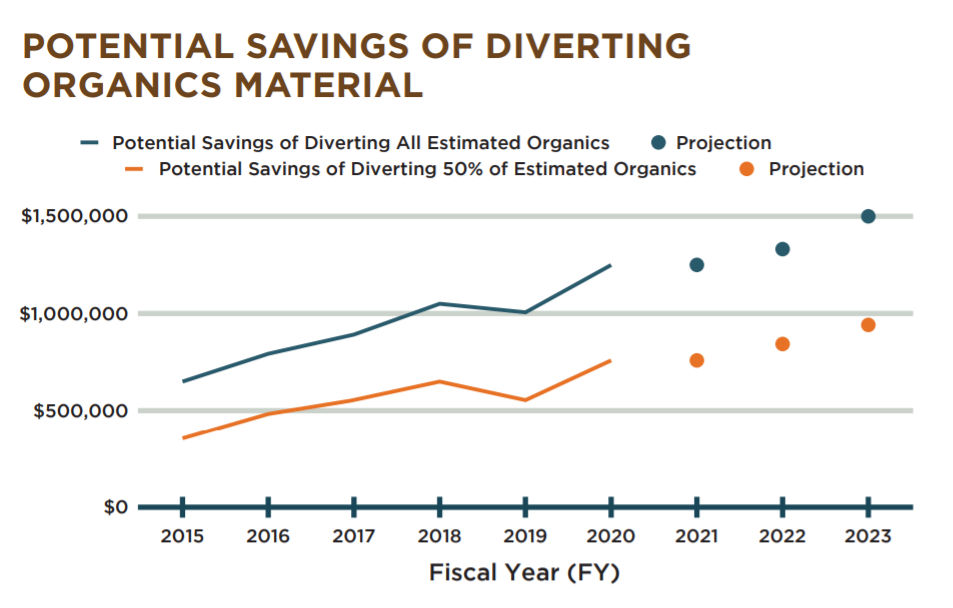
Among the findings: nearly a third of the 64,861 tons of solid waste the city dumped into the Central Landfill in fiscal 2020 could have been composted. Doing so – and avoiding the tipping fees at the landfill – would have saved the city $1.2 million in that year, the report found.
Those savings will only grow as tipping fees – and the amount of waste city residents generate – increase over time. The report estimated the city could save $1.5 million in fiscal 2025 by composting all of its organic materials rather than paying to dump them in the landfill. Even composting half of the eligible waste – a more reasonable expectation, the report acknowledged – would translate to nearly $1 million saved as of fiscal 2025.
Not to be forgotten are the sustainability benefits of composting, which could play a key role in helping the city meet its goals of achieving zero food waste by 2040 and becoming carbon neutral by 2050. Landfills are the third-largest contributor to greenhouse gas emissions nationwide, comprising about 15% of all emissions as of 2018, according to a U.S. Environmental Protection Agency study cited in the report.
Composting also has the potential to create new jobs, the report stated, citing a 2013 study by the Institute for Self Reliance that found 1,400 full-time jobs were created for every 1 million tons of waste composted.
Other benefits of composting include promoting healthy soils, improving water quality and water retention and supporting urban agriculture that can combat food insecurity, the report stated.
And support for a municipal composting program – which does not exist currently – is gaining traction. A survey of 400 city residents conducted for the purpose of the report found that 71% expressed interest in a curbside composting collection service, with 59% willing to pay more for it.
Another 57% were interested in dropping off their compostable garbage at a designated site, such as one eight of community composting facilities already operating across the city.
However, many of these sites are small or midsize and would be unable to handle a significant increase in compost waste drop-offs. This, along with lack of incentives for participation, remain the two biggest barriers to expanding city composting activity, the report stated.
With these challenges in mind, the report recommended that any city program emphasize local composting – as close as a resident’s backyard, or to be dropped off at nearby community composting site, with curbside collection the third-best option.
It also recommended education programs to help residents learn how to compost at home, and free access to community drop-off sites.
In the long-term, the city should consider requiring residents to compost – either at home or a nearby site – offering free pickup services with a “pay as you throw” model for non-compostable trash.
The report comes at the request of city lawmakers, who in January approved a resolution calling for local sustainability groups to come up with a plan for a city residential composting program.
In a statement, Mayor Jorge O. Elorza called it “a critical step” to meeting the city’s 2040 zero-waste goal.
“This report provides a catalog of recommendations that will help make it easier for residents to compost material instead of tossing it in the trash,” Elorza said in a statement. Composting, whether at home, a community compost center, or a private curbside service saves money, eliminates greenhouse gas pollution and creates rich soil for next spring’s garden.”