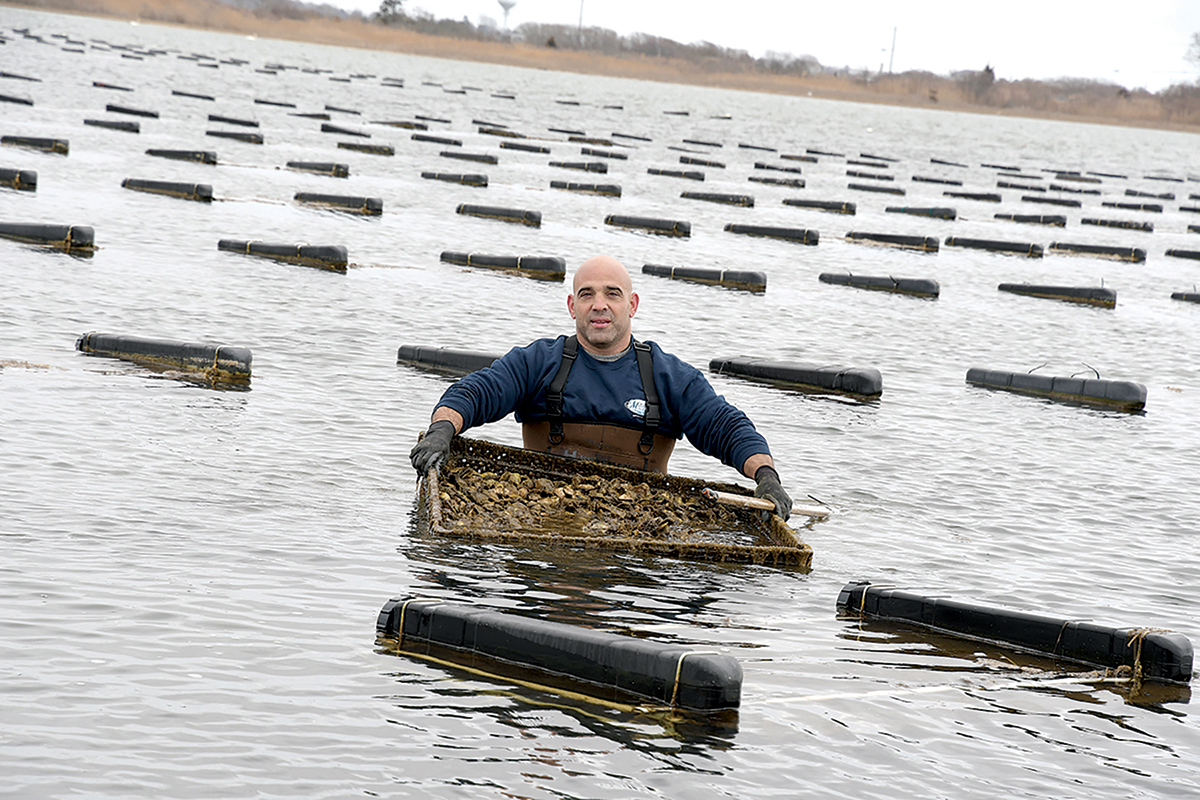
SOUTH KINGSTOWN – The Aquaculture Comeback State doesn’t quite have the same ring as the “Calamari Comeback” nickname given to Rhode Island after the 2020 Democratic National Convention.
But the seafood industry has indeed rebounded, with a “banner year” of sales and consumption in 2021, according to a new report by the R.I. Coastal Resources Management Council. The Sept. 7 report chalks up the success to a return to in-person dining and COVID-19 vaccines, which helped work up the appetite for oysters and other seafood to the highest since the agency began recording annual data in the mid-90s, according to Benjamin Goetsch, the CRMC’s aquaculture coordinator and report author.
Selling Luxury Real Estate Requires More Than Exposure
By Emilio DiSpirito IV License Partner | Private Office Advisor Engel & Völkers Oceanside www.DiSpiritoteam.com…
Learn More
Expanded aquaculture farms and forays into new crops like sugar kelp, surf clams and bay scallops also bolstered the industry.
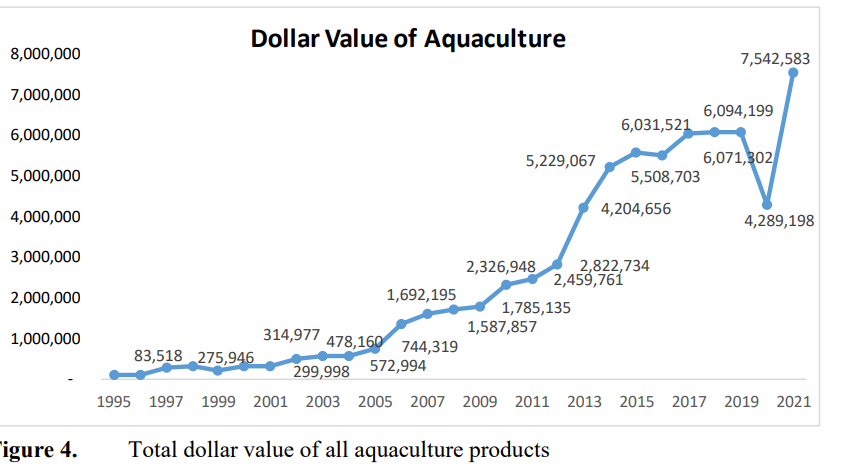
The $7.5 million “farm gate value” – representing seed sales and those for consumption – for aquaculture products grown in the Ocean State in 2021 marks a 75% jump over 2020, when the value plunged to $4.3 million. However, the latest annual estimates are also higher than pre-pandemic levels, which hovered around $6 million from 2017 to 2019, according to the report.
While inflation has raised prices of many popular crops for consumers, the 2021 data for aquaculture sales shows little inflationary impact, according to Goetsch. Instead, the rise in value reflects the higher volume of crops sold as seeds or for consumption, he said.
Oyster seed sales also jumped, up 257% year-over-year to $597,000, while sugar kelp sales dipped 18.6% to $5,700.
Rhode Island’s experience appears to square with regional and national data, which also shows a sharp increase in sales of oysters and other aquaculture crops amid a pent-up demand from restaurant diners, according to Goetsch.
While the state only added one new aquaculture farm in 2020 for a total of 84 farms, expansions of other, existing farming areas increased total acreage by nearly 20 acres, to 368.2 acres, according to the report.
At least one existing aquaculture farmer, Perry Raso, of Matunuck Oyster Bar, has sought to expand his oyster farms yet failed to secure the required approval from the regulatory agency amid a protracted battle with community members. Goetsch did not offer much comment on the Raso case specifically but said the agency and its appointed council must balance their support for the aquaculture industry with other uses along the state’s coastline. His report did not include any policy recommendations for the council regarding its oversight of aquaculture farming.
As of 2021, the industry employed 222 workers, including full and part-time and seasonal employees, compared with 216 in 2020.
Oysters reign supreme when it comes to sales for consumption, with more than 10.2 million sold in 2021. Work to restore depleted oyster reefs in partnership with universities and a number of state and federal agencies also advanced, with some 4.7 million oyster shells deposited across reefs statewide in 2021.
As restoration efforts continue and the pandemic abates, many aquaculturists are optimistic that their industry will expand further in 2022, the report stated.
Nancy Lavin is a PBN staff writer. You may reach her at Lavin@PBN.com.