State officials are making plans to add a new type of high school to Rhode Island’s education landscape, this one aimed at helping teens battle drug and alcohol addictions.
It’s called a “recovery high school,” where those who enroll will be kept away from the peer pressure and temptations they might face in a mainstream school. They also will be required to attend support meetings during the school day, among other things.
State lawmakers passed legislation in June clearing the way for the formation of the alternative school as a two-year pilot program operated by an independent organization.
Now state education and behavioral-health officials are preparing to develop rules and regulations for the recovery high school before they seek applications from licensed groups such as The Providence Center, a local nonprofit, behavioral health care group.
The legislation did not set aside money for the new school, and supporters say it won’t cost additional money because, under the state’s education funding formula, state aid will follow enrollees to the new school.
Sen. John J. Tassoni Jr., D-Smithfield – a key sponsor of the bill – said it’s more cost-effective to address drug-addiction cases when people are young instead of when they’re in need of public assistance or jailed later on in life.
And Tassoni asserted that sending students to a recovery high school would be cheaper than sending them to the R.I. Training School, saying the cost of each student at the recovery school would be $20,000, compared with $138,750 for each child with substance abuse problems at the training school.
“It’s going to cost the state a lot more in the long run if we don’t do something,” he said.
The recovery high school concept has gotten the backing of both the Deborah Gist, the Rhode Island commissioner of elementary and second education, and Craig Stenning, director of the R.I. Department of Behavioral Health Care, Developmental Disabilities and Hospitals.
The legislation, signed into law by Gov. Lincoln D. Chafee, called for proposals to operate the school to be submitted before Dec. 1, in order for the school to open the following fall.
Stenning acknowledged that it won’t leave much time for officials to assemble rules and regulations for a recovery school. “But there are enough models out there for us to use as a foundation,” he added.
Indeed, the recovery high school is not a new concept.
There are 22 of these types of schools nationwide, including three in the Boston area, according to the Association of Recovery Schools.
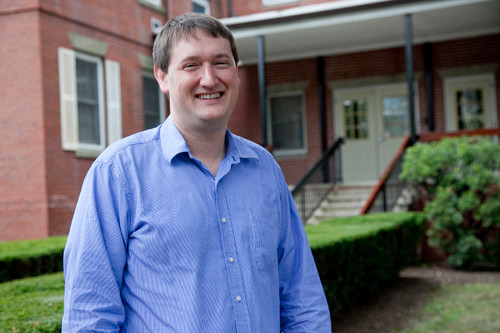
The statistics indicate they’ve been effective. The schools in Massachusetts have a 90 percent graduation rate – although class sizes are miniscule compared with a conventional school – according to Ian Lang, The Providence Center’s chief strategy officer.
And 80 percent of those graduates have a “high level of recovery” nearly two years after graduation, Lang said. “A study of Massachusetts recovery high schools showed that not only did they help graduation rates, they also had a long-term impact.”
The need for a recovery high school is big, the concept’s advocates argue.
The state has one of the highest rates of drug use among high school children, according to a federal government survey.
The U.S. Department of Human Services found that 12.42 percent of Rhode Island children between 12 and 17 had used illicit drugs in the previous month before the 2008 survey, the second highest rate in the nation; 11.4 percent reported binge drinking in the previous month; and 5.67 percent had drug dependency or abuse.
“It’s like telling an alcoholic to go to a bar for eight hours a day but don’t drink,” he said.
The Providence Center is a frontrunner in the selection process for the recovery school. The Rhode Island Foundation already has awarded the nonprofit a $100,000 grant for startup costs, and the organization has made plans to partner with the Phoenix House, a multistate detoxification center.
A tentative location would the center’s facility at 250 Hope St., Providence.
This high school would have no sports teams, no band and no clubs.
If The Providence Center is awarded the license, it would start small – 10 to 20 students covering grades 9 to 12. They would be there voluntarily, but referred by a licensed clinician, according to Lang.
Even if successful, the school enrollment would never grow much larger than 40.
“You need a community small enough that the students get to know each other,” Lang said. “The concept of a recovery high school is that you put them in a place where the pressure is toward recovery.”
The students would attend classes that could be found in conventional schools, but there will be group “recovery meetings,” too.
For new enrollees, the school offers a “more tightly knit” group of students “who have an understanding of what each of them are going through,” Lang said.
The new statute requires that the R.I. Board of Regents approve the operator’s application. Then after two years, recovery high school administrators must submit an analysis outlining graduation and retention rates, and the student’s performance in courses and on state standardized tests.
The analysis will be used to determine whether the program should continue. •