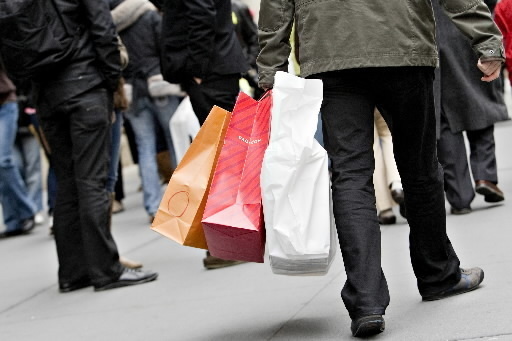
WASHINGTON – Sales at U.S. retailers rose in December for a sixth consecutive month, capping the biggest one-year gain in more than a decade.
Purchases increased 0.6 percent, following a 0.8 percent gain in November, Commerce Department figures showed Friday. The median forecast of economists surveyed by Bloomberg News called for a 0.8 percent rise. Sales climbed 6.7 percent in 2010, the most since an 8.2 percent jump in 1999.
Building a Strong Data Foundation in the Age of AI
Artificial intelligence (AI) has become a key priority in the boardroom and across management —…
Learn More
Analysts this month boosted 2011 forecasts for household spending, which accounts for 70 percent of the economy, as tax cuts and an improving job market put more money in Americans’ pockets. Ford Motor Co. and Dollar General Corp. are among companies planning to increase payrolls this year, pointing to gains in employment that may accelerate the recovery.
“Retail sales should find greater support in the coming months by improved conditions across the economy,” Maxwell Clarke, chief U.S. economist at IDEAglobal in New York, said before the report. “We see improving consumption prospects pushing further into 2011 as consumers gradually loosen the grip on their wallets.”
The projected increase in retail sales was based on the median of 83 estimates in a Bloomberg survey. Economists’ forecasts ranged from a decline of 0.1 percent to a gain of 1.3 percent.
Eight of 13 major categories showed increases last month, led by a 2.6 jump at non-store retailers, which include Internet sales, the biggest advance in more than two years. Demand at auto dealers climbed 1.1 percent.
Internet Sales
The gain last month was restrained by a 1.9 percent drop at department stores that was the biggest decline since December 2008. That followed a 2.8 percent jump in November, also the biggest in two years, indicating the government may have had trouble adjusting the data for swings in holiday shopping.
President Barack Obama signed into law an $858 billion bill on Dec. 17 extending Bush-era tax cuts for two years. The measure also renewed emergency jobless benefits for the long-term unemployed and cut 2011 payroll taxes by two percentage points. Economists such as John Herrmann at State Street Global Markets LLC in Boston said the tax package will boost consumer spending in early 2011.
Household spending this year will climb 3 percent, the most since 2005, according to the median forecast of economists surveyed this month. That’s up from a 2.6 percent median estimate in the December, before the legislation was signed.
Second-Half Pickup
Consumer spending picked up in the second half of 2010. Holiday purchases rose 5.5 percent, the best performance since 2005, said MasterCard Advisors’ SpendingPulse, which measures retail sales by all payment forms. That compared with a 4.1 percent gain a year earlier. The numbers include Internet sales and exclude automobile purchases.
Auto sales in December reached a 12.53 million annual pace, the highest since the government’s so-called cash-for-clunkers incentive program in August 2009, according to industry data.
Ford said Jan. 10 it plans to hire more than 7,000 workers in the next two years, including engineers with expertise in battery-powered cars. The Dearborn, Mich.-based company will hire 4,000 factory workers and 750 engineers this year and add 2,500 hourly workers next year, Mark Truby, a company spokesman, said in an interview in Detroit.
Some retailers are raising their profit forecasts. Shares of Tiffany & Co., the New York-based jeweler, climbed this week after announcing profit forecasts that exceed analysts’ expectations.
‘Very Pleased’
“We are very pleased with this worldwide sales growth, and with the increases we saw in every region in both months of the holiday period,” Michael J. Kowalski, chief executive officer of Tiffany’s, said Jan. 11 in a statement.
Other companies are boosting their payrolls. Dollar General, the biggest of the U.S. dollar discount stores, said Jan. 3 it plans to add 6,000 jobs as it opens 625 more stores in fiscal 2011.
Federal Reserve Chairman Ben S. Bernanke last week reiterated the central bank will buy an additional $600 billion of Treasuries through June in an effort to trim joblessness and avert deflation, or an extended drop in prices.