In the Promenade neighborhood of Providence along the Woonasquatucket River, where industry thrived during the Industrial Revolution, a few like-minded developers are doing small, green renovations and new construction that will build on the success of larger, mixed-use redevelopments.
The developers see the area, west of Providence Place, as the future home of sustainable building in the city.
As John Tabor Jacobson – whose JTJ Investments LLC attracted some attention earlier this year with 28 Wolcott, an energy-efficient “eco-office” commercial redevelopment, the area might soon be a stomping ground for smaller businesses that are now in the Jewelry District. When Brown University and Johnson & Wales University expand on the land where Interstate 195 is now, many of the properties there will increase in value, perhaps producing less-than-affordable rents for startups and green businesses, Jacobson said in a recent interview.
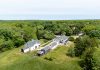
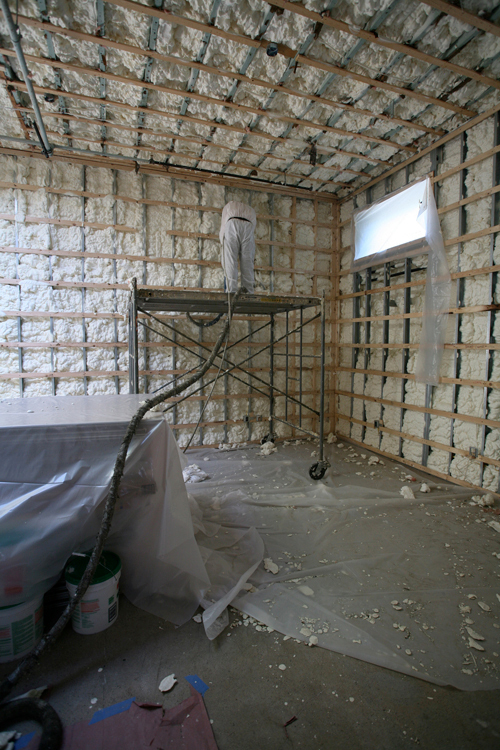
So Jacobson is now starting the redevelopment of the 10,000-square-foot West Park, an industrial building on Park Street. Because the Promenade area is zoned as “M-1” by the city, an area that allows industrial and mixed-use construction, it lends itself to small live-work spaces, he added.
And the building is attracting potential tenants. Last week, he was finalizing talks with a regional energy company for a 2,500-square-foot space.
Likewise, Truth Box Inc. principal Peter Gill Case is in the early stages of constructing “The Box Office,” which will turn 32 shipping containers into an office building at the intersection of Olneyville, the Promenade District and Federal Hill. In renderings, the building looks like a pile of stacked shipping containers, painted bright blue, green and yellow. The site is next to Route 10 and the Amtrak rail.
The 10,000-square-foot development will be built by modifying the containers and adding insulation. Case will cut holes for doors and windows and make larger spaces by combining them. Case is hoping that the 12 offices, starting at about 640 square feet, will attract innovative businesses and startups.
Visibility aside, the location is in an area poised for growth, Case said. “There’s a potential in this area to sort of continue what’s already started and leverage” investments by “pioneer” developers, such as Baltimore-based Struever Bros., Eccles & Rouse (SBER) and the Steel Yard, the arts nonprofit for which he’s chairman of the board.
“At an entrepreneurial level, it’s a reinvestment in what was an industrial sort of town,” he said.
On a map of a dozen current developments under way along the Woonasquatucket River – from Providence Place to Olneyville – Jacobson pointed out that almost all of the projects, including SBER’s seven-phase American Locomotive Works development, have green elements. It’s the largest concentration of green projects in the state, he added.
Case said that the cluster has created an element of competition between the projects to see who can be the most sustainable and use the least KWh.
But it is also important to make such projects affordable, added Jacobson, who has formed a Rhode Island chapter of the Northeast Sustainable Energy Association to create a dialogue about green design without the often-costly U.S. Green Building Council’s Leadership in Energy & Environmental Design (LEED) certification.
And a low-cost, green design will further help development in the area, he added, “because if someone can rent my place or Peter [Case’s] place and it’s the same price as another development that’s not green, they’re going to go green.” •