On the ground floor of the Providence Revolving Fund’s new West Side headquarters, the 2,800-square-foot rear room’s walls are lined with used light fixtures, wooden doors, fireplace mantels and even a claw-foot tub or two. Some of the architectural leftovers have chipped paint, others are visibly dirty. Many are stacked in piles. Most are salvaged from historic Providence homes that have been knocked down or renovated.
But regardless of their condition, age or value, it’s clear to Executive Director Clark Schoettle that they are all waiting to again be part of a home. When the fund’s Preservation Resource Center opens in the front room of the new West Fountain Street headquarters in January, Schoettle hopes it will be easier for homeowners and developers to access both salvaged parts and preservation information.
“This is the neighborhood where we’ve been working – we never really worked on the East Side,” Schoettle said. “Our offices were there, but we were operating over here.”
Indeed, the fund long has been a major presence on the West Side and throughout the city.
In 1983, when Schoettle took over as executive director, the fund managed a loan pool of about $250,000. Now, 25 years later, the loan pool is about $9.2 million, Schoettle said. The National Trust for Historic Preservation estimates that the fund has invested more than $3 million in 154 West Side restorations, including 42 formerly abandoned buildings. In all its dealings, only about $51,000 has been lost to defaults, the trust reported.
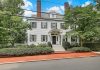
With offices upstairs – the fund moved in in April – the new headquarters fits in about 5,600 square feet, much larger than the 2,000-square-foot office that the five-employee nonprofit had had on the city’s East Side for about 28 years.
In a deal with The Armory Revival Company, a developer focusing on West Side redevelopments that does a lot of work with the fund, the fund bought the building for about $350,000 in 2007. It started the $400,000 renovation later that year and moved in after seven months of work.
The move to the West Side will be another step toward bringing a once-vibrant neighborhood back to prominence, said Kari Lang, executive director of the West Broadway Neighborhood Association. The fund has worked with WBNA on its headquarters and a few residential projects along Westminster Street. Those projects wouldn’t have happened without the fund’s help, she said.
While it has focused on West Side redevelopment, the fund’s work since its 1980 founding can be seen throughout Providence. For example: when a new 24-hour market, Gourmet Heaven, opens on the corner of Weybosset and Union streets early in 2009, it will have been financed through the fund.
That market’s owners are subleasing space from Cornish Associates, which is leasing a storefront owned by the Rhode Island School of Design.
At Cornish, Arnold B. Chace Jr. last week pegged the fund’s role in Providence as more than just a leading preservation group. It also creates space for new small businesses – and helps finance signs and build-out costs – like the soon-to-open Gourmet Heaven.
Chace, who’s regarded as being instrumental in bringing residents and shops to downtown, said many of his company’s projects were made possible by lending and grants from the fund.
“They’ve helped with the revitalization of our buildings along Westminster Street in the Downcity by giving us secondary financing on at least three of the buildings that we’ve done,” Chace said.
Schoettle handled financing for the Peerless building project, one of Cornish’s most ambitious redevelopments. Chace said that what sets the fund apart as a lender is that Schoettle and his staff quickly become “proponents and advocates,” taking an active roll in Cornish’s projects.
In 2000, Bank Rhode Island made available a loan pool to the nonprofit for rehabilitation projects. As of November, the bank had provided $640,000 in financing for 36 low-to-moderate-housing projects, according to the bank. And the new headquarters was partially funded by a $15,000 grant from the bank.
In a recent statement, BankRI Senior Vice President Peter Walsh lauded the move to the West Side of Providence, saying, “With record-high home foreclosures across the city, the resource center’s expansion and relocation couldn’t come at a better time.”
And Schoettle is aware of the growing problem.
Standing over a series of maps of foreclosed, abandoned and distressed properties throughout the city, he pointed out some streets that have clusters of five or six foreclosed homes in a row. As always, the fund is compiling ownership records and prices, looking for the next area that it wants to revitalize. The fund usually works on about 35 projects a year, alternating between renovating abandoned houses and financing others’ projects.
On the West Side, the fund was responsible for renovating much of Luongo Square, including the building that now houses The Avery bar.
“We look for clusters where there are three or four abandoned houses within about a half a block of each other,” Schoettle said. “We try to target areas like that to make a difference.”
He said those blighted blocks are becoming increasingly easy to find.
But with a high success rate, Schoettle likes to keep neighborhood projects as quiet as possible in an effort to avoid heightened selling prices. “So you go through a period of accumulation, hopefully without too many people realizing what you’re doing,” he said.
Revitalizing a blighted block was also part of the goal of renovating its new headquarters.
Since 1995, the fund had had its eye on the West Fountain Street building. But the former owner wanted to sell it and the former mill buildings across the street as a package, which the fund couldn’t afford, Schoettle said.
So the fund worked out a deal with The Amory Revival Company, which was interested in the other buildings. Armory is now renovating the other buildings and recently leased space to Planet Fitness gym across the street. Already, foot traffic has increased.
For the fund, the move is far from complete. On the ground floor, the cork flooring and two bathrooms are yet to be installed. Computers, bookshelves and reference materials have to be moved in next month. The resource center will have displays of appropriate windows and shingles for historic preservation.
Before starting the renovations, Schoettle went to the Society for the Prevention of Cruelty to Animals, which built the building and left in 1985. Using old SPCA photos, Schoettle’s staff recreated the building’s oversized forest green door and the Victorian-style lamps on the exterior. An interest in those details seems to be at least part of the secret of Schoettle’s success in leading the fund.
Standing, looking over the rows and piles of salvaged material in the new headquarters, Schoettle pointed out a bathtub with a history. If it hadn’t been picked up by the fund, it would have ended up at the landfill because it didn’t fit in the low-income housing renovation that it was pulled out of, he said.
“But some homeowner would love to have that bathtub,” Schoettle said. •



No posts to display
Sign in
Welcome! Log into your account
Forgot your password? Get help
Privacy Policy
Password recovery
Recover your password
A password will be e-mailed to you.
- Featured Event -