Even in a down economy, voters in East Greenwich last month decided to take out a 30-year, $52 million construction bond to build a middle school and fix up their high school and elementary schools.
The bond, approved by 62 percent of voters, is larger than the town’s annual budget, which is about $47 million, and the school district’s 2009 budget proposal of $32.3 million.
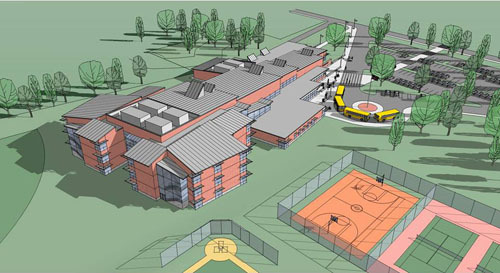
About $40 million is for a new middle school, $9 million is for renovations to the town’s high school and $3 million is for elementary school renovations, Town Manager William Sequino Jr. said recently.
“It’s a lot of money for a small town like East Greenwich, but the problem is that if you’re going to build a school, you can’t just build it halfway,” said Burns & Levinson LLP Partner John R. Gowell Jr., who since 2005 has been chairman of the school department’s volunteer facilities committee. “You can’t say you’ll build the classrooms, but not the cafeteria. Or that you’ll build the science labs but not a band room.”
The town’s Archie R. Cole Junior High School was built as a high school during the 1950s. A 2002 referendum for a $34 million school to replace it was voted down by voters.
“And Cole Junior High had just deteriorated to a state that I believe the architects and project manger felt wasn’t feasible to renovate,” Sequino said.
The new school will replace Cole and also serve as a way to restructure the district’s grades by moving sixth graders into the middle school, Sequino added. Along with being a trend in K-12 education, adding a middle school to the district will free up space in each of the district’s elementary schools, he said.
Nationally, a “difficult economy and rapidly rising costs” are cutting back on many school districts plans to build new schools, according to American School & University’s Official Education Construction Report, released this spring.
School district spending in 2007 rose to $14.67 billion for new school construction, a 7.3 percent rise from 2006, according to that report.
But spending is expected to drop in the current three-year period, ending with 2010. During these three years, new construction by school districts annually will average $12.23 billion.
For the 52 percent of districts that intend to build a new school, the median district size is 5,060 students. And median district spending will be $19 million, American School & University reported.
East Greenwich, with about 2,200 students, has less than half the student median and will spend more than double the median building cost on the new school.
But in East Greenwich, the new school is a necessity, Gowell said. At the current junior high, the nurse’s office is a former janitor’s closet. The language arts teachers use a cart to move room to room, instead of having their own room, he said.
Even in good times, there are always budgetary problems for school systems, Gowell added. Cutting needed spending had forced the district into its current situation, he said.
“And the first thing that gets cut from school budgets is usually maintenance and repairs to facilities,” he added. “They’re not going to cut teachers if they can avoid it … and, unfortunately maintenance had always been cut … by prior administrations.”
Gowell’s committee hired Old Saybrook’s Strategic Building Solutions to study the district. They also brought in architects Symmes Maini & Mckee Associates Inc. to design the school. Those firms looked at renovating the building, but in most scenarios that would have cost just as much as building a new school, he said.
The 110,000-square-foot school will be on the same Cedar Street site as the current junior high, Gowell said.
For taxpayers, the new school should help keep property values from dropping in town, he added. It’s also a way to stop the district from “putting good money after bad” and repairing schools that are beyond repair, he said. •