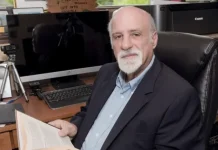
Eileen Leonard has been named senior vice president, investment officer at Wachovia Securities. She is a financial adviser in the firm’s Providence office. Leonard is a member of the Northern Rhode Island Chamber of Commerce and has served on the boards of the Providence Sunrise Rotary and American Lung Association. She has a B.A. and a MBA with a concentration in finance from Hofstra University.
PBN: What area of finance will you be focusing on?
LEONARD: In wealth management I work primarily with individuals and small businesses, but a particular segment is guiding baby boomers through their transition from work into retirement. Each client has worked a long time to accumulate their money and my job is to help them grow that wealth in a manner consistent with their objectives, but also in regards to their unique risk tolerance. Everybody is comfortable with different levels of risk – it comes down to simply making decisions that allow you to sleep at night. These things, both consistency and decision making, have to be taken into consideration.
Your Business Has Gone Global. Has Your Insurance?
A decade ago, “doing business internationally” was mostly a large-company concern. Today, a manufacturer in…
Learn More
PBN: What are some of the challenges you have found?
LEONARD: About 40 percent of my clients are between the ages of 50 and 65 years old and another 40 percent are 65 or older. Baby boomers don’t want to stop working. For my clients that are facing retirement, there is a financial and emotional component. With the growing population of baby boomers, there is a need to help this increasing population transition into retirement. It doesn’t matter the profession – doctor, executive, middle manager – they all have the same concerns: Will I have enough money to retire? If I do, how much money can I expect? And how long will it last? My job is wealth management and their job is to retire.
PBN: With an education in history and business, what is unique about your perspective?
LEONARD: My background in history and finance has given me a sense of what has happened year to year in the markets. Every few years there are scary things that happen, such as now with the credit market, but when you look back 20 years, and even further, you can’t find a decade when there wasn’t a problem economically or politically in America. Even in the 1950s, which people like to look at as a calm time, there were three different recessions. The market goes through ups and downs. My studies in history reinforced this. I look at things in the long term and don’t get caught up in things happening right now. •