NEW YORK – The index of U.S. Leading Economic Indicators last month fell to 136.5 points (1996 = 100), a decline of 0.2 percent from its revised November level, according to a report today from The Conference Board. It was the third consecutive monthly decline for the index, which fell a revised 0.4 percent in November and 0.7 percent in October.
Analysts had expected the index to fall 0.1 percent in December after falling 0.2 percent in November, based on the median forecast from a Bloomberg News poll of 62 economists. (Their estimates ranged from a decline of 0.3 percent to an increase of 0.1 percent.)
Four of the Leading Index’s 10 indicators improved in December, led by vendor performance. Also rising were the nation’s real money supply; stock prices; and manufacturers’ new orders for consumer goods and materials.
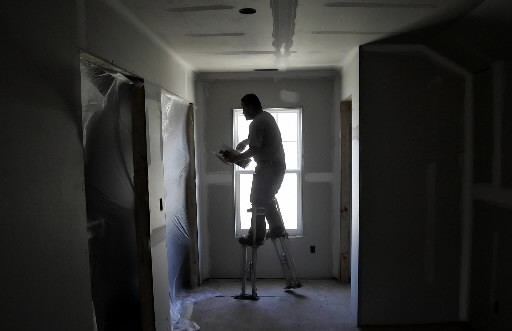
The other six leading indicators all lost ground last month, led by a plunge in building permits. “Average working hours in manufacturing also made a large negative contribution to the index this month,” The Conference Board said. Also worsening were manufacturers’ orders for non-defense capital goods; new unemployment claims nationwide, which rose; public expectations, measured by the Reuters/University of Michigan Consumer Sentiment Index; and the interest-rate spread.
“The Leading Index has weakened sharply since mid-2007, with widespread weakness among its components in the last two months, and it has returned to the level attained in mid-2005,” the report noted, adding: “While the strengths and weaknesses among its components were roughly balanced throughout most of 2007, weaknesses have become more widespread in the last two months.”
Last month’s decline left the index 1.4 percent below its level in December 2006 and 0.8 percent below its level in June.
“Taken together, the recent behavior of the composite indexes highlights increasing risks for further economic weakness, and suggests that economic activity is likely to be sluggish in the near term,” The Conference Board said.
“This is the pronounced slowdown that the Fed has spoken of,” Richard DeKaser, chief economist at National City Corp. in Cleveland, told Bloomberg News. But, he added, “I don’t think we are in – or going to be in – recession. The economy is in a period of very weak growth.”
The Conference Board is a nonpartisan, nonprofit business membership and research organization with offices in New York City, Chicago and abroad. Additional information, including this month’s full Leading Economic Indicators report, is available at www.Conference-Board.org.