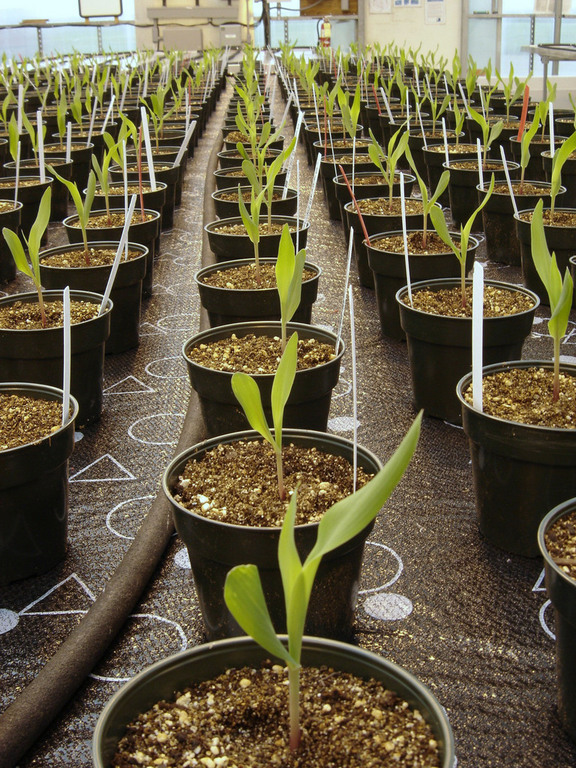
If the 75 million acres of corn produced annually by the United States were used just to make ethanol – a biofuel created by processing and distilling biomasses such as corn, switch grass or soybeans – it would displace only about 12 percent of the gasoline used each year.
An increasing population that’s using more energy per capita than ever before, coupled with a growing sustainability crisis, can’t be easily solved with a “niche” solution like corn ethanol, David Tilman, a University of Minnesota Regents professor, said at a lecture at Brown University last Tuesday as part of the school’s Environmental Change Initiative series.
Without changing the production process to increase yield and reduce energy input, ethanol likely won’t be the solution to the world’s energy problems, he said.
Currently, refining and using ethanol results in only 14 percent lower greenhouse-gas emission than the same process for oil, he noted.
“A typical gasoline blend of 10-percent ethanol, 90-percent gasoline, gives you a 1-percent lower greenhouse-gas emission than if you just burned pure gasoline,” Tilman said.
In ethanol production, only 20 percent of the resulting material is new, non-fossil energy – meaning that all the carbon dioxide released from the soil, energy burned by the tractor and other inputs – not including solar energy – are equal to 80 percent of the energy yield.
“When you go to an ethanol factory, people working there are quite proud of the volume in alcohol that they have leaving the plant,” Tilman said. “They aren’t multiplying by 0.2 to find out what amount of that alcohol is actually new energy that society has gained.”
Currently, according to the Renewable Fuels Association, 26 states have ethanol plants. That’s a more than 50-percent increase since 1999, when only 17 did. During that same period, the number of U.S. ethanol plants jumped from 50 to 130.
In Rhode Island, a $135 million plant that could annually produce about 60 million gallons of fuel has been proposed as an addition to the Quonset Business Park. As of mid-October, that plant has preliminary approval from the Quonset Development Corporation, but it still must undergo a review by state planners.
The plant has been proposed as national forces are pushing for increased use of biofuel. The U.S. Energy Policy Act of 2005, signed by President Bush, requires that the amount of biofuel used nationally must triple, to 7.5 billion gallons, by 2012. That bill also allows for $1.3 billion in tax breaks to support ethanol fuel production.
Tilman has been studying biomass diversity and its effect on the production yield of ethanol. He said growing a diverse crop of biomass on infertile land might be comparable to the ethanol yield of growing corn on fertile land. Instituting such a process also wouldn’t cut down on corn production for human and cattle consumption.
But, with the per capita consumption of energy projected to jump about 140 percent during the next 50 years, the discussion about energy production has just begun and will become increasingly important, Tilman said.
“We’re talking about biofuels because there are six billion people on Earth consuming more per person than ever before in the history of human life,” he said. “That’s why we’re doing this. And we’re going to increase from 6 billion to 9 billion people in the next 50 years.” •