Most people who live near the city know of Providence’s gay-friendly atmosphere. With more than five gay bars downtown, the gay and lesbian nightlife blends in with everything else the city has to offer.
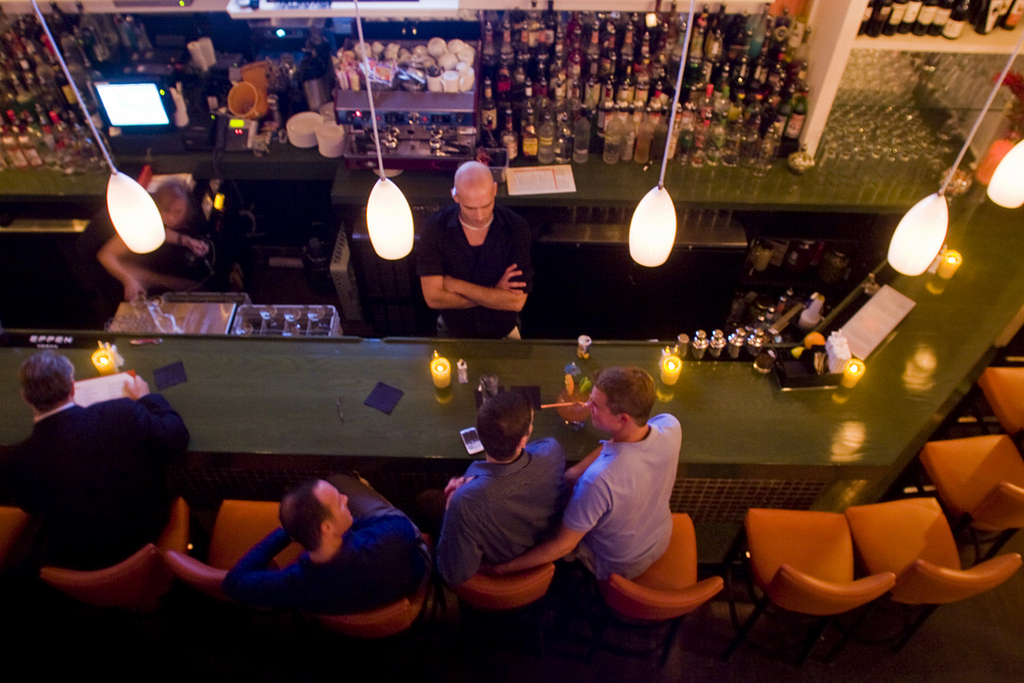
The Sept. 7 reopening of DownCity, which moved into a newly built-out space at 50 Weybosset St. after a kitchen fire claimed its 16-year location at 151 Weybosset St. in May of last year, reinforced that perception; the bar and restaurant has long been a hub for the city’s gay and lesbian community.
ISO 9001:2026: A Practical Opportunity to Build for What’s Next
For Rhode Island manufacturers, ISO 9001 has been much more than a certificate on the…
Learn More
And now the Providence Warwick Convention & Visitors Bureau is actively building on Providence’s reputation for having a gay-friendly nightlife, hotel environment and strong arts and cultural scene, reaching out to gay travelers across the country.
“It’s definitely a priority for us,” said Kristen Adamo, vice president of marketing and communications for the CVB. “We’ve been advertising in gay and lesbian-themed publications since early spring.”
The idea for an ad campaign came from feedback from several reporters from gay publications who had visited the city, she said. “They said we should investigate marketing to this community.”
So the CVB started looking at other cities such as Philadelphia, which undertook an aggressive gay-and-lesbian-focused marketing campaign organized by Community Marketing Inc., a San Francisco-based gay and lesbian market research company.
Since the campaign started more than a year ago Philadelphia has reported that for every $1 it invested, it’s gotten $100 back from the tourism generated by the targeted campaign, said Christopher Schutte, a client development director for Community Marketing Inc. who is based in Providence.
“I don’t see why it wouldn’t” happen the same way in Providence, he added. “The market is maturing, so it opens new opportunities. Not everyone wants to go to the same places anymore. They want new experiences.”
And Providence has a unique selling point, Schutte said, because the city’s gay-friendly establishments aren’t limited to one section of the city.
“In Providence, you don’t need to find the neighborhood,” he said. “You can just experience the city like everybody else.”
And that aspect appeals to the maturing market of gay travelers, because not all are interested only in nightlife, he said. Some segments of the market are retired gay couples. Some are lesbian couples with children.
As for the accommodations side of tourism, hotels that want to market themselves as gay-friendly can apply for Travel Alternatives Group, or TAG, approval.
The designation means the hotel meets certain requirements such as not discriminating by sexual orientation in employment practices, actively reaching out to the gay and lesbian community, and striving to create a gay-friendly experience for guests.
Becoming TAG approved gives hotels a broader scope of marketing, Shutte said, because searches on Web sites such as Travelocity’s new gay travel Web site return only those hotels approved by TAG.
Three Providence hotels – the Hotel Providence, the Providence Biltmore Hotel and Hotel Dolce Villa in DePasquale Plaza on Federal Hill – are TAG approved, and the Renaissance Providence Hotel is in the process of getting the approval as well.
“The TAG people do a tremendous amount of marketing to the gay and lesbian community via direct e-mail,” said Tom Riel, director of marketing and communications at the Renaissance. “And their accommodations directory reaches throughout the United States and internationally.”
The Renaissance aims to prove its track record as a gay-friendly business by including the after-hours events it has hosted for Rhode Island Pride in its application to TAG, Riel said. The hotel also must include a letter of recommendation from a gay and lesbian organization.
Gay tourists are much sought-after because they are thought to have more disposable income for travel, he added.
“That demographic is very loyal,” Adamo said.
But the loyalty of the gay demographic isn’t a new experience for established venues such as DownCity, whose clientele often asked owners Abby Cabral and Rico Conforti when they were going to reopen during the 15 months they spent finding and renovating the new location.
Finding space downtown, however, was a new – and very frustrating – experience, Cabral said.
“We looked at 10 different places,” she said. “Most of the owners of the spaces didn’t think we could handle [the challenge of the] buildout.”
But that didn’t stop the search.
And it all worked out for the best, Cabral said, because the space she and Conforti found was perfect for the new DownCity the pair had envisioned.
Designed by Providence-based Keven Hawkins Inc., the space is modern and hip, with an orange and white color scheme and lounge-like feel. A mezzanine overlooks the bar, and the whole place can seat 156 people, whereas the previous location could accommodate 85.
The menu has been expanded as well, keeping traditional favorites such as the meatloaf, calamari and crab cakes, but adding new dishes and 30 more specialty martinis than the old DownCity had.
Many of the martinis are named after intimate friends or phrases of the owners; some are named after local drag queens. DownCity boosts its gay clientele by advertising in gay publications, but it also advertises in mainstream publications because the restaurant wants to pull in “anybody and everybody” from the community. And with a business lunch hour, happy hour and brunch on weekends, that is exactly what it does.
“This is no longer the little restaurant that could,” she said.
Those interested in seeing Providence succeed as a gay tourist destination are recognizing the same thing about the city.
Schutte said Community Marketing Inc. recently added Providence to its annual tourism survey and, although the numbers aren’t fully compiled, the information indicates that 50 percent more survey respondents plan to travel to Providence within the next year than those who said they have traveled to the city within the last 12 months.
That’s a good sign, he said. •