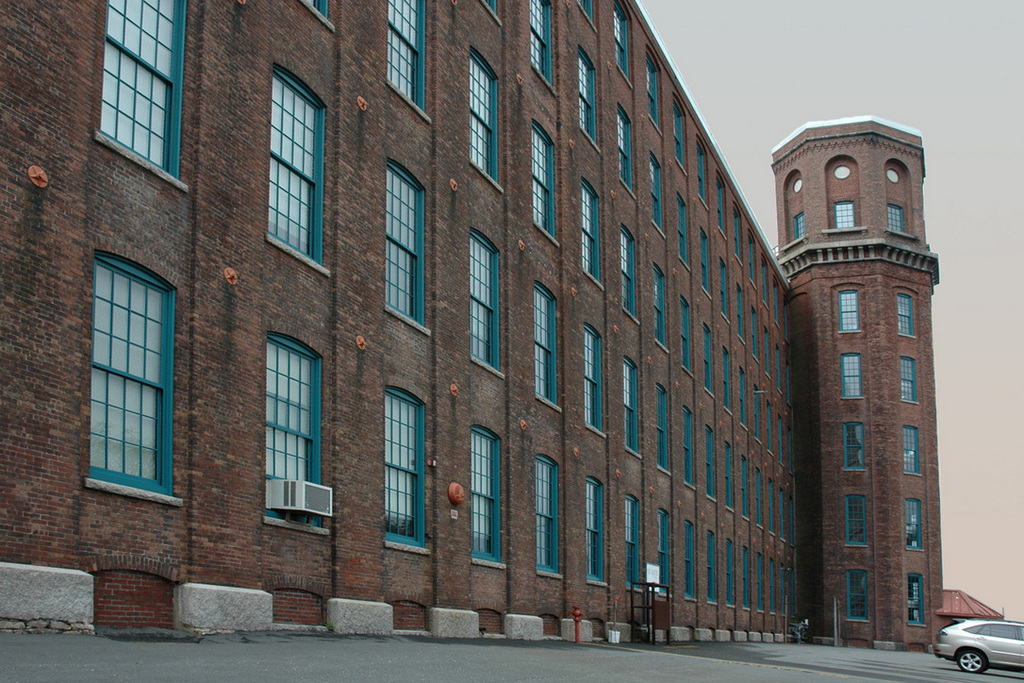
Joanne Bagley, president of Kenyon-based Kenyon Industries Inc., said news of Quaker Fabric Corp.’s decision to discontinue operations reaffirmed her sense that “manufacturing companies are an endangered species in this country.”
Though Kenyon Industries does not manufacture fabrics, the company does process and treat fabrics to meet various specifications for durability, waterproofing and fire-retardant standards in the industry.
And, like Quaker Fabric, the company knows what it’s like to constantly battle the competition from cheaper exports, Bagley said.
Unlike Kenyon Industries, however, Quaker Fabric finally lost that battle. The company announced July 2 that it was unable to repay the $34.2 million in outstanding loans it owed to four lenders, including Bank of America.
During the past three years, Quaker Fabric reported continual net losses, including a $5.1 million loss in the first quarter of this year; in the same quarter a year earlier, it had lost $4.1 million. For all of 2006, Quaker Fabric reported a net loss of $37.6 million.
The company lost about $213 million in sales between 2002 and 2006.
“For them it’s been a long, agonizing, slow death,” said John Visich, assistant professor of operations management at Bryant University.
Visich attributes the company’s demise to the shift of final-assembly manufacturing to China.
“Most of the furniture now is made in China,” he said. “So why would they want to outsource fabric made in the U.S.?”
Quaker Fabric did make attempts to outsource upholstery fabric production in China. Last year the company set up a long-term production agreement with manufacturers there.
The company also tried developing new product lines for custom manufacturing, and for the outdoor furniture and upscale furniture markets.
“I think they were making the right moves,” said Jack Healy, director of the Massachusetts Manufacturing Extension Partnership, which is similar to the Rhode Island Manufacturing Extension Service, better known as RIMES.
“I just think they ran out of time,” he added. (Larry Liebenow, president and CEO of Quaker Fabric, did not respond to a request for comment.)
Healy said he remembers when MassMEP helped the company set up small-run manufacturing processes for its custom fabric business. That was about seven years ago.
“At that time they made the decision that they would have to do a lot more custom work,” he said. “Their customers’ business was moving offshore. … The unfortunate thing about Quaker is it’s an industry where the people they sold to are going out of business.”
The manufacturers that are surviving have to be more flexible and responsive to customers and trends in their industry, Healy said.
“It’s very hard to compete with a commodity basis,” he added. “There are too many people around the world that can compete with commodities, and at a cheaper price.”
Visich, who teaches about supply chain management, said another aspect that’s killing companies such as Quaker is the fact that it is cheaper not only to make product in China, which offsets the cost of longer transportation time, but also increasingly to ship product via ocean freight.
Ocean freight allows furniture to be shipped in cubed containers at a low cost, he said. One boat can hold as many as 10,000 containers, and the containers can be filled to the brim.
Visich said a focus on high-performance, quality products and on the speed of the product development process is crucial to surviving as a manufacturer in the United States.
Speed in getting ideas for new products from concept to market has been a key to Kenyon Industries’ survival, Bagley said.
“We’re spending a lot of time developing new products,” she said. “We are continually coming up with new ideas very fast so we can introduce them more quickly than anyone else.”
But battling the high cost of energy, health care and compliance with environmental regulations is another challenge.
Bagley said this year the company’s health insurance costs rose 25 percent. And the company’s energy costs rose 27.8 percent between 2005 and 2006.
In addition, when manufacturers go out of business, letting go 900 employees like Quaker Fabrics did, Bagley said, it makes it harder for other manufacturers to find qualified employees to fill vacancies or new positions.
“They’re frightened,” she said. “Everybody wants to work for a company and stay until retiring, but with so much uncertainty now … if they lose their job more than one time, they get very concerned and discouraged.”
Sixty-two of the 900 employees that worked at Quaker are Rhode Island residents. •