Disasters can happen, and the smart homeowner or business manager is ready in advance: candles, batteries, rock salt, propane stove, drinking water, walkie-talkies, data backup systems, fireproof filing systems, telephone notification plan, generator. C’mon hurricane.
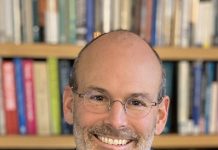
For Dr. Selim Suner, unit commander of the R.I. Disaster Medical Assistance Team, the job is bigger and broader. He heads a group of 230 volunteers – medical, technical and logistical people – who can be in motion within eight hours of any disaster in the United States with the capacity to set up three field hospitals and to treat up to 250 people a day.
Teams within the Rhode Island DMAT, which has its own transportation facilities, spent weeks working on the perimeter of the World Trade Center site and waded into the New Orleans Superdome after a previous medical team was withdrawn.
Suner co-founded the DMAT in 1989, when he was a medical student and EMT. He is now director of emergency preparedness and disaster medicine at Rhode Island Hospital and an associate professor at Brown University.
DMATs were formed starting in the early 1980s to track the availability of hospital beds across the country for use by overflow military personnel injured in conflicts overseas, Suner said. But the need never materialized, and over time, the DMATs’ role changed, and they were deployed to sites of hurricanes, earthquakes, ice storms and terror attacks.
The Rhode Island team has been mobilized in advance to events where big crowds were expected and medical problems could arise, such as the Olympics in Atlanta and Salt Lake City, air shows, marathons, inaugurations and political conventions.
Now, Suner said, the DMATs are working on becoming more mobile for faster responses. (The Rhode Island team’s slogan is “There before you think you need us,” and, indeed, the group was poised on the outskirts of New Orleans before Katrina landed.)
Almost every disaster also brings lessons, Suner said, and the DMAT has adapted accordingly. For example, working in the New Orleans Superdome, the team was buffeted with people who needed medications for chronic conditions such as high blood pressure and diabetes, because their medicines and records had been swept away with their homes.
“We were prepared for burns, traumatic injuries; we can set bones, suture, intubate,” Suner said. “But what happens if 100 people with high blood pressure knock on your door? Our pharmaceutical cache was not designed to deal with that. Now we have adjusted our pharmacy to include medicines for chronic illness.”
Also at the Superdome, the DMAT needed for the first time to do more work on keeping its members safe. “How do you secure your team when they are in the middle of 30,000 to 40,000 hungry, frightened people?” Suner said. “We had to work very closely with the federal protective services.”
Yet another lesson and adjustment in procedures was visited upon the team when it was working at the World Trade Center site. For the first time, team members were working in the shadow of buildings that could have collapsed at any moment.
“We had to deal with evacuation protocols and strategies,” Suner said. “During [subsequent] deployments, we have briefed our team on that.”
Leadership of the DMAT, by Suner and his top deputies, involves keeping a close eye on the emotional well-being of the workers as well as their physical safety.
“After 9/11, when we were walking around body parts in sheets, I thought it could not get any worse, and then there was Katrina,” Suner said. “After 9/11, mental health visits went up for everyone who was affected.”
He said that anyone recovering from a role in a disaster needs to watch for signs of stress, like changes in sleeping and eating patterns; steer clear of using alcohol and drugs; talk frequently and opening with affected children; and rely on family, friends and colleagues.
“As a leader,” Suner said, “my job is to alleviate stress in team members and to be a good example. I tell team members, ‘We anticipated this; we planned for it; we are looking out for you.’ In the Superdome, we had a sense of security, a sense of mission. We knew that no matter where we were or what we were doing, we were in it together.”