In its half century of existence, the Providence Preservation Society has expanded its focus beyond College Hill to become a force promoting preservation and guiding planning and development across the city.
The Society has become especially present in the Downcity District in recent years, largely through its Planning and Architecture Review Committee. The committee – which is comprised of local architects, urban planners and preservation experts – reviews and advises on the rehabilitation of historic properties and on new developments in historic districts.
Building a Strong Data Foundation in the Age of AI
Artificial intelligence (AI) has become a key priority in the boardroom and across management —…
Learn More
While consultation with the committee is voluntarily for developers, in its two decades of existence the committe has become an established arbiter and advocate for the Preservation Society. The commitee has consulted on such landmark projects as the Providence Place mall, and redevelopment of the Shepard department store building, The Arcade and the Masonic Temple.
More recently, developers Evan and Lloyd Granoff consulted with the committee regarding their project to build luxury condominiums on the site of the former Providence National Bank in downtown Providence. While the historic bank building on Westminster Street will be razed, the project also includes an historical renovation of old buildings on Weybosset Street.
Reviewing the project, the committee felt the ground-level facade of the new building planned for Westminster Street could be enlivened, and the Granoffs incorporated suggestions that came out of the design review. The Society also helped to link the Granoffs with the Partnership for Creative Industrial Space to remove and preserve historically significant murals inside the old bank building slated for demolition.
The project typifies the Society’s approach to downtown development, the group’s Executive Director Jack A. Gold said.
“It’s a really good example of how the Preservation Society is able to work with a developer to promote a successful project,” Gold said. “You can’t expect that you’re going to save every single building.”
To promote successful smaller projects downtown, the Society’s sister organization, the Providence Preservation Society Revolving Fund, partnered last year with the Rhode Island Foundation to establish a new loan fund.
The Downcity Fund Loan Program will provide loans to qualified borrowers for substantial renovations and for facade improvements in the Downcity District. The Rhode Island Foundation committed $7.2 million to the loan fund.
Continuing its focus on downtown Providence, in June the Society conducted its annual Festival of Historic Houses entirely in the Downcity District. The festival, the first of its kind held downtown, showcased commercial spaces that have been redeveloped as residential lofts.
Another tool the Society has frequently employed to promote its mission downtown is its Ten Most Endangered Properties list, with which they cast a spotlight on historical buildings threatened by arson, vandalism and abandonment. Buildings that have been or are currently being restored after being named to the list include the old Shepard Department Store, the old Providence Journal building and the façade of the Masonic Temple building.
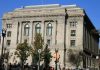
The Society considered it a victory when the developer building a hotel at the Masonic Temple site reworked the plan to preserve the building’s façade following pressure from the Society and other parties.
“It was going to be demolished,” Gold said of the building.
Anticipating a comprehensive rewrite of Providence’s zoning ordinance currently under way, and a dramatic redevelopment of the city’s waterfront following completion of the city’s highway relocation project, in January the Society created the Critical Issues Committee to participate in large-bore planning by the city.
Trustees of the Society served on a few subcommittees involved in drafting the comprehensive zoning ordinance for the city. Many stakeholders expressed disappointment that the city did not incorporate more input in drafting the new zoning bylaw, but the new ordinance is better than the old one, Gold said.
“I think they’re moving in the right direction,” he said. “What they’re coming up with is much better than what we’ve had.”
The Critical Issues Committee held a public meeting Oct. 29 to discuss the city’s development plan for the waterfront. Other issues the committee is focused on include the state’s historic tax credit, which may be threatened with rollbacks, and the state’s lead law, which is expected to cause an increase in the replacement of many historical facades with vinyl.
The Society is also advancing its mission in the city’s outer neighborhoods, primarily through the revolving fund, which was established 25 years ago to provide gap financing and technical assistance in distressed neighborhoods. The fund has grown to become one of the largest preservation funds in the nation, and the loan pool continues to expand as new neighborhoods are targeted.
To raise funds and awareness of its mission as it nears its 50th birthday in January, The Society will hold an event Nov. 4 featuring renowned antique specialists from PBS’s “Antiques Roadshow.”
As part of a Collectors’ Afternoon, 40 guests will be transported by trolley to two private homes in Providence, where Leslie and Leigh Keno will conduct tours of each home’s antique collections. After the tours, guests will join the Keno brothers for tea at the Nightingale-Brown House.
Following the tours, the Kenos will host a Patrons’ Reception at the Biltmore Hotel, which will include a bidding auction and a signature presentation by the brothers. Guests can bid on a cocktail party for eight at Leigh Keno’s gallery in Manhattan.