Business Council of Rhode Island
Innovation, creativity seen as ways to open new markets
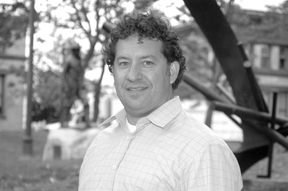
Peter Bramante
Your Business Has Gone Global. Has Your Insurance?
A decade ago, “doing business internationally” was mostly a large-company concern. Today, a manufacturer in…
Learn More
Age: 42
Position: Executive Director, Arts & Business Council of Rhode Island
Background: Prior to becoming executive director in 2000, Bramante
was artistic director for Groundwerx Dance Theatre in Providence for 13 years.
Education: Master’s of Fine Arts, Connecticut College; Bachelor of
Fine Arts, Roger Williams University
Residence: Providence’s Armory District
The Arts & Business Council of Rhode Island works to promote cultural
and economic growth through leadership, partnerships and programs that link
the arts and business sectors. It is one of 23 affiliates of the Arts &
Business Council/USA network, and is an affiliate program of both the Greater
Providence Chamber of Commerce and the Rhode Island Chamber of Business &
Industry.
Q. There’s a long history in Rhode Island of business support for the arts.
How has the council formalized that relationship?
A. Our primary mission is about linking the arts and business sectors
through leadership programs and partnerships. We provide services to arts and
cultural organizations across the state, sort of the business side of the equation,
making sure that the goals of their artistic mission are supported from an operations
standpoint. Consultants help them with specific projects, like developing marketing
plans. We’re really in the business of solving business problems for our constituents,
who are primarily the arts and cultural groups. But those groups also have a
great deal of knowledge for businesses around creativity, team-building and
innovation that can help reinvigorate our manufacturing sector and our business
leadership.
Q. What sorts of businesses do you target to help arts and cultural organizations?
A. We do have a lot of independent consultants, entrepreneurs or small-business
owners. But ideally we work with corporations. We’ll target our recruitment
efforts within certain industry sectors, like financial services, where we need
certain skill sets. When you bring the collective weight and community impact
of a larger business, that sets a tone, not only for volunteerism, but also
for the institutional knowledge of that organization. They lead the way to show
that ‘we understand this is an important sector that needs to be nurtured, and
we’re all going to benefit.’ We are doing more targeted recruiting in this next
year. We do two trainings a year for our consultant pool, and we’ll be targeting
Fidelity (Investments), Bank Rhode Island and Textron (Inc.).
Q. What do the businesses get out of it?
A. We’d like to think of the equation as being an equal one, where
it’s not just bringing knowledge from the business sector over to the nonprofit
sector. For the actual consultant, they’re building their professional skills.
They can take their everyday working knowledge and transfer it into a challenging
and fun environment. Also, bringing to the companies that idea of creativity
and innovation. If they’re thinking about entering a new market, for example,
there may be teambuilding or creative thinking skills that consultants can bring
back to their company. We’d like to really think about how we can almost develop
arts and cultural consultants for the businesses, sort of a swap.
Q. What’s a good example of how these consultancy programs help arts organizations?
A. A few years back, the Sandra Feinstein-Gamm Theatre was looking
to relocate its home, and came upon the Pawtucket Armory. It became clear there
was an opportunity, but the entire building was going to be such a huge project
to get up and running. So a separate nonprofit organization called the Pawtucket
Armory Association was created, and through the city of Pawtucket, the building
was sold for a nominal fee. We from the start were part of the discussion as
to how that would happen, and then we provided a consultant who basically did
the financial prospectus for that project. We now have a team of three consultants
working on how the Gamm Theatre will relocate its audience and develop a marketing
strategy when they actually make this move.
Q. Can any artistic nonprofit benefit from these kinds of programs, or
do they have to be members and pay dues?
A. Currently the consultancy program is just on an application process.
So you don’t need to be a member; it’s available to any arts or cultural organization
that applies, and then we try to match the need to the skill of the consultant
we have on our roster. As we add more services we’re going to look to a broader
membership model. We do have membership for a new service that we just kicked
off called ArtTix, which is a centralized box office, marketing and ticketing
service.
Q. How is the ArtTix program going?
A. It’s going phenomenally well. This was a huge need: audience development
and ticketing, especially for the majority of our small- and mid-sized organizations
that don’t have a box office. This is a way for them to outsource that service.
When we launched the program on May 6th we had about 20 members and we’re now
at 50 members. We’re trying to brand it as a source for arts and cultural events-information
and ticketing. We’d like to see how we can partner with tourism groups to promote
Rhode Island and Providence as an arts and cultural destination for the entire
region. If you’re coming into town, this is a great way to find out what’s happening,
where the show is, buy a ticket, plan your dinner reservations – sort of one-stop
shopping.
Q. Is there a left-brain/right-brain dynamic that makes running a business
challenging for artists?
A. An artist entrepreneur – just like any entrepreneur – starts with
vision and passion. That is organized in a different manner than are management
principles. And oftentimes what happens is the idea takes precedent, and you
need that first and foremost. Normally they’ll charge ahead with the vision
and then go backward and think about the structure of it. Usually the board
is a bunch of friends who support your idea. So normally all the things you
would do in a business plan before you would launch your venture happen after
the fact (laughs). So it’s sort of going back and doing that basic business
planning. At that point, the focus is really legal issues, structure, governance,
financial policies.
Q. What challenges do more-established arts businesses face?
A. Once things take off, they’re not really sure who their audience
is. There’s the challenge of really understanding the market and thinking strategically
about marketing. This is one of the tradeoffs that is difficult for a lot of
artist entrepreneurs. They think of marketing as an evil thing. ‘It means I’m
going to sell out my vision to become commercial.’ Through the National Arts
Marketing Projects, which is one of the programs we run that is shared with
12 affiliates in the country, we have taken some of the best practices of marketing
and translated it into arts language. It’s also educating arts leaders to understand
that art speak is not consumer language.
Q. Can the effects of the council’s programs be measured in terms of dollars?
A. We can clearly measure the value of what our consultants are doing.
In the last year we know that we provided over $780,000 worth of consulting
services alone to about 45 arts and cultural organizations across the state.
But we don’t yet have a way to measure ‘what has the delivery of those services
meant to these organizations?’
Q. How has the slow economy affected business support for arts and cultural
nonprofits?
A. It’s really been tough quite honestly. And we haven’t seen the
end of it yet, because most corporations and foundations are basing their giving
on a certain percentage of earnings and investments. So we’re still feeling
the effects back from 2001. It’s probably one of the toughest climates ever.
I lived through the late ’80s downturn, but this is really quite a bit tighter.
There has been so much consolidation, so there are fewer larger corporate entities
here. There’s just nobody that is flush with cash at this point.
Q. The city and state have new economic-development strategies that focus
heavily on maintaining a ‘sense of place.’ How does the council’s work fit into
that strategy?
A. There has been a shift in recognizing our economic-development opportunities
and how arts and culture play a role as an economic engine and making the place
attractive for new or existing business. I think the role is for us to be that
conduit between the business and arts sectors. Our civic and business leaders
really do get it now, they get the fact that this is an economic engine. Through
the (former Providence Mayor Vincent) Buddy (Cianci) years, there was a lot
of hype about it, but there wasn’t a lot of support there. But in the same way
we’ve had structural problems with our budgeting at the state and city level,
we’ve had a structural deficit in investing in this arts and cultural sector.
Everybody understands its importance, but those dollars aren’t there.
Q. So additional state investment in the arts is needed?
A. I look at it in the same way that (the state) is trying to invest
through the Slater Centers to attract biotech and IT, and to provide training
and job-development programs. We’ve got to take that same approach with our
arts and cultural sector. While it’s strong in terms of integrity and quality,
the structure that holds it together, the capacity, still is very fragile. We
haven’t put a lot of investment there at the state, corporate or private levels
as a general strategy.
For the complete current issue, visit our subscription Web site, or call (401) 273-2201, ext. 227 or 234.