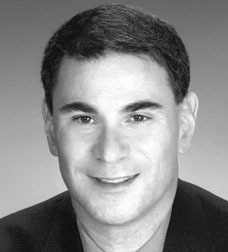
It’s no matter of happenstance that Saul Kaplan – recently tapped by the Rhode Island Economic Development Corporation to lead the state’s effort to attract new businesses here – has vast experience in one field: life sciences.
Gov. Don Carcieri and his economic-development team have made the biotechnology industry the top priority in their quest to create 20,000 new jobs over the next three-plus years.
“He knows what’s going on in the lifesciences business intimately, and he knows how CEOs think,” said EDC Executive Director Michael McMahon. “That’s critical when you’re trying to get someone to locate or grow a business in Rhode Island.”
Your Business Has Gone Global. Has Your Insurance?
A decade ago, “doing business internationally” was mostly a large-company concern. Today, a manufacturer in…
Learn More
Kaplan, a graduate of URI’s School of Pharmacy, has spent his entire career working with life-sciences companies.
As a marketing manager at pharmaceutical giant Eli Lilly and Co. in the 1980s, Kaplan spearheaded the launch strategy for antidepressant drug Prozac.
For the past 11 years he worked as a senior strategy partner in the Health and Life Science practice of consulting firm Accenture Consulting in the Boston area, advising biopharmaceutical firms and medical-device makers on everything from R&D to marketing strategies.
When eyeing his next move, Kaplan, 46, said there was a gravitational pull toward the biotech-rich Boston market. But he says the opportunity to help build Rhode Island’s economy was too intriguing to pass up.
“I believe in the product,” said Kaplan, who officially began his new job on July 24. “Rhode Island is a very special place with a unique economy. But there’s a lot more we can do to attract new business and increase the opportunities for businesses that are already here.”
Kaplan says Rhode Island already has planted the seeds of economic prosperity by finally embracing its strong suit: academic resources and the ideas, research infrastructure, federal grant money, spinoff companies and skilled workers that flow from it.
It’s what Kaplan calls a “changing knowledge base,” as opposed to an economy with a “stable knowledge base,” where little ongoing innovation is necessary and the cost of doing business is the most important factor for companies.
“We will never compete based on our relative cost compared to other parts of the country, let alone overseas,” Kaplan said. “But for businesses that depend on a rapidly changing knowledge base, it makes a lot of sense to locate in Rhode Island.”
The Brown Medical School has rapidly evolved into a stalwart of biomedical research, garnering some $90 million in National Institutes of Health (NIH) research grants last year. Kaplan also cited Brown’s recent initiative to expand its research programs, appointing computer scientist Andries van Dam as its first vice president of research last year.
Similarly, the University of Rhode Island has shown a propensity to broaden its research infrastructure and produce graduates who can help fuel the state’s emerging high-growth sectors.
For example, this fall the school will begin a new bachelor degree program in biopharmaceutical manufacturing to prepare students for careers at biotech companies such as Amgen Inc. And URI recently opened a new biomedical lab that will host students and research faculty from virtually all of the state’s colleges and universities.
Another linchpin of Rhode Island’s sophisticated knowledge base: the defense establishment that has been spawned in part by the Naval Undersea Warfare Center on Aquidneck Island. One key to success, he says, will be using the state’s small size as an incubator for collaboration among state officials, academic researchers, entrepreneurs and big business.
Kaplan offered one example: He envisions working with local biotech companies to create a standardized approach to clinical development, or the process of taking an experimental drug into human trials. He says each company in the industry now uses its own preclinical processes and data-management systems.
“We can do things like that because we can bring all the stakeholders together in a way that no other state can,” Kaplan said. “That’s a big competitive advantage.”
For the complete current issue, visit our subscription Web site, or call (401) 273-2201, ext. 227 or 234.